Women

Lessons from an ex-Baptist attempting Zumba

Taking a commercial break from the heavy stuff…  today it’s all about Zumba and the lies my hips don’t tell.

I went to my first Zumba class recently and learned a few surprising things about myself.  I was temporarily under-employed, so I decided to make the best of my extra free time and work off some of the taco-induced jiggles that have joined me here in Southern California by hanging with the retirees swiveling their hips at the gym.

It’s probably relevant at this point to admit that I was born a Baptist.  (The frozen-stiff kind, not the wavy-hands kind).

I secured my spot in the back corner of the aerobics room, as far away from the instructor and public windows as possible.  The svelte instructor cranked the music, struck a pose, and we were off to a Salsa beat.

It took about two minutes for me to curse my undergraduate Spanish degree for not including Latin dance classes.  I can move my feet. I can move my hips. I can even wave my arms.  But I cannot move them all at the same time, especially in multiple directions at high speeds.  About five minutes in, I started thinking that while my hips had been quite adept at propping up babies and collecting the extra yumminess from all this uh-maz-ing ethnic food in LA, they had certainly not been endowed with the ability to swivel.

Thankfully, about half the class was old ladies.  My hips were in good company, so swivel (or something like that) they did. Those Baptist-born hips have never seen so much action.  If my children had been in the room, they would have died of either embarrassment or laughter.  Heck, I don’t think my own husband could have kept a straight face.

But me? My hips and I were determined to stick out the entire class, so I tripped over my feet, waved my hands in the air, sashayed, air-lasso-ed, bounced, kicked, and flailed my limbs in every direction.  About half-way through, I acknowledged silently to myself that most of the little old ladies swiveled waaay better than I did so I just kept hopping around and avoided direct eye-contact at all costs.

The class ended with an enthusiastic whoop as the instructor dismissed us with a cheerful “Wasn’t that fun?!”

As I made a bee-line for the door, I met eyes with an old lady who grinned at me, “Fun!?!?  I think I’ll go die now.”

I chuckled all the way to my mini-van where I spent the drive home formulating a few conclusions from my ill-fated Zumba class:

1.  I’m not very cool, and I’m ok with that.  I kinda liked the fact that the old ladies had more zip than me.  It gave me something to look forward to.  It reminded me that closing in on 40 means I feel a whole lot more comfortable with who I am, and that comfort will only grow stronger as the years pass.

2. It’s a good for me to do things I stink at.  I’m a teacher and a writer who generally controls everything around me.  Swiveling my stiff hips and tripping over my feet keep me humble, reminding me that I don’t always have everything figured out, especially my own body.

3.  Old ladies who do Zumba are freaking-awesome.  I may go back just to hang out with them in the hopes that they’ll rub off on me.  I mean, seriously, who can argue with this?

4.  Growing old need not be boring.  Even though #1 gets truer and truer by the day, I’m reconciling the fact that cool does not necessarily equal fun, and that old does not unequivocally equal boring.  I have a whole lot of life left to live, and there’s still so much to learn and understand and grow into that I know so little about.

5.  As Shakira suggests, hips don’t lie.  Mine were shouting loud to the whole world that the gift of groove was not bestowed upon me.  In our world of plastic bodies and photoshopped selfies, my clumsy hips reminded me to be true to myself just as I am, not as the world tells me I should be.

I’m not sure how soon I’ll be going back to swing my hips with the old ladies.  (I’m pretty sure I’m more of a yoga girl.)  But in the mean time, I’m walking hobbling around with a slight grin on my face, grateful to a silly little Zumba class for reminding me of both who I am and what I am becoming.

Culture & Race

Words that changed my world

Bronwyn Lea is hosting a series called, “Words that changed my world” where I’m guest posting today about a small conversation years ago that opened a whole new world to me.  Come read about the words that changed my world at Bronlea.com! Here’s a little glimpse:

“You don’t have to think about the issue of race,” she said to me point-blank.

I was taken aback, “Yes, I do. It’s really important to me to understand,” I tried to half-convince, half-explain.

“But you don’t have to,” she persisted. “I can’t ever take my skin off. It comes with me everywhere I go. You don’t have to think about yours if you don’t want to. I don’t have a choice.”

Belief, Culture & Race

101 culturally diverse Christian voices

101 culturally diverse voices sq“I’m just tired of only hearing white, mainstream evangelical voices,” a good friend lamented to me recently. “Why aren’t voices from other backgrounds listened to in the same way as the white voices?” I heard the weariness of consistent exclusion in his question, and frankly, wondered the same thing myself.

When I saw Rachel Held Evans’ list of 101 Christian Women Speakers a few months ago, I was struck most by their lack of representation and recognition in the mainstream white evangelical Christian culture.  Looking at the speakers at so many Christian conferences and gatherings, it would appear that white males are the only people qualified to speak from a place of faith. Rachel’s list showed us that this was not so.

As I researched this list, I was struck by how many great voices from diverse backgrounds are speaking in the public sphere through all sorts of mediums – writing, music, art, speaking.  It is my hope that this list will broaden the conversation even further and be a resource to help distribute the collective voice beyond only one dominant cultural perspective in the public Christian sphere.

A few things to note about this list:

  1. This is not a ‘best of’ list.  It is a list to highlight the vast array of voices from culturally diverse backgrounds speaking actively about faith. My goal is mainly to show that such voices are plentiful and active in order to encourage the white Christian body at large better access to finding and listening to more perspectives as a norm – not an afterthought, exception or token.
  2. This is not a list of conference speakers. I attend professional conferences, but tend to steer clear of Christian ones.  I learned long ago that the group-think/yay-rah environment of Christian conferences wears my soul out quickly.  If I go on a retreat, it’s usually a silent one or at least a very small one without personality-driven agendas. Many of the people on this list do speak, but some of them write or paint or sing as well.  Their perspectives can be listened to through their writings, their creative work, and their voices.
  3. That being said, I value public voices deeply, but I tend to listen to them instead one at a time through books, blogs, and organizations. As a result, I tried to include people from a wide variety of cultural backgrounds and perspectives who have this type of public voice.  Sometimes I gave preference to people with a stronger online presence not because they’re ‘better’ voices, simply because they’re easier to follow and hear from in a public context.  I also gave preference to some lesser-known voices over very-established ones like Tony Campolo, Luis Palau, Cornel West, Desmond Tutu, John Perkins, Ravi Zacharias, and Tony Evans.  That being said, I did also include some voices that have been around for quite some time but may not be as widely recognized like Ruth Padilla, Ajith Fernando, Samuel Escobar, Ken Fong, Noel Castellanos, and Michael Oh.
  4. Since I live in the US and the vast majority of my readers are from the US, much (though not all) of this list is also based in the US.  Singular vision and polarized conversation may very well be a problem more unique to the American church, and for this particular weakness we need lists such as these. For practical reasons, I did not include voices who communicate primarily in languages other than English. I am sorely aware of the privilege this reinforces, but also found it the most useful way to create a list like this.
  5. There is no intentional theological bent or classification for this list.  The voices represent a range from conservative to liberal, Catholic to protestant and I made no attempt to include or exclude voices because of their particular theological perspectives. The only qualification I looked at was if the person publicly identified as a Christian. That being said, it is likely ‘imbalanced’ in some fashion or another and is also most probably heavier on evangelicals and/or protestants because this is my own background as well as the protestant perspective running many conferences and powerful publishing companies.
  6. This list, of course, is woefully incomplete, and like Rachel, I encourage others to form their own lists of valuable voices that diverge from the mainstream. Additionally, please feel free to leave others’ information I may have missed (or your own!) in the comment section below. The louder the collective voice, the more clearly it is heard. I’d love to see others create their own lists – global theologians, regional voices (I could have made a similar list of 101 culturally diverse voices in LA alone!), or ethnic group specific voices.
  7. If you are included in this list and I have listed incorrect or incomplete information, please let me know and I’d be happy to correct it.
swirl 
Khristi Adams @KhristiLauren
Author, Campus Pastor, Documentary Filmmaker, Youth Advocate
Watch a promo for her book.
Watch her speak.  
Watch “Chivalry is Dead” documentary. 
Southern California
 
Robin Afrik @afrikadvantage
Speaker, national consultant and strategist on issues surrounding reconciliation/diversity, international adoption, multi-cultural families’ and identity formation. 
http://afrikadvantage.com/
Check out her work here.
Holland, Michigan 
 
Dr. David Anderson @AndersonSpeaks
Pastor. Author. Radio Show Host
http://www.andersonspeaks.com/
Check out his books here.
Washington, DC
 
Ramez Atallah @RamezAtallah
General Director, The Bible Society of Egypt 
http://rameza.wordpress.com/
Listen to him speak.
Egypt
 
Sami Awad @Sami_Awad
Founder and Executive Director of Holy Land Trust
http://www.holylandtrust.org/
Listen to him speak here.
Palestine
 
Leroy Barber @LeroyBarber
Executive Director, Word Made Flesh
http://www.wordmadeflesh.org/
Listen to him speak here.  
Check out his book here.
 
Eric D. Barreto @ericbarreto
Theology professor, Luther Seminary
http://www2.luthersem.edu/ebarreto/ebarreto/About.html
Check out his writing here
Listen to him speak here.
Saint Paul, Minnesota
  
Cheryl Bear
First Nations Musician and speaker
https://www.facebook.com/pages/Cheryl-Bear/70132140328
Listen to her music here.  
Listen to her speak here.
Check out her book here.
Canada
 
Grace Biskie @gracebiskie
Blogger/author, advocate, community activist 
http://gracebiskie.com/
Read more of her writing here.
Kalamazoo, Michigan
  
Edward J. Blum @edwardjblum
Author, teacher, student of race, religion, culture, politics
http://www-rohan.sdsu.edu/~histweb/faculty_and_staff/faculty_bios/e_blum.htm
Check out his books here.
Listen to him speak here.
San Diego, California
 
 
Amena Brown Owen @amenabee
Writer. Poet. Hip hop head.@spelman woman
http://www.amenabrown.com/
Check out her book here.
Listen to her spoken word here.
Atlanta, Georgia
 
Austin Channing Brown @austinchanning
Learner. Listener. Trainer. Writer. On a mission to make the racial divide smaller.
http://austinchanning.com/
Read more about her here.
Chicago, Illinois
  
Velynn Brown @gospelrainsong
Blogger, Poet
http://velynnbrown.com/
Pacific Northwest
 
J. Kameron Carter @jkameroncarter
Writer, intellectual.  Professor of theology and black church studies at Duke University. 
http://jkameroncarter.com/
Check out his books here.
Listen to him speak here.
North Carolina
  
Noel Castellanos @NoelCCDA
CEO of Christian Community Development Association
http://www.ccda.org/about/staff
Check out his books here.  
Watch him speak here.
Chicago, Illinois
 
Elias Chacour
Former Archbishop of Akko, Haifa, Nazareth. Writer, reconciler between Arabs and Israelis
Check out his books here.  
Watch him speak here.  
Israel 
 
Mark Charles @wirelesshogan
Native American writer
http://wirelesshogan.blogspot.com/
Watch his videos here.
Navajo Nation
 
Peter W. Chin @peterwchin
Pastor of Peace Fellowship in D.C. 
peterwchin.com
Read his writing here.
Listen to him speak here.
Washington, D.C.
  
Eugene Cho @EugeneCho
Christ Follower. Husband. Father. Pastor. Humanitarian. Activist. Founder of One Days Wages, Q Cafe, and Seattle Quest Church
http://eugenecho.com/
Listen to his TedTalk.
Check out his upcoming book.
Seattle, Washington
 
 
 James Choung @jameschoung
author of True Story & Real Life, national director @IVWitness, founder @vineyardU, speaker, professor
http://www.jameschoung.net/
Check out his books here.
Listen to him speak here.
Los Angeles, California
 
Christena Cleveland @CSCleve
Author of DISUNITY IN CHRIST: Uncovering the Hidden Forces that Keep Us Apart.
http://www.christenacleveland.com/
Check out her book here.
Listen to her speak here.
Minneapolis, Minnesota
 
Rev. Elizabeth Conde-Frazier, Ph.D.
Dean of Esperanza College, Eastern University
http://www.eastern.edu/about/university-leadership/rev-elizabeth-conde-frazier-phd
Listen to her speak here.
Check out her books.
Pennsylvania
 
Orlando Crespo
Pastor, theologian, writer
https://www.ivpress.com/cgi-ivpress/author.pl/author_id=1407
Check out his book here.
Listen to him speak here
New York
 
Linson Daniel @Linson_Daniel
Area Director for @INTERVARSITYusa. Teacher. Blogger. Podcaster. Musician. 
http://www.linsondaniel.com/
Listen to his podcast.
Dallas, Texas
 
Ruth Padilla Deborst
Theologian and educator
http://www.stjames-cambridge.org/padilla-deborst/
Read an interview here.
Watch her speak here.
 
Miguel De La Torre @DrDeLaTorre
Professor of Social Ethics and Latino/a Studies at Illiff School of Theology, writer, speaker
http://www.drmigueldelatorre.com/
Listen to him speak here.  
Check out his books here.
Denver, Colorado
 
Mark DeYmaz @markdeymaz
Founding Pastor: Mosaic Church (AR); Executive Director: Mosaix Global Network; multi-ethnic church movement leader: author, columnist, consultant.
http://www.mosaix.info/
Listen to him speak here.  
Check out his book here.
Little Rock, Arkansas
 
Joshua Dubois @joshuadubois
Author of bestseller, The President’s Devotional; @thedailybeast columnist; led @whitehouse faith office
http://joshuadubois.com/
Check out his book here.  
Listen to an interview with Joshua here.  
Washington, DC  
 
Dennis Edwards @RevDrDre
Teacher, mentor, pastor of Sanctuary Covenant Church.
http://dennisredwards.com/
Listen to him speak here.  
Minneapolis, Minnesota
 
Samuel Escobar
Writer, theologian
Watch him speak here.
Check out his books here.
 
Helen Soosan Fagan @drhelenfagan
Teacher, global leadership scholar, diversity consultant
http://helenfagan.com/
Watch her TedTalk here.
Lincoln, Nebraska
 
Richard Allen Farmer @timsdad
Bible expositor, concert artist, worship leader
http://richardallenfarmer.com/
Watch him speak here
Dallas, Texas
 
Ajith Fernando
Writer, theologian, preacher, former country director of YFC Sri Lanka 
https://www.facebook.com/AjithFernandoYFC
Check out his books here.
Listen to him speak here.  
Sri Lanka
 
Anton Flores @ANTONofALTERNA
co-founder of Alterna, a Christian missional community that offers accompaniment, advocacy, and hospitality to Latin American immigrants
http://www.alternacommunity.com/
Read his blog here.
Listen to him speak here.
LaGrange, Georgia
 
  
Ken Fong @KenUyedaFong
Pastor, Evergreen Baptist Church
http://www.ebcla.org/
Check out his books.
Watch videos from his church here.  
Los Angeles, California
 
Makoto Fujimora @iamfujimura
Artist, writer, creative catalyst
http://www.makotofujimura.com/
Check out his book here.  
Watch him speak here.
New York
  
Nicole Baker Fulgham @nicolebfulgham
public school advocate, faith-motivated justice seeker, founder of The Expectations Project
http://www.theexpectationsproject.org/about-us/leadership/
Check out her book here.  
Listen to her speak here.  
Washington, DC
 
Marilyn Gardner @marilyngard
Writer, blogger on cultural issues and third culture kids
http://communicatingacrossboundariesblog.com/
Cambridge, Massachusetts
 
Ivy George
Academic in Sociology & Social Work at Gordon College, speaker, writer
Ivy is an especially captivating speaker.  Watch her speak here.
Check out her books here.
Massachussetts
  
Edward Gilbreath @EdGilbreath 
 Author of Reconciliation Blues and Birmingham Revolution.
http://www.edgilbreath.com/
Listen to him speak here.
Check out his books here
Chicago, Illinois
 
Justo Gonzalez
Theologian, writer, academic
Check out his renowned theological books here.  
 
  
Derwyn L. Gray @DerwinLGray
Lead Pastor of Transformation Church; Former NFL Player
 http://www.derwinlgray.com/
Listen to him speak here.
Check out his books here.  
Charlotte, North Carolina
 
Jelani Greenidge @jelanigreenidge
Writer, communicator, comedian, thinker, speaker, musician
http://jelanigreenidge.com/
Listen to his music here.  
Check out his comedy here.  
Listen to him speak here.  
Portland, Oregon
   
Gustavo Gutierrez
Peruvian theologian, author, endowed professor at Notre Dame
http://theology.nd.edu/people/faculty/gustavo-gutierrez-o-p/
Check out his books here.
 
 
Erna Hackett @ErnaSings
Songwriter, Blogger, Social Justice leader, Intervarsity staff member
http://feistythoughts.com/
Listen to her music here.  
Los Angeles, California
 
Linda Hargrove @llhargrove
Fiction Writer
http://llhargrove.com/
Check out her books here.
Watch a trailer for her book here.
North Carolina
  
Lisa Sharon Harper @lisasharper
Director of Mobilizing @Sojourners. author, political activist
http://sojo.net/biography/lisa-sharon-harper
Check out her books here.  
Listen to her speak here.  
Washington, DC
 
Gary Haugen @garyhaugen
President & CEO of International Justice Mission
http://www.ijm.org/
Check out his books here.
Listen to him speak here.
Washington, DC
 
Young Lee Hertig
Co-founder and Executive Director of Institute for the Study of Asian American Christianity
http://www.isaacweb.org/
Check out her book here.  
Pasadena, California
 
Peter Hong
Pastor of New Community Covenant Church
http://thenewcom.com/who-we-are/our-staff/
His sermons are rich and deep.  Listen here.  
Chicago, Illinois
 
Munther Isaac @MuntherIsaac
Christian Palestinian professor at Bethlehem Bible College
http://muntherisaac.blogspot.com/
Watch him speak here.
Jerusalem, Israel
 
Greg Jao @GregJao
Urbana emcee, IVCF National Field Director, author of Your Mind’s Mission
http://www.intervarsityleads.org/
Check out his book here.  
Listen to him speak here.  
New York
 
Katelyn from By Their Strange Fruit 
Blogger on race and christianity
http://bytheirstrangefruit.blogspot.com/
Columbus, Ohio
  
Skye Jethani @skye_jethani
Christian author, speaker, editor, pastor. 
http://www.skyejethani.com/
Check out his books here.
Listen to him speak here.
Chicago, Illinois
 
Rachel Pieh Jones @RachelPiehJones
Writer, development worker in Djibouti
http://www.djiboutijones.com/
Djibouti
 
Kathy Khang @mskathykhang 
Reader. Writer. Speaker. Follower of Jesus. Regional multiethnic ministries director @intervarsityusa.
http://morethanservingtea.wordpress.com/
Read an interview with Kathy.
Check out her book here.
Chicago, Illinois
 
Grace Ji-Sun Kim @Gracejisunkim
Author, visiting researcher at Georgetown University. 
http://gracejisunkim.wordpress.com/
Check out her books here.  
Listen to her speak here
 
Helen Lee @HelenLeeAuthor
Author, journalist, speaker, blogger
http://helenleeauthor.com/
Check out her books here.
Listen to her speak here.
Chicago, Illinois
 
Terry LeBlanc
Director, My People International; Chair, North American Institute for Indigenous Theological Studies; Indigenous Studies Program Director at Tyndale University College & Seminary
http://www.mypeopleinternational.com/index.html
Watch him speak here.
Canada
 
Grace Hwang Lynch @HapaMamaGrace
Writer, Consultant, Blogger, News Editor at BlogHer @BlogHerNews
http://hapamama.com/
San Francisco Bay area, California
 
Zaida Maldonado Pérez
Professor of church history and theology at Asbury Theological Seminary
http://www.asburyseminary.edu/person/dr-zaida-maldonado-perez/
Check out her books here.
Kentucky
 
Vishal Mangalwadi
Lecturer, philsopher, writer, social reformer, political and cultural columnist
http://www.revelationmovement.com/
Check out his books here.
Watch him speak here.
 
Loida Martell-Otero
Professor of Constructive Theology at Palmer Theological Seminary
http://www.palmerseminary.edu/about/faculty/loida-martell-otero
Read her books here.
Pennsylvania
 
 
Fouad Masri @CrescentProject
Pastor and founder of the Crescent Project
https://www.crescentproject.org/
Check out his books here.
Listen to him speak here.
Indianapolis, Indiana
 
Ramon Mayo @mayotron
Writer, missionary, blogger on diversity, the church, and racial justice
http://ramonmayo.com/
Check out his book here.
Chicago, Illinois 
 
Erwin McManus @erwinmcmanus
Writer, speaker and lead pastor of Mosaic Church
http://www.erwinmcmanus.com/
Check out his books here.
Listen to him speak here.
Los Angeles, California
 
Idelette McVicker @idelette 
Writer. Activist. African-Canadian. Founder & Editor of SheLovesmagazine.com 
http://www.idelette.com/
Listen to her speak here.
Vancouver, Canada 
 
Paul Louis Metzger @paulouismetzger
Professor at Multnomah University, Director of the Institute for the Theology of Culture, Author, Speaker
http://new-wineskins.org/
Check out his books here.
Listen to him speak here.
Portland, Oregon
 
 
Osheta Moore @osheta
Urban church planter and blogger
http://oshetablogs.wordpress.com/
Cambridge, Massachusetts
 
Salim Munayer
Instructor at Bethlehem and Galilee Bible College
http://www.bethbc.org/academics/faculty/dr-salim-j-munayer
Check out his books.
Listen to him speak here.
Jerusalem, Israel
 
Samuel Naaman
President of the South Asian Friendship Center in Chicago, professor of World Missions and Evangelism at Moody Bible Institute
http://www.safcbookstore.com/staff/
Chicago, Iliinois
 
Trillia Newbell @trillianewbell
Freelance journalist, Christian writer, author of United: Captured by God’s Vision for Diversity (Moody, 2014)
http://www.trillianewbell.com/
Check out her book here.
Listen to her speak here.
Nashville, Tennessee 
 
Kelly Nikondeha @knikondeha
Writer. Thinker. Lover of Jesus, justice & jubilee. Adopted & adoptive mother of 2. Doing theology in transit. 
http://kelleynikondeha.com/
Listen to her speak here.
Arizona & Burundi
 
Michael Oh @ohfamily
Executive Director / CEO of the Lausanne Movement as well as founder & board chairman of CBI Japan (http://cbijapan.org ).
http://www.lausanne.org/
Listen to him speak here.
Nagoya, Japan
 
Enuma Okoro @TweetEnuma
Writer. Speaker. Consultant.
http://enumaokoro.com/
Check out her books here.
Watch a book trailer here.
Listen to her speak here.
 
Jacqueline Ottmann
Aboriginal scholar at University of Calgary
http://jacquelineottmann.com/
Check out her research here.
Calgary, Canada
 
Eboo Patel* @EbooPatel
Founder and President, Interfaith Youth Core. *While Eboo is a Muslim, not a Christian, he works frequently with Christians in interfaith dialog.  
http://www.ifyc.org/
Check out his books here.
Listen to him speak here.
Chicago, Illinois
 
Screen Shot 2014-03-02 at 5.42.10 PM
Soong-Chan Rah @profrah
Pastor, author and academic at North Park Theological Seminary
http://www.profrah.com/
Check out his books here.
Listen to him speak here.
Chicago, Illinois
 
Vinoth Ramachandra
Writer, Secretary for Dialogue & Social Engagement for IFES
http://vinothramachandra.wordpress.com/
Check out his books.
Watch him speak here.
Colombo, Sri Lanka
 
Patricia Raybon @PatriciaRaybon
Writer
http://www.patriciaraybon.com/
Check out her books here.
Listen to her speak here.
Colorado
 
Deidra Riggs @DeidraRiggs
visionary at JumpingTandem, managing editor at TheHighCalling.org, monthly contributor at (in)courage.me
http://www.deidrariggs.com/
Listen to her TedTalk here.
Lincoln, Nebraska
 
Natasha S. Robison @ASISTASJOURNEY 
Speaker, writer
http://www.natashasrobinson.com/
Listen to her speak here.
North Carolina
 
Robert Chao Romero @ProfeChaoRomero 
UCLA Professor. Historian. Lawyer. Pastor. Author
 http://www.jesusforrevolutionaries.org/
Check out his books here.
Los Angeles, California 
 
Gabriel & Jeanette Salguero @NalecNews
President, National Latino Evangelical Coalition
http://www.na-lec.org/
Listen to Gabriel speak here.
New York
 
 
Brenda Salter McNeil @RevDocBrenda
Reconciliation Trailblazer, Associate Professor of Reconciliation Studies & Teaching Pastor at Quest Church
http://saltermcneil.com/
Check out her books here.
Listen to her speak here.
Seattle, Washington
 
Alexia Salvatierra 
Pastor, writer, advocate, consultant, community organizer
http://www.alexiasalvatierra.com/bio.html
Check out her book here.
Listen to her speak here.
California
 
Arlene Sanchez-Walsh @AmichelSW
Professor of American religious history and Latina/o religion
 http://www.patheos.com/blogs/amsanchezwalsh/
Check out her book here.
Los Angeles, California
 
Tamara Shaya Hoffman @tamarashaya
Media Communications Specialist. Conflict Analyst. Development Advocate. Strategist. Storyteller. Leader.
http://www.linkedin.com/pub/tamara-shaya/6/893/793
Washington, DC
 
Priscilla Shirer @PriscillaShirer
Bible teacher and speaker
http://www.goingbeyond.com/
Check out her books here.
Listen to her speak here.
Texas
 
Andrea Smith
Intellectual, professor at University of California Riverside, Co-founder of INCITE! Women of Color Against Violence
http://mcs.ucr.edu/andrea-smith-associate-professor/
Check out her books here.
Listen to her speak here.
Southern California
 
Emfrem Smith @efremsmith
President and CEO of World Impact. Author and speaker with Kingdom Building Ministries.
 http://www.efremsmith.com/
Check out his books here.
Listen to him speak here.
San Francisco Bay area, California
 
Matt Soerens @MatthewSoerens
Field Director for the Evangelical Immigration Table. US Church Training Specialist for @WorldRelief, author
http://evangelicalimmigrationtable.com/
Check out his book here.
Listen to him speak here.
Chicago, Illinois
 
Bryan Stevenson
Founder and Executive Director of the Equal Justice Initiative.  Lawyer defending the poor, imprisoned, and mentally ill
http://www.eji.org/
Listen to his TedTalk.
Montgomery, Alabama
 
Jemar Tisby @JemarTisby
Co-Founder of @RAANetwork, Student at @RTSJackson, Black & Reformed Christian
http://www.jemartisby.com 
Jackson, Mississippi
 
Nikki Toyama-Szeto
Senior Director of Biblical Justice Integration and Mobilization at International Justice Mission
http://www.ijm.org/node/2392
Check out her books.
Watch her speak.
Washington, DC
 
Richard Twiss
Speaker, activist, educator, author on Indigenous communities.  Founder of Wiconi International. 
(Richard passed away earlier this year, but leaves a rich legacy of work with us)
http://www.wiconi.com/
Watch some videos here.
Check out his writing here
 
 
Kathy Tuan-Maclean
Area Director, Boston Graduate/Faculty Ministries, InterVarsity Christian Fellowship
http://www.patheos.com/blogs/wordynerdy/
Watch her speak
 
Canon Andrew White @vicarofbaghdad
Vicar of St. George’s Church in Baghdad
http://frrme.org/
Check out his books.
Listen to him speak.
Baghdad, Iraq
 
 
Marcos Witt @MarcosWitt
Christian musical artist
https://www.facebook.com/marcoswitt
Listen to his music here.
Houston, Texas
 
Randy Woodley @randywoodley7
Native American (Keetoowah), Spiritual, farmer, professor, activist, writer, Ph.D. Intercultural Studies
http://www.eagleswingsministry.com/
Check out his books here.
Listen to him speak here.
Oregon
 
George Yancey @profyancey
Sociologist, researcher, writer
http://www.georgeyancey.com/
Check out his books here.
Listen to him speak here.
Denton, Texas


Jenny Yang @JennyYangWR
Vice President of Advocacy and Policy @WorldRelief and co-author of Welcoming the Stranger: Justice, Compassion & Truth in the Immigration Debate.
Read more about Jenny.
Watch her speak.
 
Naomi Zacharias @Naomi_Zacharias
Author, Speaker, and Director/Vice President of Wellspring International.
http://wellspringinternational.org/ 
Check out her book.
Listen to her speak here.
Atlanta, Georgia
  
 
Belief, Restoration & Reconciliation

A skeptic falls off her soap box

dillardWhile ultimately my faith sits at the feet of Christ, the steps that got me there were ‘friends’ who took the time to sort out their faith on paper: Phil Yancey, Cornel West, Frederick Buechner, CS Lewis, Anne Lamott, NT Wright.  My heart holds Annie Dillard in a special little corner though, for she was the one who broke the final straw of my resistance to faith.

In her essay The Book of Luke, Annie Dillard captured my reconversion perfectly.  To this day, I cannot read it with dry eyes.  She draws her observations on Luke to a close by describing how it ends with the disciples enthusiastically ‘praising and blessing God,’ moving the fledging church forward.  A skeptic reading her words, I rejoiced at her unexpected critique of the developments that followed Christ’s crucifixion:

“What a pity, that so hard on the heels of Christ come the Christians.  There is no breather.  The disciples turn into early Christians between one rushed verse and another.  What a dismaying pity, that here come the Christians already, flawed to the core, full of wild ideas and hurried self-importance.

Internally, I cheered her on, “Yeah! Those Christians…crazy, arrogant, obsessed.”  She continued her rant:

For who can believe in the Christians?  They are, we know by hindsight, suddenly not at all peripheral.  They set out immediately to take over the world, and they pretty much did it.  They converted emperors, raised armies, lined their pockets with real money, and did evil things large and small, in century after century, including this one.  They are smug and busy, just like us, and who could believe in them?  They are not innocent, they are not shepherds and fishermen in rustic period costume, they are men and women just like us, in polyester.  Who could believe salvation is for these rogues?  That God is for these rogues.

I’d now climbed right up on my own soapbox behind Annie, fully entrenched in my private choruses of “You go, girl!”  She’d hit the nail on the head.  These rogues – they were crazy.  They converted unethically, didn’t think about anything critically, and threw their Bibles around carelessly defending their narrow-minded political causes.

But then – unexpectedly – she inserted the words

Unless, of course – 

I paused my internal pep rally and furrowed my brow, feeling the winds shift slightly,

Unless Christ’s washing the disciples’ feet, their dirty toes, means what it could, possibly, mean: that it is all right to be human. That God knows we are human, and full of evil, all of us, and we are his people anyway, and the sheep of his pasture.

Tears brimmed. I was human, wasn’t I?  I was not merely brain or body or achievement-after-achievement.  Sometimes I stumbled and didn’t know how to get back up.  Sometimes I failed to love those who I claimed I would give my life for.  Sometimes I failed to love myself.

She wasn’t just talking about them; she was talking about me, too.  The breeze shifted again and I read on:

Unless those colorful scamps and scalawags who populate Jesus’ parables were just as evil as we are, and evil in the same lazy, cowardly, and scheming ways. Unless those pure disicples themselves and those watercolor women – who so disconcertingly turned themselves into The Christians overnight – were complex and selfish humans also, who lived in the material world, and whose errors and evils were not pretty but ugly, and had real consequences.  If they were just like us, then Christ’s words to them are addressed to us, in full and merciful knowledge – and we are lost.  There is no place to hide.

We are lost.  There is no place to hide.

Those last words, they undid me permanently for they exposed the truth that every one of us tries to hide from our humanity with our adherence to traditions or non-traditions or skepticisms or fanaticisms.  Plain and simple, we’re not all that different from one another when you strip us straight-down to our skivvies. Underneath the masks we don, we’re all just broken, bumbling, and beautiful creatures, a-little-found and a whole-lot-lost, sitting broken and bare at the feet of the One who made us, whether we know it or not.

Belief

{this side of the stars}

dear god:
this may not come as a surprise to you,
but
i don’t really know
what i’m doing.
~
i see so many
claiming to understand you perfectly,
to know just exactly what pleases you
and what disgusts you –
they all seem to get it,
to not struggle a bit
with the idea
that they claim to understand
every last detail about
the Creator of a billion galaxies.
~
but i do –
struggle, that is,
to understand
why and how and that
you love
me.
~
little old me.
~
i’m not even a star,
or a planet or moon.
i’m just blip,
one speck of the human race
that in all carnal understanding
is quite dispensable, disposable.
~
i certainly don’t begin to match
the glory of a galaxy or a fire of a planet
(especially not after i’ve just woken up).
i don’t always obey my Creator
or orbit just as i should
or shine with the magnitude of the sun.
~
sometimes i just stop,
too afraid or too lazy or too overwhelmed
to continue on.
half the time i don’t even know
which direction i should be going.
~
i, for one, don’t understand you.
i doubt i ever will this side of the stars.
but then i pause and consider
how you’ve hung the stars in place,
how you’ve drawn the orbits of the planets,
and i find a glimmer of hope
that you might possibly
know what you’re doing,
even if
none of the rest of us do.
Belief

Jesus doesn’t ride a magic carpet and other myths of American faith

A piece of my story that I don’t speak about much here is my days of agnosticism and the time when doubt spoke so much louder than faith.  These days unfolded slowly in the shadows of my mother’s cancer, the loss of several close friendships, and the dawning of the clash of cultures I had never encountered in my mono-cultural world.

Even though I had been loved well by so many, there were still days I felt I’d been lied to.

Even though I had learned many answers, there were still so many unrelenting questions.

Even though my childhood world had been safe and beautiful and rich and good, there was still sorrow to face that it, too, was a broken place.

As the questions of these days quieted, I grew into a new kind of faith, one that was less flashy and more rooted, less emotional and more perseverant, less starry-eyed and more observant, less notch-on-my-belt and more depth-of-my-soul, less-shine-Jesus-shine, more-candle-flickering-in-the-dark. To my great surprise, the questions didn’t just go away.  They hung in the air, following my faith around like a shadow. The betrayal of a broken world sunk deep into my soul, leaving me with a thirst for justice and a hunger for righteousness.

Like Donald Miller expresses in his essay on why he doesn’t attend church much, I still find that I don’t meet God very frequently in ways the modern day church facilitates, especially the never-ending ‘pop-corn’ prayers and endlessly repetitive singing.  My personality isn’t much built for these – I’m an ENTJ (aka ‘the executive’) on Meijers-Briggs and other such tests label me “Independent Thinker”, a learner, intellect, seeker of input and connection, always strategizing for the future.

So when I hear folks speak of how much they love Jesus, I grow a little sheepish.  Given my personal wiring, I don’t ‘feel’ all that much, at least not in the ways traditionally advertised by feelers. When I speak of Jesus, it’s hard to sincerely say that I ‘love’ him with the same kind of fiery passion to which I frequently hear others refer for my faith feels far more often like a candle flickering faintly in the dark.

Perhaps one dynamic influencing my hesitation in this business of ‘loving’ Jesus is American culture’s Disney-movie interpretation of love.  From the movies, I learned that love was a magic carpet ride full of wonder and adventure, a prince arriving to save me at just the right moment, or swirling around a ball-room in a place I didn’t really deserve to be.  I learned that ‘being in love’ meant swooning emotions, pretty dresses and palpitating hearts.  There were no Disney movies, however, about crying angrily on the way home from church or getting up with screaming babies six times in the middle of the night or being overly snippy with your spouse.  The Disney view of love wasn’t particularly sustaining through these moments.

When I cut to the core, though, I’m also hard-pressed to say that I don’t ‘love’ Jesus just because I don’t express my commitment like the enthusiastic-feeler-personalities. I just find myself using different words:

I walk with Jesus in caring for the stranger, in welcoming them to a new land.

I listen to Jesus as I create quiet spaces for myself and my family, refusing to run at the break-neck speed of the rest of the world.

I trust Jesus as I put one foot in front of another blindly, having given up one story and wait patiently as the next one unfolds.

I hope for the continual restoration of brokenness and healing of wrongs, even though some days feel completely hopeless.

I long for the days that will bring all those I love into one place together, no longer separated by airplanes or oceans or passports.

I dream of making the world right, of creating reflections of God’s kingdom here on earth, of making all things new.

I speak honestly and forthrightly, pushing through hard conversations toward wholeness, restoration and healing.

I walk toward the broken things, refusing to turn my head away just because they are ugly to look at or too complex to resolve by tomorrow.

While I no longer use the same words as the ‘Jesus Freaks’, I suppose I ultimately mean the same thing.  Since we’ve lived in many parts of the country, I’ve had the curse fortune to participate in a wide variety of traditions in the church.  We’ve visited a gamut of staunchly conservative, wildly charismatic, stiffly liturgical, and laid-back artistic churches.  When we’re in the evangelical churches, we hear a lot about loving Jesus.  In the charismatic churches, its all about the Holy Spirit’s moves. The liturgical churches wax quiet and reverent about the Father.

I actually find all these different perspectives quite refreshing because their diversity allowed my faith breathing-room just when I needed it most. Though I met Christ first among the Jesus-lovers, I returned to Him quietly among the Father-devotees. In the shadow of their liturgy, I bent on my humbled and aching knees, tasted the sweet potency of communion wine, and whispered time-tested words alongside the other voices. Their quiet way soothes my soul and allows me a pause-of-calm in the midst of a chaotic world.

It’s almost like God knew that some of us would need a completely different spin on faith for one reason or another, so He* allowed us to create spaces which differ wildly from each other.  Humans tend to see this as problematic and try to force everyone else to function exactly like themselves; but I think God grins at our bumbling efforts. Like we smile proudly at our toddlers when they stumble over themselves in their attempts to copy us, maybe He is simply grateful when we find paths that connect us to others and help us follow Him more faithfully instead of hurling our faith over cliffs instead.

Seeing this distinction changed everything for me – it meant I didn’t have to leave completely; I just needed to move around a bit.  And as I did, I returned to faith slowly with an awakening realization that I was just as helpless and broken as all the bumbling folks around me I didn’t understand. I returned because traveling the road alone was even bleaker than the doubts I had within faith.

Once I dug past the shallowness of our Disney-love culture, I found a sustaining faith rooted deep and strong in spite of its imperfect followers. It definitely lacked some of the enthusiasm of my youth, but easily made up for this in its substance and depth. When I hear all the raging debates these days about who’s-right-and-who’s-wrong, who’s-more-relevant and who’s-more-biblical, I wink at the sky, fall to my knees, and whisper a prayer of gratefulness that under God’s love, there’s a space of grace for all of our bumbling ways.

swirl

 * I’m not a huge fan of assigning gender roles to God, and find the English language disappointingly limiting in this regard.  If the use of God as He is hard to swallow, feel free to ignore these imperfect terms.  Personally, I don’t find she or it to work any better, and thus remain at a complete pronoun stand-off.

Related Posts

Spiritual Formation

Survival tactics for truth-tellers, hole-pokers, and skeptics

survival tactics

Tired and grumpy, I got a bit harsh with my slightly lazy eight-year-old son about his messy-room-that-never-seems-to-actually-get-cleaned the other night.  As the words came out, I knew instinctively that I’d crossed the mean-mama line, so I returned awhile later to apologize for my tone, “I’m sorry I snipped at you about your room, buddy.”

His grinning response didn’t miss a beat, “Snipped?!?  You didn’t snip at me – you lashed me – with whips and chains!”

He’s a truth-teller, that kid . . . and there’s nothing like being reminded that the apple didn’t fall too far from the tree.  Some days, I’m a bit of a truth-teller myself, and I’ve learned it’s not always the most popular trait in a person.  Truth-tellers are wired to poke holes, ask questions, point out inconsistencies, question accepted norms – often for the value of the greater-good, but usually at the cost of keeping-the-peace.

I have an on-going internal conversation about the value of being a truth-teller, of saying the things that everyone thinks but no one says out loud.  On one hand, there’s an internal sigh of relief when somebody finally comments that the emperor isn’t wearing any clothes but on the other hand, people don’t always take kindly to the reality that they’ve been playing along with a lie.  It’s a tricky line to walk, one I haven’t always known how to balance along well. While it’s easy to communicate dissent in angry, frustrated and polarizing ways, it’s not always the most effective manner of helping the truth actually be listened to and considered.

Thankfully, the years are slowly teaching me how to straddle the tensions of being a truth-teller, and through the gifts of the spiritual disciplines and faithful friends, I’ve developed a few guidelines for better managing this innate part of myself.

Be gentle.  Sometimes provocative statements are useful to highlight a hard truth, but only when used sparingly.  Even though I personally enjoy people who tell it like it is, even I begin to dismiss a person who makes frequent inciting statements because it seems like all they care about is stirring the pot instead of letting the flavors simmer together so they actually taste good.  When I write about divisive issues, I often sit on potentially controversial phrases for a while to evaluate whether they’re helpful or harmful for the larger conversation at hand.  My go-to question is often, “How can I tell the truth boldly and gently?”

Check ulterior motives.  It’s easy to subconsciously enjoy the attention that comes with telling the truth.  Sometimes such boldness brings a silent pause, focusing the attention for a moment on the giver.  Being a teacher and a writer means that I’m accustomed to a good measure of attention focused on me, so it’s always wise for me to consider if my motives are self-seeking or truly a voice for greater good. If I can’t determine my motives, it’s likely a sign I need to remain quiet.

Speak slowly.  James’ words say it well: “Everyone should be quick to listen, slow to speak, and slow to become angry.”  While this is much easier said than done, there are no exemptions given.  Sadly, some use this passage to stifle truth-tellers completely, but it’s still important to remember that some who see themselves as truth-tellers speak and grow angry far too quickly.  Quite frankly, this is counter-productive and harmful to the conversations in which we participate.  If we can’t speak the truth slowly and patiently (sometimes over years), we need to spend time pondering if we should even be speaking at all.

Remember the human.  In sharp disagreement, it’s easy to turn people into ideas. When a person ceases to exist, we tend to hear only their words and not their hearts.  My mom used to say that occasionally when they struggled to love someone in their world, they’d invite them for dinner to hear their stories.  She found that it’s a whole lot harder to see someone solely as an ideology when you know their personal story. In all of our worlds – work, church, family, friends, online – we must first remember the people we speak of and with are humans worthy of respect simply because they are created in the image of Christ.

Learn from those with opposite strengths.  Being a former skeptic, faith is not one of my stronger spiritual gifts.  However, I once heard a friend share her story of struggle, and it was laced with a fierce type of faith I had never known myself.  While the skeptic in me wanted to dismiss what I didn’t understand, I instead allowed myself to admire something in her that I didn’t see in myself and to be grateful for it.  It was astonishingly freeing to allow myself the luxury to learn from someone different than me, instead of mentally critiquing them.

Step away.  Because I write about the controversial topic of race, every so often I’ll get a cutting tweet or comment.  While I can rationally tell myself that these comments come from just a few people who may-or-may-not-be-sane, I still find myself distracted by them on occasion.  When their words grow too loud in my head, I know I need to step away for a bit, sit with the Lord, and give myself some space to remember why I speak and who I speak for.  Angry conversations rarely prove to be productive, and if my purpose is to foster productive conversations about difficult topics, I’m not helping matters if I can’t stay calm and focused on bringing light, not heat, to the issues at hand.

swirl

Society desperately needs truth-tellers who have the boldness, wisdom and maturity to use their gifts responsibly for the greater good – not to wield power for their own gain.  While the faith-gifted folks may get a better wrap, without the truth-tellers there would be no Dietrich Bonhoffers or Mother Teresas or Cornel Wests to guide us toward a better way of living together.  Whatever your gifts, may you lean into them with courage, faithfulness and humility so that together we might all learn to walk alongside one another in a better way.

Related Posts

Culture & Race, Families, Children & Marriage

Helpful resources for raising biracial children

When I first became a mother, I knew I’d need a lot of help so I consulted a wide variety of resources from friends to family to professionals.  They were all immensely helpful in helping me understand and prepare for raising children.  With regards to raising biracial children, however, I felt distinctly alone.  No one I knew had done this before, and I was blazing a completely new trail.

So, I turned to my trusty friends The Books.  They gave me access to a world I didn’t know, and taught me about things that those from my world could not.  The internet and I became quite friendly too, for I was living in quite an isolated world where the internet became my only access to families like ours.  These were life-changing gifts, ones that offered me deep insight into how my children’s childhoods might be different than my own, and what I could do to help them develop a healthy identity and view of themselves.

The resources below include some of my favorite resources, as well as some new ones I’ve found.  Feel free to add resources that you’ve found helpful in the comments below!  books for parents header

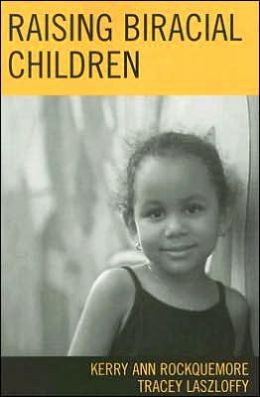
raising biracial children

Raising biracial children
by Kerry Ann Rockquemore and Tracey A. Laszloffy (2005)
 

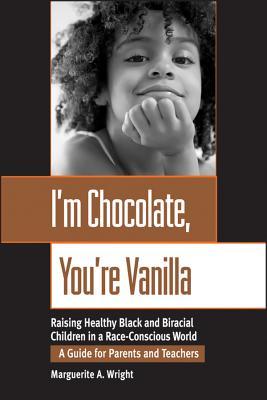
I'm chocolate

I’m Chocolate, You’re Vanilla: Raising Healthy Black and Biracial Children in a Race-concious World
by Marguerite Wright.

While this book focuses on black children, I found a lot that is quite applicable to biracial children from any background.  It’s by far the best book I’ve read on the topic.

Black Books Galore: Guide to Great African American Children’s Books
by Donna Rand and Toni Trent Parker

My sister-in-law just recommended this series to me and loves it.  Be sure to check out all the other titles in the series.

Check all that apply: Finding wholeness as a multiracial person
by Sundee Frazier
 

A great resource for biracial children and their parents that reflects on how to develop wholeness in biracial identities.

books for teachers

Since teachers spend so much time with our kids, I’ve often longed for teachers who are more aware of how to encourage and affirm my biracial children.  These are some great books that help teachers begin to acquire this knowledge.

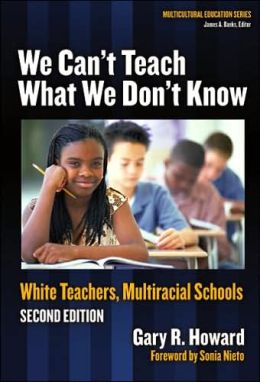
we can't teach

We can’t teach what we don’t know: White teachers, Multiracial Schools
by Gary Howard

A seminal book in the field, the title pretty much says it all (though the book is worth reading too!).

why_are_all_the_black_kids_sitting_together_in_the_cafeteria1

 
Why are all the black kids sitting together in the cafeteria? and other conversations about race
by Beverly Daniel Tatum

I’ve quoted this book a lot recently – it’s another classic that is a great introduction to an understanding of race and psychology.  Definitely a must-read for teachers and parents alike.

books for children

The book market for books including biracial children is expanding slowly, and these are a few of my favorite ones for younger kids.  You can preview all the books on Amazon.

whoever you are

Whoever you are by Mem Fox

skin you live in

The skin you live in by Michael Tyler

how my parents

How my parents learned to eat by Ina R. Friendman

two mrs gibsons

Two Mrs. Gibsons by Toyomi Igus

amy hodgepodge

Amy Hodgepodge Series by Kim Wayans and Kevin Knotts

Here are a few great lists of multicultural children’s books as well:

organizations

Screen Shot 2014-01-27 at 9.24.50 PMInterracialFamily.org

Screen Shot 2014-01-27 at 9.25.46 PMMultilingual Living Magazine

Screen Shot 2014-01-27 at 9.26.57 PMMultiracial Americans of Southern California

Screen Shot 2014-01-27 at 9.27.53 PM

Project RACE: Reclassify All Children Equally

Screen Shot 2014-01-27 at 9.29.00 PM

Swirl Magazineblogs header

A life with subtitles by Sarah Quezada.

Bicultural Mom by Chantilly Patiño.

Biracial Families Blog by Amber

Multiracial Sky by Natasha Sky

Musing Momma by Ellie

SpanglishBaby: Raising Bilingual and Bicultural Kids

~

What other resources for biracial families do you know about and love? If you have your own blog on raising biracial kids, please leave a link to your blog in the comments! 

Related Posts

Culture & Race, Families, Children & Marriage

Speaking with children about race and some tips on how to start

Being biracial in a predominately white environment, my children began noticing race as soon as they could form thoughts more complicated than, “I want my sippy cup” and “I watch a movie?”  Having worked with plenty of biracial college students who were just beginning to discover their dual identity, we’ve intentionally spoken openly with our kids about their biracial identity from the beginning.  Like their bicultural identity, we wanted it to be something that had always been a part of who they are, not something that they suddenly discovered one day.

In an effort to help them embrace all sides of themselves, we’ve had some great chats with our kids about their identity over the years.  A Latina girl in my daughter’s first pre-school class named Rachel did cause some confusion for a bit when our daughter began telling people that she was “bi-rachel.”  We also faced quite the drama attempting to explain to her that Jesus wasn’t actually white.  Yet even in the midst of confusion and drama, we’ve found it essential to talk with our kids about this aspect of themselves and their world regularly.  

Growing up white in a mostly white community, I never talked about race, so it was a steep learning curve for me.  Because I hadn’t spoken or thought about race as a child, I was initially skeptical about the value of the conversation itself. “Aren’t we brainwashing them?” I’d asked my husband. “Why don’t we just let them notice what they notice without bringing it up?”

He’d assure me that it was quite a normal – even healthy – reality to talk about race as a family and I’d acquiesce, acknowledging that my culture’s silence on the matter hadn’t helped race relations much.  We also couldn’t really skirt the conversation easily since even our extended family is made up of a variety of races.  The kids were going to see it, and we needed to give them words to help frame their understanding.

Because of the reality of living in a racialized society (make sure to watch the video above to understand the full impact of this on children), it’s imperative for all families to speak openly about raceespecially white families. As a teacher, I learned that it was helpful to have a few ‘speeches’ prepared for a wide variety of situations, and parenting doesn’t feel that different.  Knowing how to talk about hushed-up topics with our kids like sex and race and disappointment and doubt is important. In that vane, here are a few suggestions for speaking about race to stick in a back-pocket for the day that conversation does arise.

Engage, don’t shush.

Psychological studies show that children notice racial differences as young as 3.  Sometimes, they might say embarrassing things that make parents nervous like “Why is that guy’s skin dirty?” or “You don’t match your mom.”  Psychologist Beverly Tatum suggests that if white parents are uncomfortable talking about race and respond by silencing them that the children learn race is not to be talked about at all, even if they do notice it.  The better way is to engage children on the topic and help them understand.

Speak factually.

Teach your kids the word melanin and explain how it works in human bodies.  It’s a great science lesson!  Just like sex, if we don’t explain the basic facts about how race works, young children are likely to develop their own theories like thinking others turn brown from things like eating too much chocolate or simply being ‘dirty’.

Speak figuratively.

To help our kids understand their biracial identity as young children, we would pour a glass of milk into a clear glass and then add chocolate syrup.  “Mama’s the milk.  Thaatha’s the chocolate,” we’d explain.  Then we’d stir it together.  “And you’re what happens when we mix it all together!”

Beverly Tatum (1997) would explain race to kids by cracking white and brown eggs, talking about how they’re different colors on the outside, but the exact same on the inside.

When our kids were younger, we also talked openly about the inaccuracies of racial classifications.  “Mama’s not really white, I’m more peach, right?”  Then we’d brainstorm what colors we could use for their skin: caramel, butterscotch, tan.  We’d adjust song lyrics and sing together:

Jesus loves the little children
All the children of the world
Brown and caramel and peach,
Chocolate and  coffee,
Jesus loves the little children of the world.

Define race without deficiency

When we speak about differences between people, it’s important to be careful to speak without making someone else seem less than.  Statements like “her skin has too much melanin” suggest that something is wrong rather than just different.  Instead, it’s far more affirming to everyone to say things like, “We all have different colors of skin.  Isn’t it pretty like a rainbow?”

Pay attention to the surroundings you create

In simple things like choosing library books or decorations, be aware of creating a space in the home that represents a wide variety of people.  If children don’t see diversity in their immediate communities, they can at least see it in books they read and movies they watch.  This is especially important for families who live in areas that don’t have a lot of diversity where children are more naturally exposed to people of other races.  See this post for more ideas on how to incorporate diversity more deeply into family life.

Discuss discrepancies

When people of color are portrayed stereotypically or negatively in the media, bring it up. When a nativity scene or Bible shows all white people, talk with children about how this isn’t actually accurate.   We don’t always prevent our kids from seeing such inaccuracies because they’re great conversation starters when we do see them.  We also then make attempts to find other resources that balance out the inaccurate stereotype they’ve been exposed to.  For example, our kids love old sitcoms like I love Lucy and the Brady Bunch.  Many of these shows carry subliminal messages or microagressions about race that were common to their time.  We’ve made sure to also introduce shows (like the Cosby Show) that portray people of color with positive and empowering messages and talk about the how each show portrays the people in it.

When it comes to race, we must remember that our children learn from both what we say and what we don’t say.  Silence doesn’t always mean approval or acceptance.  Sometimes it creates a whole-lot-of-ignorance and breeds significant misunderstanding.  If we ourselves don’t know how to talk about race in productive, healthy, non-stereotyping and respectful ways, we won’t be able to teach them how to talk about it either.

Related Posts

Tatum, B. D. (1997). Why are all the black kids sitting together in the cafeteria. New York, NY: Basic Books.

Miscellany

Would you do me a big-huge-favor?

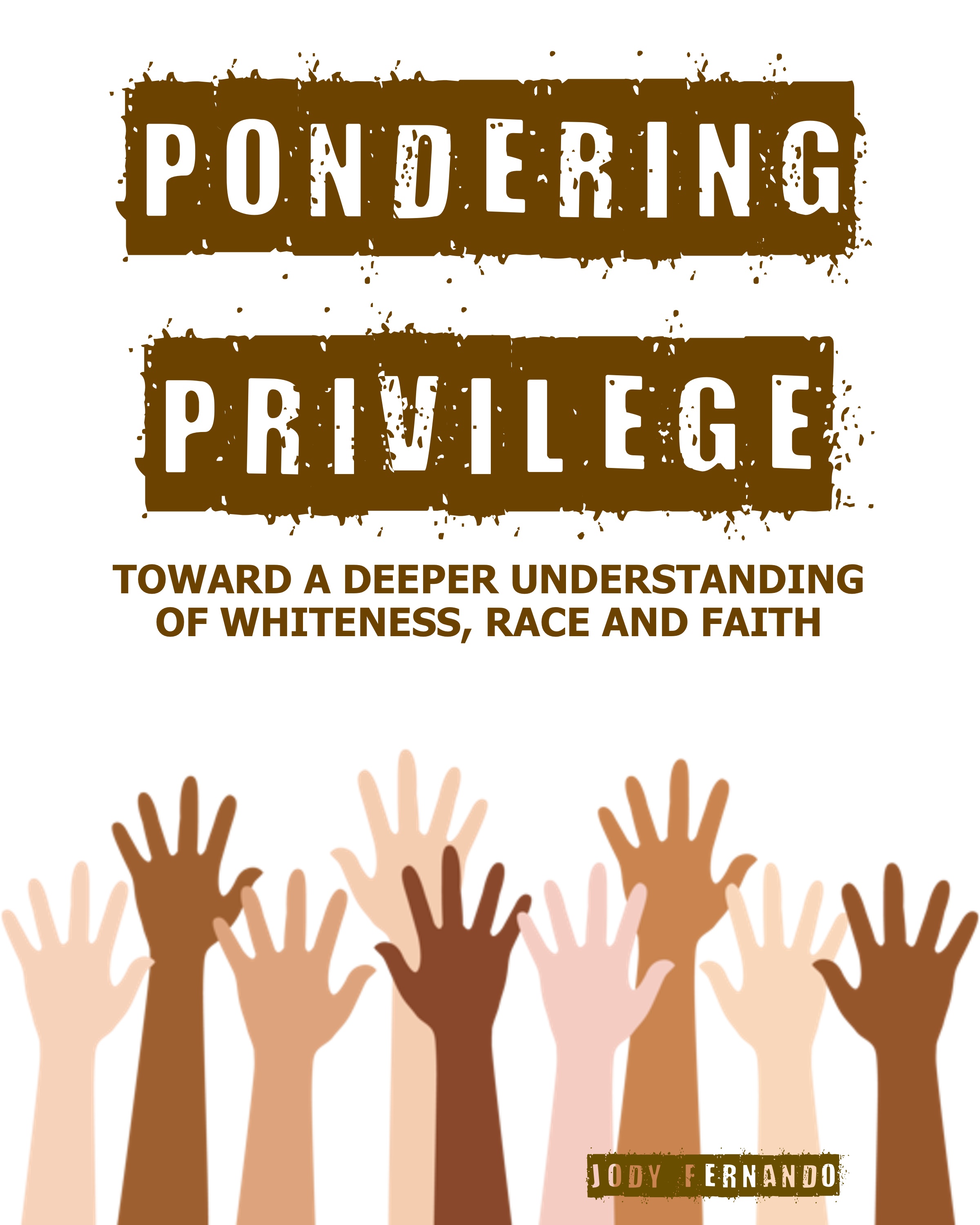
Pondering Privilege: Toward a Deeper Understanding of Whiteness, Race and Faith

I’ve just posted a slightly updated version of my ebook, Pondering Privilege: Toward a Deeper Understanding of Whiteness, Race, and Faithon Amazon and I’d really love to get some reviews on the Amazon site.  If you’ve read the book (most of it was in the free download for last month), would you be a dear and leave a review?

I’d be ever-so-grateful!  

If you haven’t read the book yet and would like to, you’re in luck!  I’m still giving away FREE COPIES to anyone willing to leave a review on Amazon.  Email me through the contact page and I’ll send you a copy ASAP!

Culture & Race

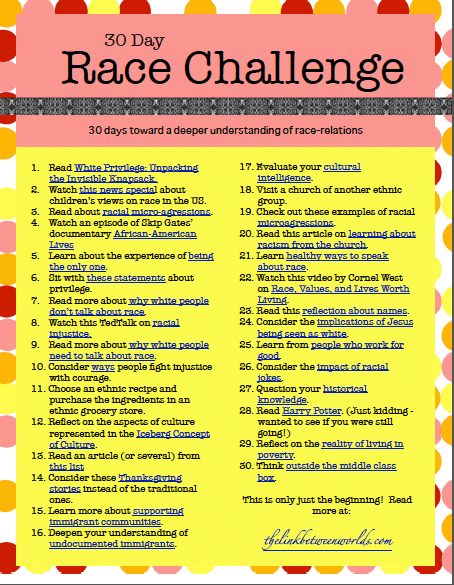
30 Day Race Challenge

When I saw the 30 Day Mom Challenge, I was inspired to create a similar challenge for people who want to develop a deeper understanding of race.  So, I developed the resource below with links to some thought-provoking resources available on race out there. (Click on the image to open the file and access the links.)  I’d encourage you to spend some time slowly digesting and learning from the resources here.

Screen Shot 2014-01-29 at 1.58.14 PM

You can also download this file here:  30 day race challenge.

The-best-ones

The-best-ones-in-February

The-ones-about-race

How I learned to stop worrying and love discussing race by Jay Smooth.

(TedxTalk) “We deal with race and prejudice with this all or nothing, good person/bad person binary in which either you are racist or you are not racist. As if everyone is either batting a thousand or striking out every at bat. And this puts us in a situation where we’re striving to meet an impossible standard. It means any suggestion that you’ve made a mistake, any suggestion that you’ve been less than perfect, is a suggestion that you’re a bad person.”

What white people need to learn by Mary Alice Daniel.

“Whiteness was never about skin color or a natural inclination to stand on one’s own; it was designed to racialize power and conveniently dehumanize outsiders and the enslaved. It has always been a calculated game with very real economic motivations and benefits.”

To the (Probably White) person who says it shouldn’t be about race by Jelani Greenidge.

“When you say you don’t want to talk about race, you are, intentionally or not, implying that this history is irrelevant to the current state of affairs. This is not only logically inconsistent, but from my vantage point, personally offensive.”

The-ones-that-made-me-think

Why I don’t go to church very often, a follow up blog by Donald Miller.

“I’d say half of the most impactful people I know, who love Jesus and tear up at the mention of His name, who reach out to the poor and lonely and are fundamentally sound in their theology, who create institutions that feed hundreds of thousands, do not attend a traditional church service. Many of them even speak at churches, but they have no home church and don’t long for one. They aren’t wired to be intimate with God by attending a lecture and hearing singing (which there is NOTHING wrong with) they are wired to experience God by working with Him.”

One-dimensional stories by Marilyn Gardner.  

“The one-dimensional stories consolidated into 140 characters and labeled #SochiProblems display a troubling ethnocentrism, failing to give valid critique and thoughtful response to a city and an entire country.”

Omaha! Omaha? by Kyle.

“A tale of two cities. I found myself momentarily perplexed after reading two separate articles about the same city. Omaha, NE was featured in an International Business Times online newspaper as, “…The Most Dangerous Place in America To Be Black“…  Strangely, as I was thinking about this article my wife brought to my attention another article about Omaha, Nebraska. The following article written by David Cross of Movoto. The article is entitled, “The 10 Best Cities to Raise a Family in America“. This was going to be interesting…  It is important to remember that there are human beings dying on the streets of mid western and east coast cities. The problem with Omaha is that both articles are true. We simply need to determine whose reality are we talking about.”

The-ones-that-told-the-truth

Anchorman Christianity by Erik Parker.

“I have seen many churches trying anything to get people to stay, to come back, to be seen. These efforts have resulted in a trend that I have been trying to name, and I have finally come up with something: Anchorman Christianity.”

I hate when I look racist by Nathan Roberts.

“I hate when I say or do something racist. I hate even looking like a racist. I hate it when I use a hurtful pronoun to describe a minority group….I hate it when my ignorance shows through….And I hate when I freeze because I don’t know what to do when other white people say something racist.”

Shit happens and other theological bumper stickers by Kelsey Munger.

“Why do bad things happen? I used to be the girl with all the one-line answers, but now the honest truth is that I don’t know. And I suspect the answers are more complex and messier than we might like them to be.”

Am I a bad mother or did Africa run out of shoes? by Rachel Pieh Jones.

“But may I never make the conceited choice of masking my parenting weaknesses behind living in the developing world, may I never make the selfish choice of blaming my failure to do something for my family on my expatriate status. May I never choose to say ‘Africa has run out of shoes’ so that I will look like a better mother. And maybe, if I learn to speak more wisely and accurately, I can help begin a small trickle of change. Maybe people will begin to see Africa not as a continent of lack but of beauty and strength and power and growth.”

The-coolest-infographics

Interracial Relationships that made History by PBS Black Culture Connection.

America’s Growing Religious Diversity by Emily Fetcsh.

Popular-on-BW

Dear ‘Merica: A Lament.

“These days, I lament how frequently I hear this story of us vs. them – a story that says everyone needs to be just-like-us-or-get-the-hell-out; a story that forgets that most of us were immigrants-learning-English ourselves not too long ago; a story that demonizes the other side without ever actually getting to know them.”

Why toys need to reflect racial diversity (Here’s lookin’ at you, Lego!).

“As we’ve raised biracial children, we’ve searched long and hard for toys and books that reflect a wide variety of experiences, backgrounds and perspectives. It hasn’t always been an easy or successful effort, but it’s been an important way we affirm this piece of our children’s identity. As a result, while a few may view such a petition as ‘silly’, I view it as yet another small step toward leveling the playing field in our broken racial history, and an opportunity to tell a new story to our children.”

4.5 tips to help white people talk about race

“One of the most common reasons I hear white people say they don’t talk about race is fear of saying the wrong thing. I know many, many people who don’t want to be offensive, but who also simply have no idea how to have a conversation on race because they’ve never had one. They may care deeply, but without experience or understanding of race in their own lives, they bumble through such conversations, hoping for the best but not really knowing if they’re helping or hurting.”

Culture & Race

Confusing the ‘American Dream’ for the Good Life

I’m guest posting today at A Life Overseas about the temptation for people around the world to pursue the hollow and meaningless parts of American culture.  Here’s a quick excerpt:

In class, my Burkinabé students echoed similar assumptions, believing that American streets were literally paved with gold.  Consequently, it wasn’t difficult to understand why a ticket to America was their dream come true (especially since most of the roads in Ouagadougou, Burkina Faso’s capital city, were not paved at all).  This mentality recurred throughout Ouagadougou – American flags on T-Shirts, pictures of American movie stars on billboards, or American rock classic playing in restaurants.

“This isn’t what you want,” I challenged my students one day as we discussed the opulence of American culture, “I know it appears enticing, especially in comparison to the poverty, hunger, and injustice people here face on a daily basis.  But what I see being chased – the pride of “image”, the greed of materialism, the selfishness of “independence” – is a façade.”

Read the whole article here.

Culture & Race

Elephant parking lots, tribal music, and the problem with stereotypes as stories

“Stories matter. Many stories matter.
Stories have been used to dispossess and to malign,
but stories can also be used to empower and to humanize.
Stories can break the dignity of a people
but stories can also repair that broken dignity.”
– Chimamanda Adichie

~

I attended a small liberal arts college in the the middle of a cornfield where most students, like me, hadn’t had a great deal of exposure to the world at large.  Many naively highlighted their ignorance in speaking with the international and urban students about their homes.

My roommate, who came from the Bahamas, was asked how long it took her to drive home.  My husband convinced a girl that he rode an elephant to school and parked it in an elephant parking lot.  Others were asked if they wore clothes, drove cars, and watched TV.

As Chimamanda Adichie so eloquently explains in the TedTalk below, my classmates were subscribing to the ‘danger of a single story’, the notion that everyone from one place is the exactly the same.  She tells a story of how her college roommate asked to hear her tribal music and was disappointed when she played Mariah Carey. Adichie admits freely that she has held very similar perspectives throughout her life – believing that the poor are only poor, unable to demonstrate any qualities aside from poverty.  While there are certain contexts in which the simplistic understanding a stereotype provides can be helpful, there are far more contexts where it’s harmful.

While the framework stereotypes offer provide a basic understanding of a culture or place, they grow quickly harmful when we don’t look past them for several reasons:

Stereotypes make us think we understand.  In the current American political wars, I hear both sides regularly assume they understand the ‘other side’ whether it be conservative or liberal.  “They’re so simple-minded and backwards,” the coasters whisper about the inlanders.  “They’re so snobby and elitist,” the inlanders whisper back.  I’ve lived in both places, and can affirm that they’re all far more complex and nuanced and human than each side gives each other credit for.

Stereotypes silence the exceptions.  When a person is gifted to work in a particular area their culture does not typically value, feelings of isolation become a familiar friend. Women in ministry often feel this rub, as do people of color who work in predominately white settings.  Yet God does not gift by gender or race but by individual.   Operating by stereotypes of these groups silences the many who don’t fit in the box they create.

My ESL students surprise me with their exceptions all the time.  I once had a particularly raucous Chinese woman in class.  One of my Latina students gently inquired about this aspect of her personality one day, explaining that most Asian women she knew were much quieter than this particular woman.  The Chinese woman laughed loudly and responded, “They may be quiet on the outside, but they’re LOUD on the inside!”  When we don’t actively work to see past stereotypes, we miss the opportunity to learn more deeply from the exceptions that exist within larger groups.

Stereotypes dismiss the individual.  One of the great gifts of being human is our ability to express individuality.  I don’t speak of this in a fiercely-independent-American-sort-of-way, but with a mind that acknowledges the uniqueness each one of us carries within.  When I taught in a predominately African-American middle school, I would cringe when I overheard white teachers commenting how “black kids are loud” or “that Mexican didn’t understand me” because I knew very well that I had plenty of quiet black students in class and Mexican students who understood every word I said.  The sweeping statements painting a picture of the whole culture dismissed the individuality of the people within it.

Stereotypes perpetuate oppression.  Nowhere is this currently seen more clearly than in the treatment of women around the world.  From unrealistic photo editing to over-princessing little girls to sex trafficking, women are portrayed in grossly stereotyped and oppressive ways.  Similar oppression continues across ethnic, race, and class lines to this day.  Black men face significantly higher rates of arrest than their white counter parts.  Rich boys suffering ‘affluenza’ are given probation instead of jail time for causing a deadly car crash while the poor remain perpetually without defense.

Instead of perpetuating the short-sighted stereotypes, may we be people who seek the deeper stories that give voice instead of silence it and that restore dignity instead of dehumanizing.  

Related Posts

Books, Women

Wonder Women: Navigating the challenges of Motherhood, Career and Identity | a book review

The Barna Group recently published a new book series called “Frames“, a series of short but meaningful issues people face in modern society. Wonder Women: Navigating the Challenges of Motherhood, Career, and Identity packs its 84 small pages full of rich statistics and ideas for women to explore.  Their logo of ‘read less, know more’ proves quite accurate.

Since I’m forever sorting out how to prioritize and balance my life responsibilities, I appreciated the pause to sit with Kate Harris, the executive director of The Washington Institute for Faith, Vocation and Culture, as she reflected more deeply on questions of how women in all stages and phases of life explore ideas like vocation, creativity, constraints, and community.

Wonder Women was a quick read (I finished it on the couch while my kids watched two episodes of Ninjago) that left me with a significant amount of both data and ideas to process.  Since I’m a visual learner, I especially enjoyed all the visual data included from the Barna group.  I also appreciated how the book addresses women in a wide variety of situations – single, married, mothers, professionals – without demonizing any of them. One of the most jarring statistics was the high percentage of how many women feel persistently lonely and long for connection with friends.

It left me thinking what a rich experience it would be to read and discuss Wonder Women with a small group of other women to learn how they work out not only the logistics, but the internal details of their lives.  It provides a thoughtful, do-able starting point for women seeking wisdom and wholeness while balancing so many things, and would beat a women’s ministry tea party any day in my book.

Be sure to check out Barna’s other titles in this series on hot topics like adoption, peace, information overload, career, church and education.