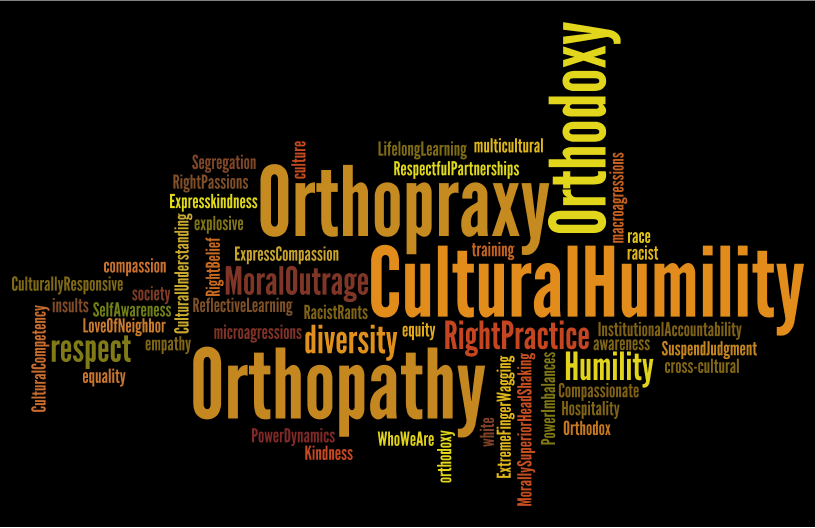
In spite of decades of diversity awareness and training, race continues to be an explosive topic, and the media headlines attest to a continued struggle of our multicultural country to come to grips with its multiple realities. There are microagressions and macroagressions, accidental insults, and purposefully racist rants.
While I don’t believe we can do much to change the extreme ends of the spectrum that refuse to think, question, and consider other viewpoints, I do have great hope for all of those who exist in-between to establish a culture of respect for diversity within society at large. Most white people I know have no desire to be actively racist, but usually either don’t know that they don’t know or have no idea where to begin and no understanding of how to consistently deepen their perspectives.
When a colleague who teaches social work first introduced me to the term cultural humility, I instantly connected to it as a fabulous starting point for cross-cultural relationships. Working in education, I had not yet heard this term that has been gaining popularity in the public health and social work fields for nearly a decade now. While I am quite familiar with the terms cultural competency and being culturally responsive, cultural humility had a whole new feel to it, one that I believe the general public would benefit from significantly given all the public sparring over our differences.
In his recent response to the Donald Sterling fiasco, Kareem Abdul Jabar captured the state of the country well, “Moral outrage is exhausting. And dangerous. The whole country has gotten a severe case of carpal tunnel syndrome from the newest popular sport of Extreme Finger Wagging. Not to mention the neck strain from Olympic tryouts for Morally Superior Head Shaking.”
Something has to give.
We simply can’t keep finger-wagging and head-shaking if we truly want to affect change. This is where I find the concept of cultural humility such a great place to start. Its three basic concepts include:
Lifelong, reflective learning
Respectful partnerships that recognize power imbalances
Institutional accountability
Melanie Tervalon, one of the researchers who coined the term, explains that the ultimate goal of cultural humility is a “sense of equity, equality, respect that drives us forward” (Chavez, 2012). These concepts turn the idea of competence upside-down, for they shift the focus from simply attempting to gather information about people who are different to an approach that shapes how we think and act toward others.
If you’ll indulge the ‘think-y’ side of me for a moment, I want to pull a few more academic/theological terms into the conversation because they address an idea that I believe needs to gain some solid traction in the public conversation. In Christianity, the white evangelical church has spent a great deal of time focusing on orthodoxy (right belief) and orthopraxy (right practice or behavior) of individuals, but not so much time on orthopathy (right passions, emotions, attitudes) in relation to how we interact with society at large.
This lop-sided growth has resulted in some significant holes in our interactions with each other. We can wave our carefully crafted orthodox flags while simultaneously finger-wagging and head-shaking, but we have a long way to go before our we actively lay our flags down, cross lines, and extend a hand of kindness and humility to someone who holds a belief that violates our carefully carved theology.
Lisa Boesen offers a helpful acronym as a guide to ASSESS how to develop consistent cultural humility:
As I write about and live out racial and cultural understanding, one of the strongest realities I’ve seen is that what creates the deepest change in relationships is who we are, not what we know.
In think-y words, this means that orthodoxy, orthopraxy, and orthopathy must be deeply intertwined rather than separate values from which we pick and choose. “We have drawn upon a negative, hostile, and confrontational form of orthopathy,” John W. Morehead reflects on recent evangelical interactions, “and out of this has come an expression of orthodoxy and orthopraxy that has been interpreted as less than compassionate by those outside our faith.”
Rather than perpetuate a hostile orthopathy, Morehead suggests evangelicals (and I would also add quite a few other Christian traditions) have another option, “Evangelicals can reflect on the scriptural call for love of neighbor, and for hospitality to the alien and stranger, and this can then can provide the basis for a reformulation of the form of orthopathy from which our orthodoxy and orthopraxy springs.”
It all leaves me wondering who we would be if the church-at-large and individuals-in-it spent our primary energies cultivating these notions of cultural humility, orthodoxy, orthopraxy, and orthopathy rather than defending our own interests? How would this reshape the imbalanced power dynamics and segregation in the western church as a whole? What if loving-one-another took the face of humility and respect for each other rather than igniting hostility and condemnation?
Instead of exhausting each other with our moral outrage, perhaps such steps would nurture our ability to respond to one another with the kind of sacrificial love Jesus himself taught us. “By this everyone will know that you are my disciples, if you love one another,”Jesus told his over-confident disciple just before he predicted Peter’s ultimate betrayal. Ironic, eh?
While we’re clearly not the first ones to stumble over ourselves in our feeble attempts to follow Jesus, may our imperfections not prevent us from seeking the deep-wisdom of those around us as we walk the winding path of loving one another.
It was a simple statement, created in the moment by one of my Syrian students attempting to form a dependent phrase, but it stopped us all in our tracks. Everyone else in the class (teacher included!) had created much lazier sentences:
“When I’m bored, I watch TV.”
“When I’m bored, I go to sleep.”
“When I’m bored, I use the computer.”
But none of us had considered offering this depth of insight when tackling grammatical structures in English sentences: “When I’m bored, I ask my heart what it needs.” The simple phrasing of his words lingered with me. How often do I ignore what my heart needs by calling it boredom? I wondered silently, the teacher-in-me suddenly becoming a student.
These students. Though they may use broken words at times, they have so much wisdom to share. Perhaps we’d all be a little better off asking what our heart needs before we speak flippantly about our moods.
I spent some time recently chatting with a group of women about what makes us flourish, what makes us feel most alive in the midst of the flurry of jobs and families and ambitions and responsibilities. We had lots of great ideas from the superficial and fun like pedicures and ice cream to the rich and meaningful like chats-with-friends over coffee and quiet-time-away-from-it-all to restore our souls. Some of us cried. All of us laughed. A few of us ached. Others of us shared grateful moments of fulfillment.
I shed a few tears over some breaking dreams and a friend reached to hold my hand. I squeezed back tight. Sometimes in the midst of falling apart, presence speaks so much louder than words.
What I heard most frequently expressed among these women was the same exact sentiment my student had just expressed that very morning: ask your heart what it needs.
Reflect.
Slow down.
Ponder.
Be a friend.
Read a book.
Watch a silly TV show.
Take a walk.
Listen.
Notice.
Contrary to the story of the freeways, we are not meant to live at break-neck speed every minute of the day. Unless we build barriers around and stoplights into our lives, we might hurtle ourselves right over the edge without even noticing.
Though we’d much prefer to speed right through them, even dark and barren days hold deep value for our souls, for what is day without night or a field without fallowness? For our roots to grow deep, we must attend to all the realities of life, not just the easiest ones.
While much in our current culture facilitates a shallow and superficial path, we must dig deeper if we believe faith is more than mere entertainment. “Remind me each day that the race is not always to the swift; that there is more to life than increasing its speed,” writes Orin Crain. “Let me look upward into the towering oak and know that it grew great and strong because it grew slowly and well.”
It’s a bit like asking my soul not what it wants – things to numb or entertain or distract it – but simply what it needs and then working those very things into the daily mundane.
Sometimes it’s the quiet of a walk in the early hours of the morning with a friend or the steady beauty of the mountains at sunset. It can be a slow cup of coffee with my husband, cuddles on the couch with my kids or the hand of a friend reaching out. Sometimes it is letting the tears fall while other times it is letting laughter carve my wrinkles deep.
In his accidental eloquence, my student had captured a truth that we fluent speakers so frequently stumble over: paying attention to our souls gives us life. Living slowly and well shapes our days into flourishing and full lives that paint a backdrop of strength to those living in our shade.
I’m in the midst of some dream readjusting right now, and my mind wandered back to this post I wrote several years ago. I had a nice little chuckle at myself because even though I now live in a ‘cool place’ and actually work with some refugees, I’m still facing the realities of readjusting dreams. Since my time to write has been a bit limited recently, I thought it would be an appropriate throwback post to share for all the other dream readjusters out there.
If I had my druthers, I would have picked a really cool place to live – you know, like New York City, Seattle, or at least Chicago. Then, when I met people from my past and they asked where I lived, I could suavely reply, “New York,” to be inevitably met by an impressive, “Wow.”
I also would have picked a really cool job – like resettling refugees, working in a soup kitchen, being an artist, or something a bit ‘edgy’ like that. Then, when I met new people and they asked what I did, I could respond (with all humility, of course), “Oh, I work in a homeless shelter,” to be met by an even bigger “Wow.”
Then, surely I would be able to saunter down the street in my funky attire and be known as someone who ‘does something worthwhile’. I also am a bit partial to being known as ‘one tough cookie’, but that doesn’t sound nearly as humble.
But, alas, the plan didn’t work.
I live in rural Indiana, drive my kids around in a mini-van, and teach part time at a Christian college – none of which have ever made my ‘cool’ list. I used to live in Washington,, DC, where my husband and I enjoyed spending warm afternoons on the National Mall or hiking around the Potomac River. When I first moved to Indiana, I desperately missed the ‘coolness’ factor of being able to tell far away friends that I’d walked by the White House or attended a peaceful protest/prayer walk past the International Monetary Fund, World Bank, and Capital Building. I mean, it doesn’t pack near the punch to say that you drove by a barn/tractor/cornfield or attended a hymn sing at church on Sunday night. While cornfields in early summer are indeed a sight to behold, they simply lack the impressive aura of the Atlantic coast or the inspiring beauty of the Smokey Mountains.
Everything here is just quieter.
Instead of car horns and sirens, there are birdsongs and rustling branches. Our only version of a traffic jam is getting stuck behind a tractor on a country road, and stop signs are relevant only when a police car is present (because there are rarely other cars at intersections). If you don’t count my neighbor who tests the engine on his race car every day in the summer, life around here is a gentle conversation between two old ladies on a front porch.
I don’t mean to insinuate anything about the folks who actually live in these places or do my definition of ‘cool’ things. I know many of them, and the ones who have settled into these vocations maintain a humility and passion that extends far beyond my egotistical motivations to do such work. It’s more about the gap between my own expectations of what meaningful life would look like, and what meaningful life actually is.
My evangelical brothers and sisters would speak of the grace and truth of Christ as the most meaningful component of their lives. My liturgical brothers and sisters would highlight the mystery and majesty of God. My charismatic siblings would claim joy and redemption. I’m glad they’re all spot-on in their own ways, but also like to think the tangible ways meaning shows up, especially on a day like today (MLK day).
Brave people – this week highlighted several of them for me. First, 37-year-old father, husband, brother, friend, actor lost his 3 month battle with an aggressive form of colon cancer this week. His friends gathered round to hold him up while he walked toward the world where dying is no more. Second, some friends of friends who are missionaries in Haiti. In the midst of surreal tragedy, a mother packed up five of her 7 children and sent them to safety in the States while she stayed to start clinics for the injured. And that’s not even to mention Martin Luther King Jr. and the faithful who carry his dream forward.
Listening people – With my husband in his second year of a PhD program, this is our “long year” where we’re tying a bunch of knots and holding on for dear life. Over some tasty burritos last night, our weary souls were soothed by the listening ears and compassionate hearts of dear friends.
Veiled beauty – even in spite of fog smothering our area for four days straight, I caught glimpse of a beautiful tree while driving home the other day. I wanted to take a picture, but didn’t, and the image has lingered in my mind since. Thankfully, lots of other people think things like this are pretty too, and I found some great photos online just like the scene I saw. Somehow, it reminds me of the aforementioned Brave People.
Quietness – being a holiday, the kids and I are off and home relaxing. The kids are busy imagining some great quest, and in my own little quiet space, I’m grateful to ponder everyone else’s great quests, including my own, unexpected as it may be. Sometimes, even though they can grow a bit repetitive, the quietness of these cornfields is terribly good for my soul.
We don’t yet see things clearly. We’re squinting in a fog, peering through a mist. But it won’t be long before the weather clears and the sun shines bright! We’ll see it all then, see it all as clearly as God sees us, knowing him directly just as he knows us! But for right now, until that completeness, we have three things to do to lead us toward that consummation: Trust steadily in God, hope unswervingly, love extravagantly.
“I don’t know what’s wrong,” the concern in the doctor’s eyes told my mother-heart that this wasn’t a good thing. Our 1-year-old daughter had spiked at a fever of over 105 for over a week without any other symptoms. Cautiously, the doctor explained his concern over the lack of additional symptoms because this could indicate a more chronic illness like leukemia or juvenile rheumatoid arthritis or all sorts of other options a mother should not be left to wonder about.
We were completely in the dark, with no answers and no light at the end of the tunnel.
Gratefully, a few days later, my daughter’s tiny neck swelled, indicating a localized infection, and the light flickered on. “Wow, that’s just great!” the doctor exclaimed with relief when we showed him. I didn’t feel quite as relieved as he seemed, but I also knew that it meant there was a symptom to treat rather than more dark tunnels. She ended up with a 2 week hospital stay and surgery at a children’s hospital, but once we found the source of the problem, it was ultimately treatable and relatively short-lived.
My daughter’s hospitalization was neither the first nor last time I have felt lost in such a visionless tunnel. There have been years of questions without answers:
I’ve waited on pins and needles for results of job interviews, medical tests, bank account balances and academic examinations – some with great results and others not-so-much. In every situation, the waiting-in-the-dark is by far the hardest part.
Once there is an answer – good or bad – at least I can begin to deal with it. But darkness? No response? Endless waiting? Unguaranteed outcomes?
This does me in.
I rant to myself or those close enough to me who won’t think worse of me for it. I lose myself online, wasting hours with mind-numbing and meaningless activity. I’m not much of a cryer, but sometimes, when the darkness has threatened to consume everything, the tears have slipped down my cheeks in quiet angst. Other times, in uncharacteristic anger, I have beat my fists on a steering wheel, protected by the privacy of my car, pleading with God to catch some faint glimmer of hope.
There’s plenty of light – both figuratively and literally – where I live now. The sun shines almost 300 days a year, and blue skies are the norm. Life these days offers a buffer that allows me to step back for the moment and ponder the darker days I’ve walked.
What were those years for? I’ve often wondered, or as it sometimes comes out, What-the-hell were you thinking, God?
The answers come slowly – I don’t know that I’ll ever fully understand every dark path I’ve walked. But as my soul rests in the light of these days, one of the truths I consistently see about the dark days is how closely God walks alongside those who don’t know where they are.
I couldn’t see it at the time, but with space to look back, what I remember most vividly are the times when God heard. At the time, of course, it felt like thin air to me, but hindsight paints a different picture:
My shouts ofwhere ARE You?fell onto the pages of Job, Ecclesiastes, Lamentations and the Psalms in good company with a whole variety of other hopeless followers.
My fears of what happens if it all falls apart?unraveled in the safety and faithfulness of loved ones who knew listening hearts and open arms were as valuable as answered questions and systematically constructed theologies.
My questions of will I make it?sunk deep and forced me to grapple with where my strength and hope really lay.
My whispers of are You good?echoed beneath every denouncement of pain-in-the-world that I didn’t understand.
It was not the ‘unshakable faith’ I’d learned as a young believer. This faith-in-the-dark was one that shook to the core. It was, however, surprisingly stronger. Like so many cantankerous souls in the Bible, it left me unafraid to bring my questions to God – both faith-filled and faithless. It blew my faith open wide to allow the possibility for answers to be beyond myself and my control. Ultimately, it brought me to my knees in surrender of all that I held dear – even my own faith.
The lessons aren’t over, I’m sure. The dark days will most certainly come again. While I can’t quite say that I welcome them, neither can I deny the ways they have shaped me. My world would be a very different place without the darkness of the days I’ve known. Though I couldn’t see it at the time, they’ve taught me some invaluable lessons that I carry with me through these brighter days:
Lament. As a young believer, I learned a lot about the value of joy. To my understanding, followers of Christ were happy, well-adjusted, and optimistic. But when those values seemed unreachable, I found all sorts of other stories in the Bible about people who followed God fiercely and yet also raged, lost perspective, and doubted. As they lamented the brokenness within and around them, it changed who they were, how they saw the world and interacted with the people in it. Lamenting created an insatiable thirst for the restoration of the broken, and it often compelled them to pursue healing for the very sorrows they lamented.
Connect. Because modern society is increasingly fragmented and isolated, connecting in meaningful ways with others will be a pivotal component of how we develop in healthy ways. While it’s certainly true that it’s hardest to find another person in the dark, it’s equally true that when we do, we feel much less alone. Sitting in a corner waiting for someone to find us doesn’t work nearly as well as shouting out, “Is anyone out there?” and listening for a response. Sometimes, all we need is to know we’re not alone and the burden instantly becomes more bearable. Even in the darkest moments, being able to share vulnerably in a safe space can create lasting and permanent change within.
Hope. I must admit that in dark days, hope is one of the last things on my mind. And yet hindsight reminds me that it was the darkness of the days that compelled me most strongly toward hope. In my agnostic days, I often commented I didn’t pray at all. In retrospect, I see now that every breath I took was a prayer. I was notat all apathetic about my belief in God, (or in the term my rector Michael Swanson so brilliantly coined, an “apa-theist”), because it shook my soul to imagine that I was left to fend for myself on this chaotic mess of a planet. Even in my greatest moments of angst, my ultimate hope was for hope to actually be possible and not pointless.
If the light of my current days has taught me one thing, it’s that stars shine brightest in the darkest places. As much as I love living closer to a city, I will also admit that the dark and empty places I’ve lived have also offered far more beautiful glimpses of the stars precisely because they taught me how to lament, to connect in vulnerable ways to others, and to hope in spite of the brokenness. As the wounded parts heal, I feel a bit like one of those resilient little flowers pushing its way up through a crack in the concrete, a brief glimmer of beauty blossoming from what once felt so very empty and alone.
When I noticed the hashtag #weneeddiversebooks trending on Twitter tonight, I was completely thrilled and just had to share! (I also found it happily ironic that it was trending on the day the NBA banned the Clippers owner Donald Sterling for his racist comments…)
To which my son promptly added that we also need stories that just don’t explain interracial families, but just present them as normal people.
Make your own sign and take a picture to post on social media May 1-3 to give the movement some traction, and visit the link above to submit it to the Tumblr site for #weneeddiversebooks.
While you’re at it, check out some other posts about the need for increased diversity in children’s exposure to the world:
Jill’s House: Something for you to consider by Scot McKnight. Some friends from college (who I wrote about here) introduced me to this amazing organization that serves families who have children with disabilities. Watch this video and consider how you might get involved.
Serious reading takes a hit from scanning and skimming, researchers say by Michael S. Rosenwald. “Humans, they warn, seem to be developing digital brains with new circuits for skimming through the torrent of information online. This alternative way of reading is competing with traditional deep reading circuitry developed over several millennia.”
How to make Facebook’s changes slightly less annoying by Kristen Howerton. “By some mystery matrix, Facebook is choosing which posts show up in your news feed, rather than just serving up status updates as they come. The result is that older status updates are showing up at the top, and others aren’t showing up at all.”
Biracial, and also black by Martha S. Jones. “Ordinarily, I am silent, listening and taking notes. But by the time I heard a third student say “I am mixed-race, from a mixed race family,” I had set down my notebook and was perched at the edge of my seat.
“Me, too,” I heard myself say. And with that, I knew that the class would be anything but routine. Until that moment, I had always told a neater story about my identity. I was, simply put, black. And about my mother being white? That had been irrelevant for me and my“one drop rule” generation.”
How white parents should talk to their kids about race by Melinda Winner Moyer. “I’ve avoided talking about race with my kids mainly because I’ve thought that racial bias is learned by direct instruction and imitation—and that if I don’t talk about race or act in explicitly racist ways, my kids won’t pick up prejudices. My sources told me that this notion is pretty common; research suggests that nonwhite parents talk about racial identity much more frequently with their kids than white parents do, but that even minority parents often avoid talking about racial differences.”
This is what the average American will look like by 2050 by The San Francisco Globe. “National Geographic covered the changes in America physically as the country continues to be the melting pot for the world and as interracial marriages become more prevalent. “We’ve become a country where race is no longer so black or white.”
the-ones-about-living-between-worlds
We, the people of the globe by Laura Parker. “We are a people made tender by airport goodbyes and flexible by the travel we log after those tears have dried. We are those who open Christmas presents over Skype, who sleep in foreign beds in our home countries, who taste the pain of the missed funeral, the birth, and the regular family dinner after church.”
24 charts of leadership styles around the world by Gus Lubin. “Different cultures can have radically different leadership styles, and international organizations would do well to understand them.”
A year of multicultural picture books for the global child by Meera Sriram. “If you have not been including multicultural books in your reading diet, this is a great beginner’s guide that will last you for the year. The books cover many important and diverse themes like tradition, travel, history, holiday, migration, art and culture. This is a fantastic potpourri of books for children aged three through 12 growing up to be global citizens of tomorrow!”
the-ones-about-immigration
We pray for reform by Sarah Quezada. “For the families left behind that desperately miss a loved one. For the mamas who worry when the woman you brought into this world hasn’t been heard from in too long. For the wives waiting for money from the States but missing the partner who should be at the table.For the babies who’ve not met their papis. For the teenagers who respect the sacrifice, but barely remember their mama’s touch. We pray for reform.”
5 things I learned from immigrants learning English.“Their resilience, fortitude, humor, and kindness are teaching me just as much as I’m teaching them – probably more. “I teach you English,” I tell them in our serious moments. “But you teach me life.”
the-ones-about-faith
The polarization of “Biblical Christianity” by Michael W. Pahl. “The World Vision ruckus was only the latest in a line of once-a-month mêlées among Christians appealing to the Bible over some hot-button issue. And as Christians repeat this reactionary, polarizing approach to every issue that comes up, month after month, year after year, sides are indeed being taken. Some are not even taking sides—tragically, they’re abandoning the attempt to be either “Christian” or “biblical.””
A year of grieving dangerously: An interview with Kay Warren by Timothy C. Morgan. “About two weeks ago, Kay Warren’s anger boiled over. The co-founder of Saddleback church wrote on Facebook, “As the one-year anniversary of Matthew’s death approaches, I have been shocked by some subtle and not-so-subtle comments indicating that perhaps I should be ready to ‘move on.’ … I have to tell you – the old Rick and Kay are gone. They’re never coming back. We will never be the same again.”
What does it mean to be white? Resources on white identity development. “Many white people I know haven’t ever given much thought to how their race has influenced them. When other Americans of color talk about their own cultural backgrounds, white people might sheepishly wonder, “What culture?” about their own backgrounds.”
Why we can’t just set race aside. “This is how I perceive the situation,” I’m often known to comment to my husband – even when my perceptions sound so racist I’m embarrassed to admit them, “Help me understand why I think this but feel bad saying it out loud.”
Years of such admissions are slowly helping me understand when my reactions stem from being a cultural majority and when I’m actually allowing more than one perspective to shape my perceptions.”
If you’re new here, or perhaps read occasionally but are interested in reading more, this is a recap of some of my most popular posts. You can also follow Between Worlds on Facebook by clicking Like in the Facebook sidebar to the right or visit the Between Worlds Facebook page. You can also subscribe by email in the sidebar to the right to get new posts delivered directly to your inbox.
We want to say that everything that happens in church is about Jesus, but it’s simply not. There’s a whole lot of culture and power and history and social structure in there as well. Until we acknowledge how these realities shape our thinking, we’re going nowhere.
As we’ve raised biracial children, we’ve searched long and hard for toys and books that reflect a wide variety of experiences, backgrounds and perspectives. It hasn’t always been an easy or successful effort, but it’s been an important way we affirm this piece of our children’s identity.
30 day race challenge: infographic linking to resources for people wanting to develop a deeper understanding of race.
101 Culturally Diverse Christian Voices: listing representing the wide variety of Christian voices speaking about or living out their faith in the public sphere.
I know firsthand that you don’t easily know what to do with people who are not like you. Our biracial and bicultural and multilingual-but-English-speaking family lived among you in a tiny little cornfield town for 8 long and painful years, enduring glares and scowls, holding hearts and sighing wearily with the very-few-others-like-us. You love yourselves well, but you did not love us at all.
“This isn’t what you want,” I challenged my students one day as we discussed the opulence of American culture, “I know it appears enticing, especially in comparison to the poverty, hunger, and injustice people here face on a daily basis. But what I see being chased – the pride of “image”, the greed of materialism, the selfishness of “independence” – is a façade.”
At first, I was a bit hesitant, wondering if the evil, the battle, the fear that rages in the story of good vs. evil would be too much for them. But as we read, I grew more convinced that this was more than an entertaining story, it was food for their souls.
The first time I heard you say you had a dream, I didn’t know it would be for my children. But in those first moments when I stared into their deep brown eyes, held their tiny caramel hands in my pale ones, and paused to consider the ‘content of their character’, my heart whispered your words to them.
While comparatively few are called to such an intimate cross-cultural partnership, all Christians have a responsibility to seek reconciliation across barriers.
A long(er) view of intercultural marriage. Exploring characteristics of ‘deeper intercultural marriage’: grace, insight, sacrifice, flexibility, patience, patience, honesty, friendship.
The dementia had stolen him from us one-slow-day-at-a-time, and replaced his jolly warmth with violent reactions and confused arguments. It was like having a three-year-old in the family all over again.
Though I cannot promise you it will be a simple path, I can attest mightily to its richness and depth. For in every failure, there is forgiveness, in every brokenness – healing, and in every sorrow – restoration. It will surely not appear in the ways you expect, nor as easily as you hope, but as you walk in Christ’s way, it will come, steadfast and sure.
In the earliest years of parenting, our decision to travel with our children was merely a hunch that it would be good for them in the long run. “Start as you mean to go on” became our motto, for we wanted the world to be something that was as much a part of them as their hometown, and we knew that to do this, it should be something they had always known.
The warm breeze blew romantically that evening, enticing me to relish that moment of my children dancing, twirling in their joy-filled innocence. It will not last long.
I’d now climbed right up on my own soapbox behind Annie, fully entrenched in my private choruses of “You go, girl!” She’d hit the nail on the head. These rogues – they were crazy. They converted unethically, didn’t think about anything critically, and threw their Bibles around carelessly defending their narrow-minded political causes.
Truly, the heart is deceitful above all things; and it was in marriage that we finally were forced to face our long denied deceit of stubborn habits, selfish expectations, and unrealistic dreams.
Truth-tellers are wired to poke holes, ask questions, point out inconsistencies, question accepted norms – often for the value of the greater-good, but usually at the cost of keeping-the-peace.
From the movies, I learned that love was a magic carpet ride full of wonder and adventure, a prince arriving to save me at just the right moment, or swirling around a ball-room in a place I didn’t really deserve to be. I learned that ‘being in love’ meant swooning emotions, pretty dresses and palpitating hearts.
There were no Disney movies, however, about crying angrily on the way home from church or getting up with screaming babies six times in the middle of the night or being overly snippy with your spouse.
As the years have passed, I’ve discovered ways of walking with God that offer more sustenance than my questions. These paths are why I’ve stayed, and why I continue to seek life in Jesus even when I don’t fully know all the answers.
Favorites
Still want to read more?!? Check out my monthly compilations of some of the best reads on the web here.
To the casual observer, it would be easy to assume that they are the ones who need me. They’re new here – foreigners from every corner of the globe learning the ways and words of a new land.
Me? I’m the ‘native’, able to translate the words and explain the customs. I’ve spent years studying how to teach English as a second language and even get paid to pass along my knowledge. I know the nooks and crannies of this crazy language and play the role of a seasoned tour guide helping my students navigate the complex streets of grammar and spelling and pronunciation.
But don’t let that fool you.
Their resilience, fortitude, humor, and kindness are teaching me just as much as I’m teaching them – probably more.
Click here to read the rest of my guestpost today about the gifts of working with adult immigrants on Rachel Pieh Jones’ site, Djbouti Jones.
Liked this post? Don’t miss this post on immigration:
YouTube has taught us all that sometimes nothing is as powerful as a video clip that delivers a powerful, memorable message in less than 5 minutes. I’ve found videos endlessly useful as a means of starting productive and thoughtful conversations about issues of issues surrounding diversity, whether in the classroom, on Facebook, or in personal conversations with family and friends. The videos below are the best I’ve found (with a little help from my friends – thanks to those who gave me ideas for this!).
On race & stereotyping
What kind of Asian are you?
Scene from Crash
Racist harrasses Muslim cashier
Guy brings his white girlfriend to barbershop in Harlem
How to tell someone they sound racist
Moving the race conversation forward
The Lunch Date
A look at race relations through a child’s eyes
African men. Hollywood stereotypes
The women of Nyamonge present: Netball
UCLA Girl’s Offensive Asian Rant
(be sure to watch the response below)
Asians in the library of the world: a persona poem in the voice of Alexandra Wallace
A trip to the grocery store
(1)ne Drop
Make sure to watch their other videos about race here.
5 Things White People Should Do to Improve Race Relations
Harvard professor Henry Gates Jr. on his arrest
Lin’s success crosses racial boundaries
On privilege
Africa for Norway
Cadillac Commercial (Make sure to watch Ford’s response to this commercial below)
Ford’s response to the Cadillac Commerical
On white privilege
Make Poverty History
Giving is the best communication
On diversity
America, the beautiful
It’s beautiful, behind the scenes
Ethnicity matters: The case for ethnic specific ministries
Move – Around the World in 1 Minute
Where the hell is Matt? 2012
The world’s most typical face (National Geographic)
Reconsider Columbus Day
On Immigration
A new dream: Evangelical undocumented immigrants tell their side of the story
Every so often I’ll hear white people pull out suggestions like these in conversations about race. I’ve probably even said such things myself at some point, for it wasn’t until I read Stephen Brookfield’s article Teaching about Race that the impact of such statements fully clicked:
Assume that for students of color race is evident in everything – how we name ourselves, what we consider as respectful behavior, how we think a good discussion goes etc. The freedom to say ‘let’s put race aside’ is something Whites have – they can ‘choose’ when to switch the racial perspective on or off.
A friend had sent me Brookfield’s article and wanted to know my opinion of it. “I’d like to get your take on the post-colonial condescension idea in relationship to the work you are doing and what I am finding/experiencing,” she wrote of her current dissertation research. “You seem to be so FREE from this in your writings and persona.”
Internally, I chuckled. She clearly didn’t live with me. My first reactions are quite frequently just as ‘white’ as the next person. But I also knew there was a slight difference in my life, too.
“It’s love,” I thought, almost without thinking. Being the only white person in my house, it’s next to impossible for any opinion to leave my mouth without also being filtered through three non-majority-race experiences. Because our conversations happen in a place where the undercurrent love, there is an inherent safety for honesty, even when conversations are contentious and hard.
“This is how I perceive the situation,” I’m often known to comment to my husband – even when my perceptions sound so racist I’m embarrassed to admit them, “Help me understand why I think this but feel bad saying it out loud.”
Years of such admissions are slowly helping me understand when my reactions stem from being a cultural majority and when I’m actually allowing more than one perspective to shape my perceptions. Sometimes it’s hard to tell, but as my understanding of racial experiences other than my own grows, explanations like Brookfield’s about white perceptions of race make more and more sense inherently.
While marriage is definitely one way toward this understanding, it’s certainly not the only one. I know others who have gained deeper understanding through friends, roommates, churches, neighbors, living abroad and working in cross-cultural contexts. It doesn’t always happen, mind you. There are plenty of patronizing white folks who think they’re helping when their ignorance is actually feeding their own egos and making situations worse. A huge key to authentic understanding is when people take the time to listen and don’t assume their perspective is best, or even ‘normal’.
Another key is that they place themselves under the leadership of people who aren’t white. As Soong-Chan Rah is known to say, if white people haven’t ever had a non-white mentor, they won’t be true missionaries, they’ll simply be colonialists all over again. Without the presence of a perspective to speak a different story into our own, it’s really tough to consistently consider how others might perceive situations and understand how our ignorance inflicts more harm than help. This is one of the reasons I occasionally post resources like the ones below – to help facilitate access to and highlight the value of these voices.
When we only listen to ourselves, we lose the ability to understand others. When we don’t understand others, we segment and isolate and operate solely out of stereotypes and fear. We assume and second guess and overreact. Life is definitely easier this way – one look at the world tells us so; but it is not the way of Christ when we seek to walk in his commands by loving one another.
In liturgy, we confess our lack each week: We have left undone those things which we ought to have done; and we have done those things which we ought not to have done. The church’s often passive and dismissive response to racial brokenness falls mostly under the category of “those things which we ought to have done”. These things we leave undone – failing to seek understanding, compassion and empathy for others – are perhaps one of the greatest sins of omission in the church today.
Quite frankly, I also find that they’re one of the greatest challenges in my own life. It’s a whole lot easier to ignore something than to actively engage it – especially because I come from a culture that discourages direct confrontation. My own sins of omission often stem from a sense of lostness about knowing how to start. The Greek philosopher Epictetus offers sage advice to reluctant pilgrims like me, “First, learn the meaning of what you say. Then, speak.”
When it comes to race, too many of us are speaking before we understand, and it’s time we more seriously heed Paul’s wisdom to slow our speech down and speed our listening up. Understanding comes only after we take the time to listen, for in listening to others, we learn their stories. When we know another’s story, our ability to love them also expands, both in word AND deed.
In the scheme of things, isn’t love what it’s all about anyway? Not the syrupy, American, Disney type of love, but the deep and wide sacrificial love of Christ for a broken and beautiful world.
I’ll be the first to acknowledge that the racial conversation is a rocky and winding road, but avoiding it won’t make it go away as some would suggest. The only way out is through, and the way-through requires something we must all practice afresh every day:
It’s love.
My heart knew before my brain even had a chance to kick in.
We rejoice in our sufferings, knowing that suffering produces endurance, and endurance produces character, and character produces hope.Romans 5:3-4
When my nieces were little, I once watched from the corner as scheming-older-sister tormented innocent-baby-sister when Mom wasn’t looking. Older-sister would lean hard on baby-sister’s back, bending her little body in two, forcing her forehead as close to the ground as she could get. Baby-sister fought back fiercely – I watched her little face turn red in silent effort to withstand her sister’s pressure – until her nose was barely an inch from the ground and she let out a shriek that made big-sister relent and quickly attempted to tell angry-mom that she hadn’t “do-ed anything” to make baby-sister cry.
I spent most of my twenties feeling a lot like baby-sister. They were a decade when I learned the harsh reality of theory-meeting-practice, and the times in life Paul refers to as ‘suffering’. There was a lot of fierce and silent enduring, being bent in half until I just couldn’t take it anymore and let out a shriek to the sky, hoping someone would come to my rescue.
As I approach my 40s, I’m starting to see the benefits that the fierce bending of my 20s forged. I remember reading Romans 3 as though it were a linear process with a definite end point – suffering formed endurance which created character which turned into hope. At the time, I estimated I was firmly rooted in the suffering stage. Over the course of a few years, I noticed that the ‘suffering’ seemed to be subsiding and life seemed to require more endurance.
Aha! I thought. I’ve moved to the next step. Suffering: check. Good thing I’m done with that. On to endurance!
Predictably, endurance showed up as a main act in my life. My early thirties brought stubborn toddlers, a husband entrenched in a PhD program, and an isolated life in the middle of a cornfield that was exactly the opposite of everything I had ever dreamt for myself. Every day required the drudge of one-foot-in-front-of-the-other. Endurance became my tried and true friend.
In spite of this drudging-reality, many pieces of life were rich and good. Though they threw temper tantrums and reeked havoc on my value of a good night’s sleep, I loved my toddlers in a way I had never loved before. Though my husband both worked and studied full time, he remained a faithful friend and loving father. Though I struggled to walk a different way in a world of sameness, slowly, I found my voice. Though the cornfields often felt silent and empty, my soul reaped the benefits of living in a world without much noise. While the suffering of my twenties had quieted, endurance sang its steady song.
As I walked alongside endurance, I learned some helpful life-skills like ignoring the Jones, practicing the spiritual disciplines, and living my own story faithfully. A square peg in a round hole, I found ample opportunity to practice both kindness toward others and compassion with myself. I didn’t always make it to either one of those goals, but I did get plenty of practice. Eventually, I completely gave up trying to fit in, pierced my nose and leaned hard on endurance to help me seek out the other tender-hearted souls who lived in the margins as well. Sometimes, I wondered if the enduring years would ever end.
To my great surprise, they did. I find myself now in a place where there’s space for someone-like-me. I have friends. My work is meaningful and life giving. I delight in my children and thoroughly enjoy my role as their mother. My husband and I sit on our front porch, drink coffee, and chat again like old friends while the kids ride their scooters down the street to the neighbor’s house. No one looks at us like we’re aliens anymore – we blend in just fine. Our community is growing, and daily life feels rich and meaningful and connected. I am happy – perhaps the happiest I’ve ever been in my adult life.
I’d be foolish, however, to somehow assume that happiness equates the-next-Romans-step of character. The happiness is merely a gift-for-the-day – one that I treasure mightily – but one that also has the potential of slipping through my fingers at any given moment. The gift-for-the-lifetime is the character that has been growing beneath it all through the suffering-and-enduring years.
I feel it sometimes, like when I walk down the street and breathe in the mountains, the palm trees and the blue skies, grateful for both the moment-at-hand and all the moments that have been and will be, suffering, enduring and all. I feel it when I want to throw an all-out-internal-temper-tantrum but instead pause and pray simply, Lord, have mercy – on me and all the other crazies out there. I feel it when the day doesn’t go my way and I retreat silently in the evening to rest and refocus rather than sulk and pout. I feel it when my hips round and my body ages and I know there is more to life than bikini worthy figures and wrinkle free faces. I feel it when the character growing slowly within starts to feel a whole lot like hope.
It’s not all perfect, but it’s changing one slow day at a time. I used to think life was a straight slant upward – once I learned one thing, it would be done for good and time to move onto the next. I now know it’s more like a spiral where we hit the same vertical points that tell the same stories time and again, but at different levels with new skills and deeper levels of maturity and faith. The gift of the Romans 5 spiral of suffer-endure-character-hope is that as it repeats itself in my life, each time carries a bit more faith, hope and love than the one before.
Many white people I know haven’t ever given much thought to how their race has influenced them. When other Americans of color talk about their own cultural backgrounds, white people might sheepishly wonder, “What culture?” about their own backgrounds.
As I looked into what was out there on white identity, I was dismayed to find Jared Taylor’s book White Identity: Racial Consciousness in the 21st Centuryamong the first and most prominent search results. Taylor essentially advocates white supremacy, segregation and racial superiority and completely dismisses the notions of white privilege. While I generally advocate civility across differences, I found Taylor’s perspectives frightening, damaging, and outright racist. Consequently, it was understandably disappointing to for Taylor’s work to be the primary search results of “white identity”.
A simple internet search proves that the loudest people talking about white identity are the blatant-racists and people of color. It was disappointingly tough to find any other voices in the mix. No wonder white people have such difficulty understanding ourselves!
In this spirit, I wanted to create a list of resources that speak to developing white identity from a position of cultural humility and value for understanding ourselves in light of both our history of racial oppression and a modern desire to create an equitable society for people of all backgrounds.
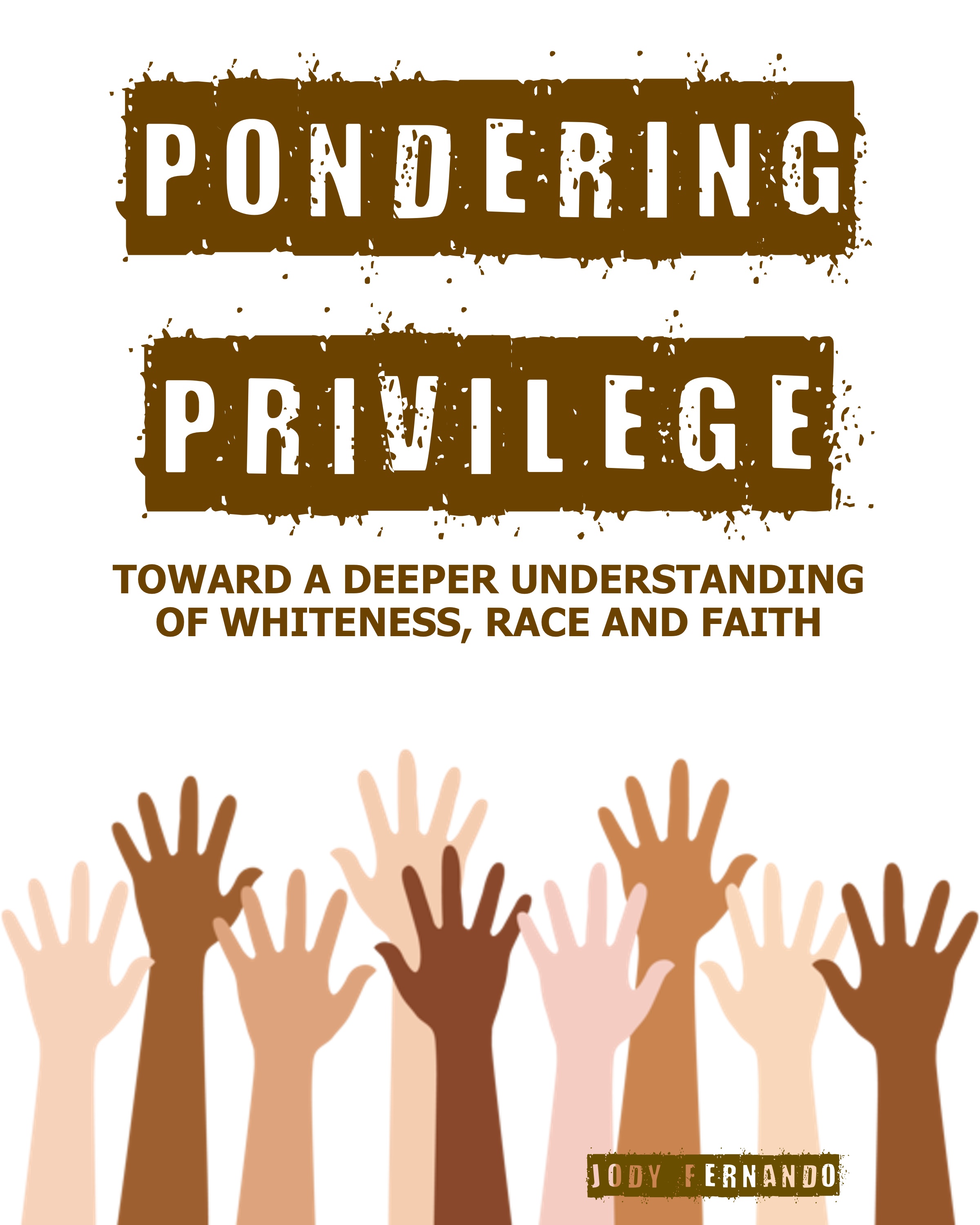
For many white people, race can be a difficult subject to navigate. Some have never discussed the issue at all and may have no idea where to begin. Others, viewing themselves as colorblind, see no need to think about the issue at all. The topic grows even more difficult within the Christian church where it is no secret that Sunday mornings are often more racially divided more than united. Regardless of white people’s ignorance or inability to discuss racial issues, however, they are not going away. Rooted in the concept of cultural humility, Pondering Privilege provides white people an opportunity to spend time more deeply reflecting on their personal perspective of and communal role in race relations by exploring why white people don’t talk about race, why they need to talk about race, suggestions for productive ways to discuss race, and how to deal with anger in race relations. Each chapter includes discussion and reflection questions and is ideal for personal or group use.
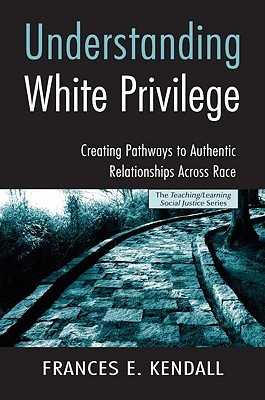
From Amazon: “Racial privilege is hard to see for those who were born with access to power and resources. Yet it is very visible for those to whom it was not granted. Understanding White Privilege is written for individuals and those in organizations who grapple with race every day, as well as for those who believe they don’t need to. It is written for those who have tried to build authentic professional relationships across races but have felt unable to do so. It is written for those who believe strongly in the struggle for racial justice and need additional information to share with their friends and colleagues. Inviting readers to think personally about how race–theirs and others’–frames experiences, relationships, and the way we each see the world, Understanding White Privilege focuses squarely on white privilege and its implications by offering specific suggestions for what we each can do to bridge the racial chasm.”
From Amazon: “Studies of racism often focus on its devastating effects on the victims of prejudice. But no discussion of race is complete without exploring the other side–the ways in which some people or groups actually benefit, deliberately or inadvertently, from racial bias. This is the subject of Paula Rothenberg’s groundbreaking anthology, White Privilege.
The new edition of White Privilege once again challenges readers to explore ideas for using the power and the concept of white privilege to help combat racism in their own lives, and includes key essays and articles by Peggy McIntosh, Richard Dyer, bell hooks, Robert Jensen, Allan G. Johnson, and others. Three additional essays add new levels of complexity to our understanding of the paradoxical nature of white privilege and the politics and economics that lie behind the social construction of whiteness, making this edition an even better choice for educators.
Brief, inexpensive, and easily integrated with other texts, this interdisciplinary collection of commonsense, non-rhetorical readings lets educators incorporate discussions of whiteness and white privilege into a variety of disciplines, including sociology, English composition, psychology, social work, women’s studies, political science, and American studies.”
From Amazon: “What does it mean to be white? When you encounter people from other races or ethnicities, you may become suddenly aware that being white means something. Those from other backgrounds may respond to you differently or suspiciously. You may feel ambivalence about your identity as a white person. Or you may feel frustrated when a friend of another ethnicity shakes his head and says, “You just don’t get it because you’re white.”
So, what does it mean to be white?
How can you overcome the mistakes of the past?
How can you build authentic relationships with people from other races and ethnicities?
In this groundbreaking book, Paula Harris and Doug Schaupp present a Christian model of what it means to be white. They wrestle through the history of how those in the majority have oppressed minority cultures, but they also show that whites also have a cultural and ethnic identity with its own distinctive traits and contributions. They demonstrate that white people have a key role to play in the work of racial reconciliation and the forging of a more just society. Filled with real-life stories, life-transforming insights and practical guidance, this book is for you if you are aware of racial inequality but have wondered, So what do I do? Discover here a vision for just communities where whites can partner with and empower those of other ethnicities.”
From Amazon: “Walk into any racially mixed high school and you will see black youth seated together in the cafeteria. Of course, it’s not just the black kids sitting together-the white, Latino, Asian Pacific, and, in some regions, American Indian youth are clustered in their own groups, too. The same phenomenon can be observed in college dining halls, faculty lounges, and corporate cafeterias. What is going on here? Is this self-segregation a problem we should try to fix, or a coping strategy we should support? How can we get past our reluctance to talk about racial issues to even discuss it? And what about all the other questions we and our children have about race?
Beverly Daniel Tatum, a renowned authority on the psychology of racism, asserts that we do not know how to talk about our racial differences: Whites are afraid of using the wrong words and being perceived as “racist” while parents of color are afraid of exposing their children to painful racial realities too soon. Using real-life examples and the latest research, Tatum presents strong evidence that straight talk about our racial identities-whatever they may be-is essential if we are serious about facilitating communication across racial and ethnic divides. We have waited far too long to begin our conversations about race. This remarkable book, infused with great wisdom and humanity, has already helped hundreds of thousands of readers figure out where to start.”
From Amazon: “White Like Me is one-part memoir, one-part polemical essay collection. It is a personal examination of the way in which racial privilege shapes the daily lives of white Americans in every realm: employment, education, housing, criminal justice, and elsewhere.
Using stories from his own life, Tim Wise demonstrates the ways in which racism not only burdens people of color, but also benefits, in relative terms, those who are “white like him.” He discusses how racial privilege can harm whites in the long run and make progressive social change less likely. He explores the ways in which whites can challenge their unjust privileges, and explains in clear and convincing language why it is in the best interest of whites themselves to do so. Using anecdotes instead of stale statistics, Wise weaves a narrative that is at once readable and yet scholarly, analytical and yet accessible.”
As both a parent and a teacher, I have come to view teachers as one of the primary gatekeepers of cultural change and understanding. When teachers understand and present the value of diversity, children learn a new reality that subconsciously shapes their entire worldview. As a result, I believe that a fundamental skill of teachers of every student at every level is both intercultural and racial understanding. The books below are written specifically to help educators develop this understanding.
From Amazon: “This monograph is focused on educating faculty and administrators about the developmental issues faced by students from different racial, ethnic, or other social groupings as they attempt to define themselves during the college years and the ways this information can enhance campus classrooms, programs, and policies. Although there is a growing body of work on how various racial, ethnic, gender and other social groups develop their identity, there has been limited synthesis or application of this literature to the practice of professionals in higher education. The authors have higher education administrative backgrounds, so their recommendations are grounded in experience, and each also has a solid record of scholarship in identity development. The combined scholarly and administrative experience of the three authors enhances the contribution of this book.”
“Courageous conversations” has got to me one of my personal favorite sayings, and this book offers great insights on how to begin such dialogs. The purpose of the book is to help educators work to close the racial achievement gap in public schools and it explores this through examining characteristics, foundations, and keys to anti-racist leadership. A facilitator’s guide is also available for purchase.
A powerful book on the impact of white teachers in multiracial schools, Gary Howard’s book is a “Racism 101” text for teachers stepping into the racial dialogue. It’s a remarkably powerful book that chronicles Howard’s own journey toward a deeper understanding of race.
(acts 3)
ironically,
your warped body
begged by day
at a gate called
Beautiful –
something
you were not.
most people at the courts
looked through you,
never at,
for fear, perhaps,
of ruining the Gate’s name.
but they looked –
the disciples of One
to whom “beautiful”
meant more than
straight anklebones.
and then you
walked,
skipped,
leapt,
twirled,
danced,
and probably cried
at the beauty
of moving
for the
very
first
time
in your life.
I first read Where is God when it Hurts as a young 20-something agnostic. Yancey’s delicate and thoughtful exploration of the reasons behind the presence of pain in the world spoke to many of the questions that had left me questioning the existence of a loving creator. Intrigued by what I read, I devoured the rest of his books, my other favorites being Disappointment with Godand Soul Survivor: How my Faith Survived the Church. Unlike other books I’d read, these were not apologetics as much as they were simple admissions of hard-questions and honest reflections on how he’d walked through them.
While I have slowly returned to faith in the years since my agnostic angst, the questions that Yancey addresses in his writing have never fully gone away. Why do horrible things happen? Is God unfair? Is he silent? Is he hidden?
These questions simmer behind every tragic headline or heart-breaking story I encounter. For awhile, I considered the fact that I couldn’t reconcile a loving God with a tragic world a distinct lack of faith. So I understandably grinned when I came across Yancey’s newest book, The Question that Never Goes Away: Why. A sequel to Where is God when it hurts, his new book examines the questions that the recent tragedies of Newtown, the Japanese Tsunami, and the atrocities of civil war in Sarajevo raise. Because of the relevancy of his book Where is God when it hurts, Yancey was invited to speak in the aftermath of each of these places.
He speaks of these tragedies tenderly and gently, acknowledging with brutal honesty their unimaginable losses and heartbreaking consequences. I’m not much of a crier, but it didn’t even take me 5 pages to tear up. These situations were unspeakably horrific, and their realities left the whole world’s souls aching.
What I appreciate most about Yancey’s writing is his commitment to brutal honesty, willingness to admit that sometimes the answers elude, and conviction that we play a piece of God’s plan to renew and restore the brokenness in our world. He writes,
“Optimism promises that things will gradually improve, Christian hope promises that creation will be transformed. Until then, God evidently prefers not to intervene in every instance of evil or natural disaster, no matter how grievous. Rather, God has commissioned us as agents of intervention in the midst of a hostile and broken world.”
Here’s another gem that captures well his willingness to face the difficulty of pain head-on:
After spending time in Japan and Newtown, I have adopted a two-part test I keep in mind before offering counsel to a suffering person. First, I ask myself how these words would sound to a mother who kissed her daughter goodbye as she put her on the school bus and then later that day was called to identify her bloody body. Would my words bring comfort or compound the pain? Then I ask myself what Jesus would say to that mother. Few theological explanations pass those tests.
Finally – someone has the guts to admit the theologians don’t always have all the answers. Drawing from a rich knowledge of literature and philosophers, Yancey wades through the muddy waters of unanswerable questions with an intense level of equal parts faith and doubt. At one point, he writes about the final question he received in an audience following the Newtown tragedy, calling it the one he most “did not want to hear”: Will God protect my child?
His response:
“No, I’m sorry. I can’t promise that.” None of us is exempt. We all die, some old, some tragically young. God provides support and solidarity, yes, but not protection – at least not the kind of protection we desperately long for. On this cursed planet, even God suffered the loss of a son.
The questions never go away, he acknowledges. However, in the closing chapter of the book, he explores several answers to the question ‘Where is God?’ I highly recommended spending a few hours with this tiny-pack-a-punch (and a kleenex!) book to read more about his conclusions. They’re well worth the consideration should these questions never leave your soul either.
Urban church planting plantations by Christena Cleveland. “In Seattle, Minneapolis, Chicago, Houston, Los Angeles, Boston , Charlotte and many other cities, I’ve seen predominantly white, wealthy suburban churches take an imperialistic glance at the urban center, decide that they are called to “take back the city” and then proceed with all of the honor and finesse of a military invasion.”
the-ones-on-being-a-working-mama
In which I don’t mind if my tinies see me on the computer by Sarah Bessey. “So, is it a shameful thing for a mother to work on the computer while her children are present? Nope. Not only is it not damaging to my tinies to see me – gasp! – working on the computer while they’re here, I believe it’s downright good for them.”
Recline: Why “lean in” is killing us by Rosa Brooks. “Long ago, before Sandberg’s book Lean In convinced me to change my ways, I had a life. I had friends. I had hobbies. I could generally be relied upon to remember my children’s names, though I sometimes skipped their adorable little preschool events to take naps and read novels. I had a job, too, of course, but I also took occasional vacations, knocked off work at a sensible hour and got eight hours of sleep each night. Then I read Lean In and realized that I was self-sabotaging slacker.”
Of symbols and sacraments by Juan Carlos Lopez. “I used to think that Evangelical meant someone who preached the Gospel. Now, not so much. It’s only a way to express our political affiliations.”
The higher cost of loving by John Blase. “But Christ’s wounds keep him forever alien, not fully home, not fully prodigal.”
the-ones-that-should-make-us-pause-for-thought
Please don’t say “They are poor but they are happy” by Rachel Pieh Jones. “If the poor are so happy, that alleviates some of the rich person’s guilt. The wealthy outsider can praise their good attitudes, their thankfulness, they can categorize their smiles in the face of dire circumstances as evidence of happiness. And in doing so, they remove the burden of guilt, complicity, and the pressure to act. The also remove the poor person’s natural human ability to feel complex emotions, happiness being one of the most simplistic emotions there is.”
The immigrant’s dilemma by Tori Marlan. “José Ángel says that if he has no opportunity to adjust his legal status, there are two likely outcomes. The thought of the first, family separation, is unbearable to him. “I’m married to an American citizen, and I have an American child, and I might not be able to stay with them and see my daughter grow up—that’s the part that terrifies me the most, not being with them.” The other, moving the family to Mexico, is almost as terrifying. “It wouldn’t be if Mexico were a more stable country,” he says. “But the news is filled with horror stories: violence, corruption, pollution, lack of opportunity. This is what is waiting for us if we have to go. I don’t want my child to grow up in an environment like that.”
10 reasons why we need research literacy, not scare columns by David Kleeman. “The children and media research community has been buzzing with frustration at the viral circulation of Cris Rowan’s Huffington Post column, “10 Reasons Why Handheld Devices Should Be Banned for Children Under the Age of 12.” The piece pretty well defines “hack-ademic” writing, in which an author throws lots of learned-sounding terms and citations at a lay reader, while obscuring misinterpretations and fuzzy logic. Here are 10 reasons why Rowan’s column is flawed.”
I’m not lazy, I’m a millenial by Megan Egbert. “Escapism from parenting didn’t start with smart phones. It didn’t start with television. Parents escape through a multitude of ways because parenting is flat out hard. My generation sometimes does it through handing their child a device to play on or playing on a device themselves. Those are the tools we know and are familiar with when we need to escape. ”
World Vision, Gay Marriage, and a Different Way Through by Jen Hatmaker. “I am starving for reasonable, measured Christ-followers to become the dominant voices in the ongoing culture wars. We needn’t race to our laptops with our hair on fire every time another Christian offends our personal sensibilities.”
the-ones-about-race
Where are the people of color in children’s books by Walter Dean Myers. “Books transmit values. They explore our common humanity. What is the message when some children are not represented in those books? Where are the future white personnel managers going to get their ideas of people of color? Where are the future white loan officers and future white politicians going to get their knowledge of people of color? Where are black children going to get a sense of who they are and what they can be?”
Metaphysical Dilemma Part 2 by Austin Channing. “Can I be really honest and tell you that as much as I love conferences, I enter them with a certain level of fear and trepidation? My fear is not that I will experience an overt act of racism. I have no fears that I will be stopped at the door or rejected. I have no fears that someone will say or do anything unkind. My fear is not at all physical. Rather I fear the number of ways I will feel devalued, unimportant, sidelined, monolithic, or invisible. I never fear that I will standout. I fear that I will never be seen at all.”
White Privilege Weariness by Austin Channing. “My weariness is rooted in realizing how often starting the race conversation with white privilege automatically centers the experience of white folks. ”
Students see many slights as ‘racial microagressions’ by Tanzina Vega. “What is less clear is how much is truly aggressive and how much is pretty micro — whether the issues raised are a useful way of bringing to light often elusive slights in a world where overt prejudice is seldom tolerated, or a new form of divisive hypersensitivity, in which casual remarks are blown out of proportion.”
Speaking fear, praying Shalom by Osheta Moore. “Baby, we’re black. It’s not safe for us. They’ll shoot first without asking questions, and your stealing only gives them permission not to trust us. It makes murdering us okay. Look at Trayvon Martin. They’re afraid of us. Don’t you see?”
Church: The racial subtext by Kelsey Munger. “How did Best Friend get to the point where she honestly thought there weren’t any good Christian black men in America? Because she’d grown up in a family, a church, and a community that was not only extremely white, they were extremely disengaged and uninterested in issues related to race.”
101 Culturally Diverse Christian Voices: “I’m just tired of only hearing white, mainstream evangelical voices,” a good friend lamented to me recently. “Why aren’t voices from other backgrounds listened to in the same way as the white voices?” I heard the weariness of consistent exclusion in his question, and frankly, wondered the same thing myself.
30 Day Race Challenge: Use this graphic to spend a concentrated time pondering racial issues more deeply.

 In spite of decades of diversity awareness and training, race continues to be an explosive topic, and the media headlines attest to a continued struggle of our multicultural country to come to grips with its multiple realities. There are microagressions and macroagressions, accidental insults, and purposefully racist rants.















 between worlds