Families, Children & Marriage, Social & Political Issues, Travel

Bright smiles and marker caps

I wrote this years ago reflecting on time I spent teaching English in Burkina Faso, West Africa.  Thanks to these children, hardly a week passes that I do think of the realities of children living in poverty.

“Nasara! Nasara!” the children shouted as my moped puttered down their street. I may have been the first white person they had ever seen. “Goo morneen!” they waved. Some wore tattered clothes. Some wore none at all. None wore shoes. Bright smiles dominated their tiny faces.

I arrived at school where I was met by my students, “Goo morneen, Meess. How are you today?” they inquired, taking my books and bag.

“Fine, thanks,” I was overjoyed, actually. Having taught in American public schools, the Burkinabé students continually amazed me with their respect and kindness. Together, we crossed the dusty school yard toward the classroom, dodging an occasional pothole, curious child or stray pig. One florescent light bulb provided light to the classroom. To turn it on, you had to precariously maneuver the wires until sparks flew and the bulb flickered on. Thankfully, my students were more adept at hotwiring light bulbs than I. They had already swept the dust from the room and arranged the desks. Covered in a mix of sweat and red dust, I opened the metal slatted windows to let in a breeze. Four grinning faces stared back at me, eager to catch a glimpse of the nasara. Continue reading “Bright smiles and marker caps”

Families, Children & Marriage

Interview at Offbeat Marriage

Offbeat marriage interviewed me recently about our marriage.  Here’s an excerpt:

What compromises are required in order to make your marriage work?

I knew immediately that my husband would never be happy unless I knew how to cook his food. While this seems like a small thing to someone who’s family eats mostly for nourishment (well, and sweets too!), food to Rukshan = love. This means that I study South Asian cookbooks, drive long distances to Indian grocery stories, and plead for spices to be sent with relatives traveling back and forth. It also means that I don’t really know how to cook typical American dishes and feel a little intimidated if I have to cook for Americans because I don’t really know what tastes good to them. After eating so much tasty South Asian food for 10 years, American food has lost a lot of its appeal (though a juicy hamburger is still hard to beat!!)

You can read the whole interview here.

Families, Children & Marriage, Food

Learning to cook Sri Lankan food *or* Curry: the way to my man’s heart


“But she can’t cook our food!!!” my South Asian friend mourned about his soon-to-be sister-in-law, “and worse yet – she doesn’t even want to learn! How will my brother survive?”

This conversation was my first clue about the kind of adjustments that marrying across a culture would entail.  It was slightly shocking to me that food – something which had been viewed primarily as a practical necessity for nourishment in childhood (well, minus homemade bread, apple pie and ice cream) – could invoke such a passionate response.  I filed our conversation away in my mind and pulled it out again in my first year of marriage to my Sri Lankan husband.

When we met, I had eaten Indian food once and wasn’t real sure what I thought about it.  The most ethnic food we ate in my home growing up was chop suey and tacos, so I was a little nervous about the prospect of even eating Sri Lankan food.  Thankfully, I ended up liking it a lot (actually even more than most American foods!), so we both breathed sighs of relief about my newfound taste buds.  When we married, in addition to curry, I tried to cook a few dishes I knew (which wasn’t much) – tacos, pasta, casserole.  My new husband dutifully tried to eat my favorite dishes, but he clearly didn’t enjoy them.  It didn’t take me long to figure out that Sri Lankan food was his love language, and that curry was a beeline to his heart.  Thus began my journey as a white-girl-turned-South-Asian-chef. Continue reading “Learning to cook Sri Lankan food *or* Curry: the way to my man’s heart”

Books, Families, Children & Marriage

Free e-books for cross-cultural transitions

Missionary care resources is offering free e-book downloads on their website including titles like:

  • Raising Resilient MKs: Resources for Caregivers, Parents, and Teachers
  • We’re Going Home: Reentry for Elementary Children
  • I Don’t Want to Go Home: Parent’s Guide for Reentry for Elementary Children
  • Third Culture Kids and AdolescenceCultural Creations
  • Missionary marriage issues

Families, Children & Marriage

A long(er) view of intercultural marriage

172087165“Many waters cannot quench love,” I pondered Solomon’s words sitting on a dusty porch in West Africa, the afternoon downpour pounding on the tin roof over my head. “But they certainly do a good job trying to drown it.”

My boyfriend was spending the summer at his parent’s home in Sri Lanka while I was teaching English in Burkina Faso. At that time, there was little access to phone lines or email, so our only form of communication was the relentlessly slow exchange of letters. From the beginning, we had both sensed a unique kinship between us in spite of our cultural backgrounds.  However, we also realized that such a relationship carried many complexities, and that our cross-continental lives would not combine easily. When our respective summers ended, we reunited for the fall semester, somewhat unsure of our future together.

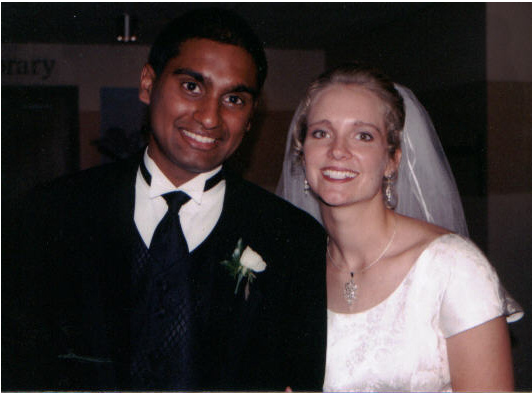
“You remind me of a Sri Lankan girl,” he told me one day, raising his deep eyes to meet mine. I had no idea what a Sri Lankan girl was like, but I was thrilled. Obviously, he connected deeply to something in me, regardless of my cornfield upbringing and blond hair. From the first day we met, I sensed an eerily similar reflection of myself in him. There were moments, of course, when we weren’t sure how to connect – meeting our families, interacting with hometown friends, navigating the chasms between third-world realities and first-world luxuries. While these cultural differences were a significant part of our relationship, our similarities ultimately prevailed. Nearly four years later, we married in a joyful ceremony, surrounded by family and friends from around the world.

Guide me, oh thou great Jehovah. These words sung at our wedding reflect our desire to follow God’s guidance in the steep task of uniting contrasting worlds.We entered the world of intercultural marriage as pilgrims in a barren land, knowing few role-models who had attained such unity across cultural boundaries. Together almost 10 years now, we have two young children and love journeying together through life.

While comparatively few are called to such an intimate cross-cultural partnership, all Christians have a responsibility to seek reconciliation across barriers. In an increasingly diverse society, our ability to establish unity across cultural boundaries is rapidly becoming a key factor in the strength of the church. Because we practice these skills daily, I have found lessons I’ve learned from our relationship to be a microcosm for cross-cultural relations at large.

Here are some skills we find useful in seeking unity across our own cultural differences:

Pay attention, be intentional
Sri Lanka is half way around the world from the U.S. At times, it feels very far away. Being so far removed from our lives, it is easy to fall into an “out-of-sight, out-of-mind” mentality with this part of my husband’s life. This has, at times, caused division between us because an essential part of his personhood lies neglected. Therefore, it is essential to pay close attention to the Sri Lankan part of him, and to seek to incorporate it in our daily lives. We both read the news and follow current events on a regular basis. Our home is filled with reminders of Sri Lanka, from batik wall hangings to photos of sari-clad relatives. We visit Sri Lanka as often as we can afford, prioritizing this over other options, even when inconvenient or complicated. We maintain regular contact with my husband’s family through phone calls, email, and pictures.

In the same way, many live in isolated communities and interact little with other cultures. People in these communities can make intentional efforts to consider differing perspectives by reading books or watching films, as well as by traveling to places where they interact across cultures. Just as I must intentionally seek to pay attention to my husband’s culture, so can people pay attention to cultures outside their own as an effort toward unity. As current events, dialogue, and perspectives from other cultures are encountered, a broader way of thinking and interacting with others naturally develops.

Share honestly, listen carefully
Romance, while breath-taking, is not particularly characterized by honesty. As the passionate romance of our relationship has settled into a committed, deeper love, we have shared many moments of intense honesty. At times, it is simpler to avoid such conversations, for we each have our own interpretation of “normal” and fear looking ignorant or prejudiced. However, this kind of honesty brings about true compromise, and ultimately, inner change.

Having grown up in a wealthy, stable, and efficient country, I struggle with certain aspects of Sri Lanka’s developing and conflict-filled environment.My husband has experienced these aspects as “normal” for much of his life.Because these perspectives form an integral part of our core-beings, we feel strongly vulnerable when sharing our fears. This fear creates a reluctance to relinquish my expectations of order, cleanliness, and safety, causing me to shut out a cherished part of my husband’s life.

In a similar vain, he has experienced certain “looks”, discomfort, and ignorance when interacting with people from my home. While I hold deep affinity for my home, it is helpful to separate from my personal attachments in order to hear his emotions. In doing this, I listen without defense, letting him process his feelings honestly.

Ultimately, honesty between cultures is not about being right orwrong. It’s about listening and considering another’s experience without defense or justification. In order to create a safe place for trustworthy relationships, people need to feel they will be heard when sharing honestly.

Be salad, not soup
The idea of a “melting pot” denies the individual characteristics that exist within cultures. A mixed salad is a more accurate comparison, as it contains various ingredients that compose one dish, yet retains unique qualities rather than dissolving everything into the majority flavor. Likewise, in our marriage, we attempt to value the individuality of each other’s cultures.

One way we love each other is by knowing about each other’s homes.For example, my husband knows things about my small hometown that only “insiders” know. He knows where the locals eat a hot breakfast, and the names of high school basketball players. Because he pays attention to my cultural background, I sense a deep love for who I am and where I come from. In the same way, I don shalwar kameez (a traditional Sri Lankan dress) every so often, can cook a mean curry, and enjoy building relationships with his family and friends. Each trip to his home increases my understanding of who my husband is.

When the majority culture blindly expects others to follow their lead without knowledge of other perspectives, they subtly send the message, “You are not important to me. Your importance is to make me comfortable.” Loving across cultures means that both sides release their grip on familiarity in order to experience deeper flavors of diversity.

While many waters could not quench our love, their rough waves have certainly smoothed our rough edges. In all of these ways, we embrace our own culture while keeping our arms open to the other. Guided by our great Jehovah each step of the way, we find deep richness in loving across cultural boundaries. Our hope remains that the church will deepen in its ability to love across such boundaries as well.

Books, Families, Children & Marriage

Books on Intercultural Marriage

Just starting out?

Mixed Matches by Joel Croehn. A very detailed and well-researched book that examines interracial, interethnic and interfaith marriages, Mixed Matches helped me start to sort out what qualities were most important to me in a ‘mixed’ marriage. Continue reading “Books on Intercultural Marriage”

Families, Children & Marriage, Women

Confessions of a Slow Mama

The moment a child is born, the mother is also born.
She never existed before.
The woman existed, but the mother, never.
A mother is something absolutely new.
-Rajneesh

When I was pregnant, a friend of mine told me that her mother hadn’t been much into babies.  She chuckled a bit as she recounted her mom’s comment, “I didn’t even like you until you were three.”  In the midst of the mystery and sentiment of pregnancy, I had a hard time following her mother’s thinking.  I mean, life was growing inside me – precious, beautiful, mysterious life! How could someone not like a baby?!?  While I chuckled at the sentiment, I couldn’t quite grasp it, that is, until one actually showed up in my arms.

I suspect my inability to understand had something to do with the fact that I had not yet lost years of sleep, been puked on (and more!) multiple times, gained over 50 pounds, spent months nauseated, endured repeated bouts of mastitis, or tried to reason with a screaming 2 year who insisted on watching TV at 2 am.  I also had not yet encountered the daunting challenge of quieting a screaming baby on a 20 hour flight, keeping fingers out of electrical sockets, short-changing engaging conversations with friends/husbands/mothers to clean up the box of cereal dumped on the floor. Continue reading “Confessions of a Slow Mama”

Families, Children & Marriage

Multiracial Family Blog

By birth. By adoption. By marriage. By choice. By circumstance.

Just found this – look appropriate to pass along!

Books, Families, Children & Marriage

Another new book on Intercultural Marriage

I just saw this on Amazon (published in 2008) and was surprised I haven’t seen it before.  “In love but worlds apart” by Greta Shelling – looks interesting, and the author is certainly well qualified to write the book!  She’s also written a workbook for intercultural couples called ‘Love across Latitudes“.

Books, Families, Children & Marriage

Book Review: Your Intercultural Marriage

When my husband and I started dating 12 years ago, I searched fastidiously for a book on intercultural marriage.  I found two excellent ones:  Intercultural Marriage by Dugan Romano and Mixed Matches by Joel Crohn.  Both were informative, and helpful, but for us, they failed to offer perspective on one important piece – our common bond of faith.  Marla Alupoaicei’s new book Your Intercultural Marriage: a Guide to a Healthy, Happy Relationship seeks to fill this hole.

Your Intercultural Marriage seems best suited for young, Christian cross-cultural couples exploring the waters of intercultural marriage.  It addresses topics such as engagement and weddings, communication skills, food, finances, and children.  It is also full of movie and book recommendations, as well as lists of helpful questions to consider with a potential spouse.  For a couple who has never before considered what dynamics might arise in an intercultural marriage, it is a thorough introduction to the concept.  I will certainly be suggesting it to Christian college couples I know who are considering intercultural marriage. Continue reading “Book Review: Your Intercultural Marriage”

Families, Children & Marriage

A different daughter in law

Sometimes I grow weary of hearing folks complain about Mother-in-laws.  I know they aren’t often a bed of roses, but it’s good to hear about good ones once in awhile, especially the cross-cultural ones.  Amanda has a great post on her blog about dealing with meeting her future MIL.

Culture & Race, Families, Children & Marriage, Miscellany

Raising kids in two cultures

Sandra Whitehead has an excellent article on parenthood.com about raising bi-cultural kids.  It’s the first in a series called Bicultural Families: Meeting the needs of raising children with two cultures.

Part 1: Meeting the Challenges of Raising Children With Two Cultures

Part 2: Helping Kids Embrace Both Cultures

Part 3: Stages of Cultural Identity

Part 4: How Bicultural Families Make It Work

Part 5: Resources for Bicultural Families

Families, Children & Marriage

Multiracial Dolls

So my daughter wants a doll that looks like her for Christmas, and it’s created a bit of turmoil for me.  My husband and I are not particular fans of American Girl for a variety of reasons (i.e. reinforcing racial stereotypes, mass consumerism, price, etc.), but I’d like to get a doll the same size so that we can take advantage of all the ‘stuff’ available for 18″ dolls…

So far, here’s what I’ve found as options:

Karito Kids – Nice dolls, but expensive and 21″

My Twinn – Also expensive, and 24″

Dolls Like Me – has lots of different multiracial dolls

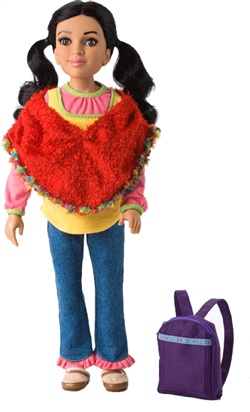
Friends Forever Girls – pictured here – this could be a good option!  18″ – Anyone out there already have one?  How do they hold up?

Anyone know of others?

Families, Children & Marriage

Talking about race with your kids

Natasha Sky has an interesting article on her blog, Multiracial Sky, on talking to children about race. An excerpt:

The key to talking with your child—or anyone—about race is the same key to discussing any complex subject: openness. Start an open dialog with your child about race early in their life. Make it a comfortable subject of conversation—for you, and for your child.

Her post also includes some excellent book recommendations.  Click here for of my own more book ideas on teaching kids about race.  Be sure also to explore her website – it has some EXCELLENT resources and is worth perusing.

Families, Children & Marriage

Thoughts on raising a mixed raced child

Colorblind Cupid has an interesting series of posts on raising mixed race children.  There’s a wide range of perspectives represented and some interesting thoughts.

Here is my response to her post:

oh, do i have so much i could say about this!!! where to start?

to be honest, one of the most exciting things for me about marrying a non-white man (other than the fact that i was gaga over him as a person) was the fact that my children would not inherit my pasty white (as my DH affectionately calls it) skin. no need to read this as distaste for my own background, only that milky brown skin is truly, undeniably beautiful. why would i not want it for my children? i’d worked with so many beautiful non-white children that it thrilled me to pieces that my children could actually look like them instead of me.

that being said, my children’s features do look quite a bit like me. its funny though, because white people say they have my husband’s coloring and brown people say they have mine. go figure. on occasion, my husband says he feels left out because they look more like me than him at the moment. i tell him its ok because sometimes they act more like him than me )

so while it hasn’t really been much of a problem for me that my kids’ skin isn’t the same hue as mine, the one thing that has been hard is for my daughter to understand why her skin is not the same as mine. recently, she’s really been trying to come to grips with this.

Continue reading “Thoughts on raising a mixed raced child”