Families, Children & Marriage

On raising children to dance

Tonight, I watched my children dance in the churchyard under the palm trees, surrounded by scurrying geckos and warm sea air.

I thought of the richness of the childhood moments they will remember from this place – the lilting accents of their grandparents, the swirling nod of their cousin, the raucous cricket games of their uncles.  I thought of the losses and gains this reality will imprint on their hearts – the comforting ability to store their hearts completely in one place, the blissful assumption that the world in front of them is the only one which matters, the conflicting knowledge that their lives root themselves deeply in both the expanse of the Midwestern cornfields and the hurdy-gurdy of an isle in the Indian Ocean. I thought of the ‘normal’ they will take for granted – seeing the whole entire world as just around the corner, playing in a world where three-wheelers and taxis are both viable means of transportation, learning to make cookies with Grandma and chapatis with Aththa.

They don’t know any of these things, of course. Continue reading “On raising children to dance”

Books, Families, Children & Marriage

GUEST BOOK REVIEW: Bringing up Brits

I’d like to introduce a new book that looks like it would be appealing to many readers here.  Rachel Dines is guest posting a review of her book.

Being a parent is challenging enough, but for those raising their children in a country that is foreign to them, a whole new level of difficulty is introduced.  I have spent time living in the USA, as a parent of a pre-school age child, but it was only ever a temporary situation and that time constraint saved an awful lot of thoughts, worries and longer-term complexities. Continue reading “GUEST BOOK REVIEW: Bringing up Brits”

Families, Children & Marriage

Check out these dolls!

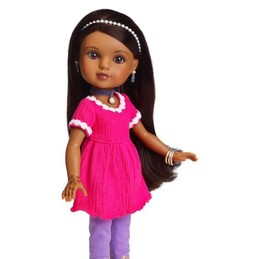
I’ve posted before on the availability of multiracial dolls for girls, and was thrilled to find Hearts4Hearts Girls doll.  With a portion of their sales going to WorldVision, these dolls promote a socially conscious message by representing girls from developing regions (Ethiopia, Belarus, Laos, Applachia, and Mexico) around the world.  They’re also a reasonable price and come with a short story about the girl they represent.

I was so enthralled by them, my dear mother got me Nahji, the Indian doll, for Christmas!  It’s a beautiful doll, with special attention to cultural details like henna on her hand and a nosering.  My mom also got me her sari which is beautiful and simple to put on.  (We celebrate Christmas with my family this weekend, and when my mom saw my 35-year-old surprised look at receiving a doll for Christmas, she smiled and said, “There are some things a mother just needs to do.” I was glad she did!)

Belief, Families, Children & Marriage, Spiritual Formation

For my children on their baptism

 
Bless the Lord who forgives all our sins;
His mercy endures forever.
 
“You are sealed by the Holy Spirit in Baptism and marked as Christ’s own forever,” Father Jim announced as he made the sign of the cross on your forehead.  This sacred moment – a pause in time when Christ marks you as his own – is part of your journey.  It is certainly not the end, but merely the beginning, that I long for you to travel your whole life long.
 

Though I cannot promise you it will be a simple path, I can attest mightily to its richness and depth.  For in every failure, there is forgiveness, in every brokenness – healing, and in every sorrow – restoration. It will surely not appear in the ways you expect, nor as easily as you hope, but as you walk in Christ’s way, it will come, steadfast and sure.

And we prayed for you[i], this:

 Heavenly Father,
we thank you that by water and the Holy Spirit
you have bestowed upon these your servants the forgiveness of sin,
and have raised them to the new life of grace.
 
Sustain them, 
O Lord, in your Holy Spirit.
Give them an inquiring and discerning heart,
the courage to will and to persevere,
a spirit to know and to love you,
and the gift of joy and wonder in all your works.
.

So many symbols and words that you do not yet understand.  But the simplicity of Christ’s love you see clearly – that he loves you with a greater fierceness than even your mama, and he gently waits for you to come to him for this love.  You are his forever child, cherished and beloved, and it is this love to which you respond.

How this mama loves your little souls –  full of so much wonder, joy, life.  How I both anticipate and fear watching this prayer fulfilled in your lives.  As each generation discovers anew, there will be great need for you to inquire, to discern, to be courageous, to persevere.  Much of this I hope you might learn from me, however, some of it I concede you will not.  As you know well enough already, a perfect mama I am not. Continue reading “For my children on their baptism”

Culture & Race, Families, Children & Marriage

Helping children process being biracial and bicultural

Over the years, my daughter has expressed a variety of feelings about being biracial.  Her reality is compounded by the fact that we currently live in a very white town and until she went to school (in a more diverse setting about 30 minutes away), she was often the only child of color.  She’s been processing again this week – this time about not being the only ‘brown kid’ because the new girl in class is Indian.

“I kind of liked being the only kid from another country, mama,” she told me last night. “Everybody asks [the Indian girl] about India and I want people to ask me about Sri Lanka.  Now that she’s here, I don’t feel special anymore. I wish I were just from one place like she is.”

This was a sentiment I hadn’t yet heard from her.  Most of our previous conversations about race have been bemoaning the fact that there is no one like her.  Thankfully, our conversation got distracted, so I had some time to ponder how I would respond (I don’t particularly think quickly in these situations).  In reflecting, I realized a few things:

  • My daughter was feeling insecure about not feeling ‘whole’. Her listening brother even made the comment, “You’re half and half – you’re not ‘whole’ anything!”
  • She needed her feelings of inadequacy to be heard.  To clarify – I don’t view her biracial-ness as inadequate at all.  I think it makes her strong, beautiful, and wise. However, even if they’re inaccurate, her feelings are her feelings.  My interpretation of her reality is just that: my interpretation, not hers.
  • She needed to hear her questions about her identity are normal.  “You have a great little mind at work in there, sweetie,” I told her as I tucked her in last night.  “You ask such great questions.  Some kids don’t ask these questions for a long time – it’s good you’re letting them out as they come up.  Keep asking, it will help you understand who you are.”  She grinned, looking relieved that she wasn’t crazy for the feelings she was having.
Working with college students, I see a variety of biracial young adults processing their identities.  Every so often, I encounter students who have never thought about the fact that they come from two worlds – it never occured to them that they weren’t white.  This causes a pretty significant level of angst and crisis in their lives.  Who am I?  is a question asked by all college students, but it’s even more acute from biracial students who’ve never grappled with this question.
                   .
The students I see with in-tact, healthy identities are usually those who grew up discussing the layers of their racial and cultural realities with people older than them.  Of course our children might feel ‘inadequate’ if they are different from those around them, and so many parents try to just sweep that ugliness under the rug by not talking about it.  In reality, our biracial children will never understand the beauty, strength, and perspective that forms their identity if we don’t talk with them about it.  Playing it safe leaves kids feeling isolated and confused.
                                                                            .
How do you talk with your children about race? What kinds of questions do they face about their identities?
Books, Families, Children & Marriage

BOOK REVIEW: Working Familes

Working Families: Navigating the demands and delights of marriage, parenting, and career by Joy Jordan-Lake

Call me crazy, but I’m currently chewing on the idea of pursuing a PhD after my husband finishes his.  It’s a bit of a tough call, but I’ve discovered that I really do love academia, and that nobody listens to me (if I really do know what I’m talking about) without those little letters after my name.  One of the main road blocks I face in this area is figuring out how to balance family and career, so I’m taking the year to spend some time pondering the implications of such a choice.

As part of this process, I’m revisiting this book – one of my favorites on the topic.  I loved it the first time I read it a few years ago, and am enjoying it even more this time.  Joy Jordan-Lakes takes an honest, challenging look at faithfulness in calling and passion in all areas of our lives, including career and motherhood.  With candor, humor and wisdom, she grapples with how to work out a marriage with two careers, others’ opinions, and the chaos that sometimes comes with the multi-layered life of a working mom.  She advocates working as faithfulness to a calling and your family – not just a paycheck.

Also quite helpful is her chapter on ‘tools for survival’ where she doesn’t just offer simple how-to’s on making the nitty gritty work, but rather reflections on how to make overall life function well (think: making a weekly grocery list vs. establishing a rhythm of prayer…)  To top it off, I frequently laughed out loud at her observations.  It all hit so close to home that I even cried a few times as well!

Some of my favorite quotes:

Combining family and professional life is about treating three callings as always connected, never allowing one part to shift without understanding how that will swing the whole ship.

There can be something very lovely, you know, about untidy lives.

Harsh but True Reality of the Adult World #452:  sometimes two good goals are not achievable at the same time.  Which means this may be a season for being creative or for compromising.  Or for preparing for the next season.  For making some tough choices.

Books, Culture & Race, Families, Children & Marriage

Integrating the world into nitty gritty family life

Several years ago, I did a presentation on how we integrate the world into our daily family life for our local mom’s group.  Thought I’d share the presntation here as well: Integrating the World into family…  Some of the toys/TV shows are a few years dated (I’m sure there are now new ones of which I’m not aware…), but I think you can get the picture.

Books, Culture & Race, Families, Children & Marriage, Miscellany

** free is good **

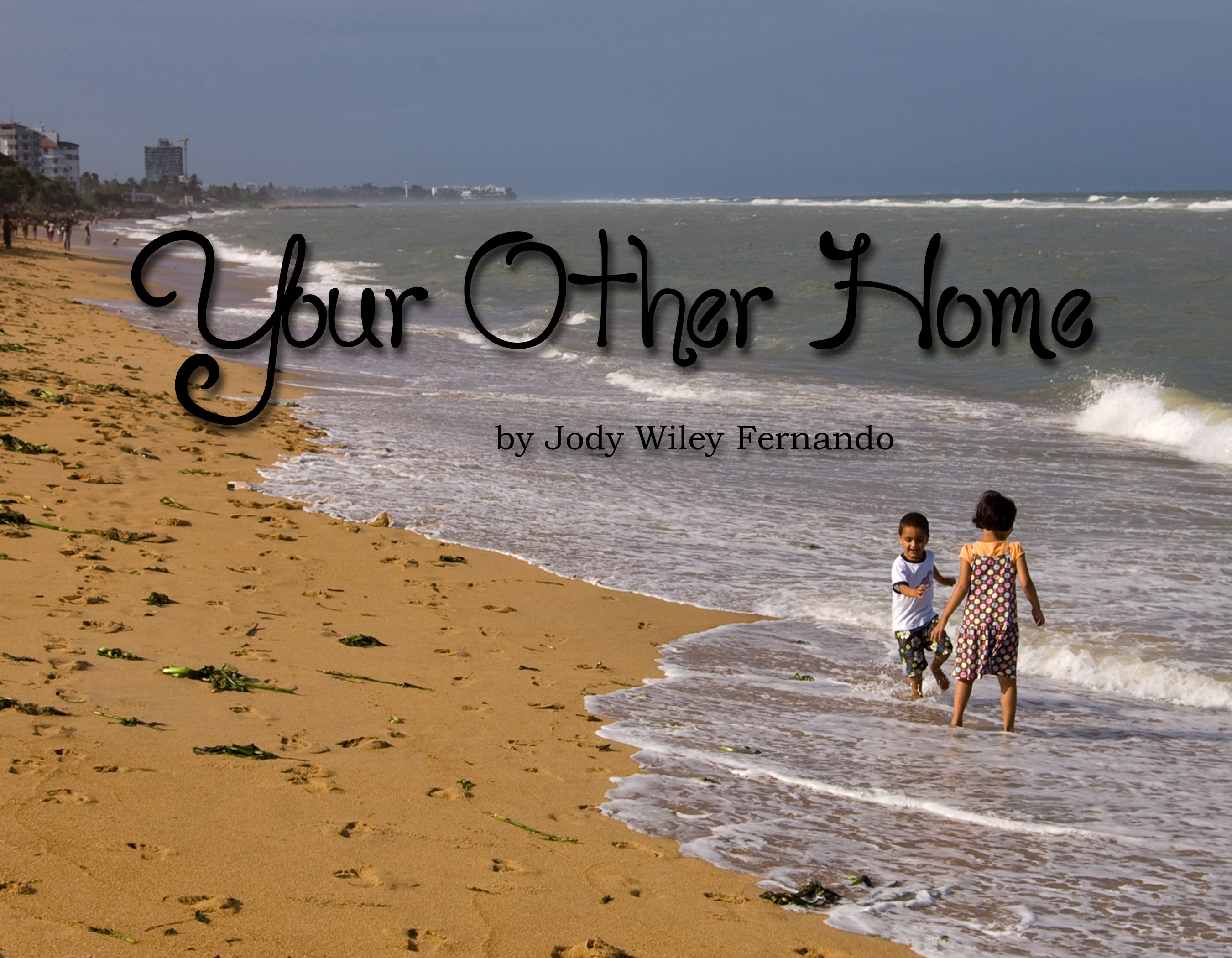
Just a friendly reminder that if you subscribe to Between Worlds, I’ll send you a link to Your Other Home, a book I wrote for my kids about growing up between worlds. See sidebar to subscribe.  {I promise not to give your email address!}

Families, Children & Marriage, Miscellany, Women

Back to work…

and so it is that the slow summer days have come to an end, when we all return to the much faster pace of the school year. my summer was full and rich – swimming pools, lazy days, lots of books, long conversations and short to-do lists.

Returning to school involves a whole different energy level. Though I do get tired, I find that the emotional energy it takes to shift back into our respective worlds is the heaviest.  Kate Daniels sums up my conflicted feelings about the whole transition in her poem below – loving work, quietness, contemplation, yet pulled by those precious little ones toward a much noisier existence.

In My Office at Bennington
 
Mornings, I sit by the open window
in the red barn, reading poems
and quietly thinking.  Coffee idles
in a cracked blue mug, and bees burst
in and out of the unscreened window.  At last, a poem seems possible
again – brain knitting a scarf
of thought, purling it into words.
 
Metaphors emerge after long seclusion –
a green crocus, crusted with dirt, thrusts
through the rotten fabric of an ailing lawn
late in February.  The season is almost
over, or it’s not, in fact, begun. 
 
But then I hear the voices of my children
returning from a meal, hiking up the hill
from camp.  Or the plastic wheels of Janey’s
carriage clattering in gravel.
The cheerful firstborn’s off-key whistle,
airy through the gap in new front teeth
 
and I’m paper torn in half,
 
the poem that didn’t work,
the wrong words, sour sounds,
ruptured rhythms, the confusion
as to what was meant, what I actually
desired besides those three small faces
raised to my open window, calling
my name over and over, Mama?


Daniels, K. (2001).  In my office at Bennington.  In M. K. DeShazer (Ed.), The Longman anthology of women’s literature (pp. 872-873). New York: Longman.

Families, Children & Marriage

What if culture catches you by surprise?

My heart is aching a bit because a friend just shared with me a story of another friend who is in an intercultural marriage but didn’t realize it before hand (think: third culture kids), and is now feeling stuck and confused, not knowing how to sort out the reality of being from two different worlds.  It’s one thing to suspect (let’s face it, nobody ever really knows) what you’re getting into ahead of time, but it’s another thing to be completely blindsided and trying to sort out differences in cultural expectations as husbands, wives, parents, in-laws, professionals.

Anybody out there sorted through these types of conflicts?  What’s worked for you?  What hasn’t?

Families, Children & Marriage

Dealing with outside stressors in interracial marriage

While we still face a fair amount of isolation, stares and discomfort being an interracial couple in a monocultural, rural, historically racist area (the last public lynching in America was 20 minutes from our home), I’m also keenly aware of the height of opposition that interracial couples before us have faced – legal prohibition, public opposition, even violence.  When the stress of our locale heightens, I often find myself wondering exactly how couples before us fared in the midst of much more overt actions. I admire their courage yet am curious about their fear.  Surely the opposition was hard on them.

A few things we do that help:

1.  We ‘get out’.  We can get to a city in an hour (though the current gas prices are making that more challenging!).  It’s always surprising to me how much I relax when I see other interracial families.  Living in an area where there are few sometimes I unconsciously start to think that our family is wrong – too complicated and too complex to be successful.  Just seeing other people doing it gives me hope.

2.  We talk.  Stuffing our feelings doesn’t help, so there are times when we just vent to each other.  Our ultimate goal still remains to love the people around us, but this doesn’t negate the fact that sometimes its hard to live with them.  We also learned last fall that it helps to combine step 1 & 2 by getting out AND talking to others at a conference on Christianity and diversity.  There, we are able to process some of our feelings in a safe environment with people who just ‘got it.’  It is incredibly refreshing to know you’re not alone.

3.  We read.  Blogging has been a helpful way for me to be reminded that their are others in this boat – to hear their stories, share their trimumphs and frustrations, and to glean from their wisdom.  There’s also a whole pile of books that speak into our lives.

If you’re in a relationship that faces adversity – whether from family or society – how does it affect you?  What are  ways you deal with negative or uncomfortable reactions to your relationship?  While some may have thick skin (ours is thickening), we do still feel and simply can’t always turn off our emotions.

Books, Families, Children & Marriage

Get a free intercultural children’s e-book

My eyes are always peeled for good intercultural children’s books.  After we returned from Sri Lanka one year, I wrote a book for my kids called “Your Other Home” about being bicultural to better help them understand where they come from.  I’d love to share it with others looking for such books, so for subscribing (see link on the right column) to Between Worlds, you can download it for free! (if you’re already a subscriber and would like access, contact me and I’ll make sure you get the info!) I promise I will not do distribute your email addresses or spam you or any other nasty internet scheme.

Families, Children & Marriage, Restoration & Reconciliation

A complex beauty

Sri Lankan BeachThere are some things that are inherently breath-taking and beautiful: a newborn baby sleeping, the mountains looming, the sea lapping the shore, a wheat field swaying in the wind.  In a world wracked with tragic ugliness, it doesn’t take long for our hearts to recognize the calming power and focus of which such simple beauties speak.  Such aspects of the created order symbolize a value for beauty and unity.  Yet within this reality is also immense diversity – sometimes so diverse it appears more chaotic than beautiful.

As a human race, we struggle much more with the concept of chaos and diversity than we do with beauty and unity.  Ethnic wars rage.  Globalism disregards the little people.  Opposing sides rail against each other.  Yet does it have to look like this?

Are beauty and unity truly pitted against diversity and chaos as the news headlines would have us believe?

Nature certainly gives of a part of the picture of created order.  Yet another piece of this puzzle involves human beings.  Even as we see them inflicting wars, cultural imperialism, trafficking, and bitter divisiveness, we also see humans participating deeply in the stories of reconciliation, empowerment, restoration, and respect for one another.  These people are merging the realities of beauty and unity with diversity and chaos to look something like this:
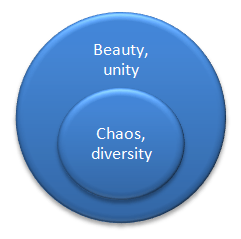
In other words, chaos and diversity exist within the realm of beauty and unity, not as forces working against it.

And what humans know the reality of this co-existence better than we who embody intercultural marriages?  I’d wager a large bet that beauty, unity, chaos, and diversity are integral aspects of our experiences, unable to be separated from each other.  Left unexamined and misunderstood, they do tend to pit us against each other.  But combined with some intense honesty and personal sacrifice, we are part of the picture to a world that desperately needs tangible examples of how to love, not hate.

It is not a task for the feeble-hearted, or for those only interested in learning about new food, new music, new clothing styles or new languages.  It is also not an endeavor to enter lightly with sugary visions of world peace.  It is a day-at-a-time thing, a walking-together path with fierce listening and compromising skills combined with perseverant hope and realistic acceptance.

And after all these things, it, too, is beautiful – albeit in a less visible and more complex way than the mountains and the sea – filled with all of their power and peacefulness, fury and calm.

Books, Families, Children & Marriage

The best book on Intercultural Marriage

Some day, I hope to write a book on the deeper side of intercultural marriage, but I still feel like I don’t really know enough to even know where to begin.  Hence my search for deeper understanding of the complex beauty of intercultural relationships.  I’ve read lots of books on intercultural marriage, but just came across one that’s the most helpful I’ve seen so far.

In love but worlds apart: insights, questions, and tips for the intercultural couple, written by Grete Shelling and Janet Fraser-Smith.  Both are in intercultural marriages of sorts and have years of working with other couples in intercultural marriages.  The book is written in a half-teaching/half-workbook style, with commentary, explanations, and examples followed by lists and lists of questions for intercultural couples to discuss.  It pretty much skips over the typical ‘cultural fascination’ dimensions (the visible layer of the iceberg concept of culture) and gets straight to the heart of intercultural relationship by helping the reader examine if they can truly live out the rest of their life in an intimate relationship with someone from another culture.

The book starts by examining the question What kind of partner am I looking for? by exploring questions like these: Continue reading “The best book on Intercultural Marriage”

Belief, Families, Children & Marriage

Thinking through interfaith marriage: a piece in the puzzle

In the world of intercultural relationships, the dynamics of interfaith marriage is a commonly examined issue.  Many have written[i] about how they work these relationships out in their lives and I respect their efforts to forge ahead together.  It’s a bit easier to find explanations of why people marry across faith than why they don’t.  Because I believe deeply that it’s important to consider many sides when making significant decisions, I thought I’d share more about why this was not my choice.  Please know that my intent is NOT to condemn those who make the decision to marry across faith, but to provide a voice in the conversation for those contemplating interfaith marriage.

So, why did I not marry across faith?  Here are some primary reasons:

Our faith is an integral part of our lives. By faith, I don’t mean a vague concept about trust in goodness or hope in mankind.  I mean a specific faith embodied by a specific set of beliefs – for us, Christian ones as found in the Bible.  We can’t separate who we are from what we believe – it affects every part of our lives from how we spend money to we raise children and beyond.  Successful marriage requires a certain measure of unity, and it would be difficult for us to have this unity without sharing the same faith.

Our faith roots us in a common denominator outside of ourselves. Let’s face it:  at some point, romantic love wears off and marriage grows hard.  I don’t believe it has to stay gloom and doom once the lovey-dovey stuff subsides, but when we have hit tough times, we’ve clung to a shared hope in a reality outside of our own situation.  This reality keeps us rooted enough to not be blown over by every storm that comes our way.   As much as I hate to admit it, our love alone is not strong enough to withstand some of the winds that have blown between us.

Our faith gives us a shared ethic to (attempt to) follow. Little decisions stem from bigger philosophies, and bigger philosophies stem from fundamental perceptions of the world.  While there’s a wide variety of perspectives within our faith (people can interpret scripture in very different ways), it’s not as wide as across religions. Even when we fail to follow our own ethic, we still have a similar place to return to reorient ourselves and continue on.

What’s your take?  If you’ve married across faith, can you speak to what has helped you make it work over the long haul?  If you’ve married within your faith, how has this worked for you?  I’d love to see some honest dialogue here, but please refrain from bashing/dismissing/disrespectful language.  While I recognize the sensitivity of this topic, I do believe it needs to be discussed without snarkiness for the sake of those in the decision making process (plus mean words make me feel bad).