 “Yay!!! We did it!” my daughter cheered with Dora-like enthusiasm as our plane bumped onto the ground, “We made it to Sri Lanka!”. My husband and I grinned at each other, bleary-eyed. We had been on an airplane for over 20 hours with two children under three and survived. We shared a subtle high five before being interrupted by our children’s wiggly attempts to escape from their seatbelts.
“We’re going to Aththa and Seeya’s house!” the enthusiasm to see her grandparents again brimmed to the top. She took off down the ramp, her backpack bobbing as she ran. Our one-year-old son was busy grinning at the stewardesses, soaking up every ounce of attention. The travelers around us breathed sighs of relief in our direction – most likely grateful that our kids hadn’t screamed for too long on the flight. We acknowledged their stares with weary smiles, singing silent praises for both the Dora videos that had kept our little boombox fully engrossed for nearly two-thirds of the trip, and the Benedryl that had lulled our one-year-old-race-car-son asleep for nearly that long as well.
As we prepared for our trip, I received more than a few raised eyebrows when we explained that we were traveling to Sri Lanka, a developing country on the brink of war, with our two small children for a month. I have to admit, it’s not a common occurrence for the small town Midwestern town where we live. While I understood, and even felt a bit of their concern myself, most of my husband’s family lives there. So, even in spite of the risk and inconvenience, we eagerly anticipate these trips to our other “home”.
I recently checked some books on traveling with children out of the library and found myself slightly disappointed by their contents. At first, I couldn’t put my finger on the source of my discontent – the suggestions were realistic and practical, the scope decently comprehensive. The more I read, the less I related to the author’s perspective. That’s odd, I thought to myself. We’ve traveled extensively with our kids – what’s so different?
For one, we don’t travel around the world in a sailboat (though that sounds fabulous!) or visit one tourist destination after another. I’m not saying that tourism travel is bad, just that it is not our primary experience. Because we travel primarily to visit family abroad, our ‘world tours’ revolve significantly around the people of a place rather than the destination itself. I suspect this is the case of many intercultural families like ours with families halfway around the world from each other.
To us, an airplane is not only a doorway to a fascinating, wonder-filled world, it is the bridge to our other home.For us, the drama of political turmoil is not just another sad story, it is a silent knife that pierces our hearts with each headline. As we encounter overly-patriotic perspectives on foreign relations, we shudder when the ‘rest of the world’ is glibly left out of the picture.
So why do we do it?
“Double-vision”
Families like ours live as global citizens because not only do we take two sides into account, we ourselves are two-sides. At the core of our being, we know that to be part of the global community means that there are times when we must see beyond our own sail boating, tourist longing minds to the reality of the beggar sitting on the corner down the street or the angry crowd protesting yet another dismissal of their personal identity. Waking up to sounds of noisy crows, lottery-ticket salesmen, fire crackers, fighting dogs, and diesel motors becomes more than an ‘exotic annoyance’, it is part of who we are.
Why does it even matter? I sometimes wonder. I mean, most people don’t live across two worlds like this. I have even, at times, been a bit jealous of such people, wondering what it must be like to share the same cultural heritage, or even just the same skin color and physical features. Primarily, I believe such relationships offer the world at large microcosmic examples of how to live at peace with one another.
On another level, intercultural relationships can breed a healthy dose of humility as we fumble through figuring out the norms of another place. I started learning this lesson the first time I met my husband’s extended family. Aunts, uncles, cousins, and grandparents were gathered for the weekly Sunday dinner, and I, being new to the scene, was (proudly) eager to impress them with my newly acquired skill of eating with my hands. In this context, everyone sat on a chair, holding a plate with one hand, and eating with another. I was skillfully disassembling my piece of chicken curry when I came upon a particularly stubborn piece of cartilage. Suddenly, the piece of cartilage snapped, and my chicken – along with what seemed like half a plate of rice – launched itself onto the floor. Trying to hide my slightly wounded pride, I internally debated what to do about the meal at my feet while pretending absolutely nothing had happened.
Before I could reach any conclusions, my mother-in-law had found a broom and dustpan, and was discreetly at my feet quietly cleaning up the mess. The rest of the family graciously ignored the whole interaction, and I attempted to humbly, and carefully, clear the rest of my plate. My mother-in-law’s simple act of kindness offered me a practical glimpse of ways that spending time in my spouse’s culture increases my understanding of how to be a humble, respectful person.
As a parent, it is of primary importance to me that my bicultural children understand the value their diverse background gives them. Without this understanding, their bicultural side is far more likely to be consumed by the culture in which they grow up. I’m not asserting that one culture is better or worse than another, just that it’s important for a bicultural child to know as much of both as they can. Hence, we tote our toddlers around the world to a developing country, lose precious sleep, and question our sanity for attempting such a feat.
But, you ask, “couldn’t you just wait until they’re a little older and more reasonable, when it’s not so hectic to take them halfway around the world?” I suppose, but let me give you a glimpse of what we would have missed if we’d not gone:
Seeing a dandelion for the first time this Spring, my four year old asked, “Mama! Could I pick that for Aththa (her grandmother in Sri Lanka)?”
“Well, honey,” I replied, “maybe you should just give it to Grandma because she’s a little closer than Aththa is right now.”
“I’ll keep it for her, mama, we’ll see her soon, right?”
Simple as it may sound, this interaction showed huge growth in my daughter’s recognition of her ‘other’ grandparents (i.e. the ones who live far away). In her four years of life, she has traveled to Sri Lanka three times, and to Ecuador once. I guess we’ll never know definitively how this has changed her perspective, but my guess is that without such trips, she wouldn’t show nearly as much enthusiasm as she does when she sees a woman in a sari, eats chapattis, or locates Sri Lanka on a map. These are small acts now, but part of our motivation is for both cultures to be a natural part of who she is, not something new we introduce when she gets older.
Global reality
I admit that I am shamefully American when it comes to my consumer nature. Left to my own devices, I’d have a hay day in Toys R Us, thrilled to buy my kids every toy their heart desires. Our trips to Sri Lanka, however, bring this nature into stark reality as I am forced to grapple with the fact that many children around the world don’t even own one toy. Facing this reality every few years brings my consumerism into check, and helps me better teach our children about things that hold true value – family, relationships, caring for others.
It also puts things into perspective for me as a parent. I often hear people (true confession: I am one of these people) fearful to travel with young children because of disease, safety, convenience. While elements of such concerns are very valid, I have personally not found the ‘what-ifs’ enough to sacrifice what our family gains from our trips abroad. This is not to say that I haven’t entertained this idea. I’ve spent my share of sleepless nights and obsessive worries over dengue fever and suicide bombers. To be honest, the thought of such tragedies still makes me quiver a bit, even after four trips abroad with our children. But then again, when I’m in the U.S., I quiver about swimming pools, car accidents, kidnappings, and the West Nile virus. Parental fear needs no national boundaries, developed nation or not.
This is where reality has really hit home for me. In theory, as a Christian I believe that God cares for me intimately[i], and guides the direction of my life[ii]. So the next logical step for me to take is that if God cares for me and my family in a ‘safe’, developed context, his nature does not change just because we travel to a developing country at war[iii]. Travelling with my kids gives me a way to practically live out what I claim to believe.
The Nitty Gritty
Aside from my philosophical meanderings, a MAJOR question of how to travel with young kids is simply how? Kids, American ones in particular, are complicated and used to certain comforts. Though I had traveled a fair amount before kids, I didn’t really have the first idea how to travel with tots in tow. There are no hard core rules, as everyone’s children and situations differ, but I have discovered some general operating principals that are helpful in traveling:
- Bring bribery. Twenty hour airplane trips are not time for training much more than perseverance, endurance, and patience. I’m not a big fan of videogames, but Leapsters and handheld movies are GREAT distraction tools for little ones. So is candy, (washable) markers, cell phones, and favorite books. Sadly, this requires you to carry bags stuffed to the brim (something over which my husband and I still debate…)
- Bring a change of clothes for everyone. On one flight, my daughter refused to allow my husband to change her diaper because she was terrified of the tiny bathroom. The stewardess refused to allow him to change her on the seat for sanitary reasons. You can only imagine the consequences…
- Bring flexibility. I’m a big fan of a strict bedtime and regular routines. However, ten hour time differences have taught me to let go of this. We also often sleep all together in one bed (something I’m NOT a fan of, mostly because I can’t sleep with elbows in my ear and feet in my stomach…) While we limit TV intake at home, sometimes a four hour viewing stint is necessary for both jetlagged parents, sleepless children (who scream REALLY loudly when they’re tired-and-refusing-sleep), and sleeping grandparents/neighborhood. In general, rules that we have at home don’t come with us to the same magnitude when we travel.
- Bring macaroni and cheese. For years, I’ve watched children of immigrant parents easily eat their native food. While we eat about 50-50 Asian-American food, it can still be a battle to get curry down our kids. I felt guilty that some kids eat their ‘native food’ so easily and my kids don’t until I remembered that they are half American too, and that they DO eat American food without much coercion (Makes sense since we’re living in America and that’s what they experience in most places but home…) While I desperately hope my children will enjoy Sri Lankan food, we still travel with mac and cheese because at the moment, their Asian palette is limited to lentils, rice, and chapatti. At their current age, it’s not worth a fight to me when there is so much other change happening.
- Bring a camera. And takes LOTS of pictures. Since my kids are so young, there memories are pretty limited to yesterday and today. After our last trip, I made a book for them that included pictures, and a story of their time in Sri Lanka. Over two years later, it’s still a favorite book, and my kids love to recount the details of the book as if they were just there last week. We also will occasionally watch video clips on the computer to remember our trip. This not only establishes current connections to their Sri Lankan family, but also establishes a deeper foundation for our next trip.
While some may assert that traveling with small children is akin to stabbing a pitchfork through your big toe (that may or may not have been my husband’s exact words), it is certainly not impossible or quite that painful. The verdict remains open, but I’m hoping that once these diapers years dry out, my children will have a deeper sense of identity, adventure, and confidence because of their early years spent traveling. (If not, I’m back-charging them both for the airline tickets and for my hours of missed sleep…)
[i] Zephaniah 3:17, Matthew 10:30
[ii] Jeremiah 29:11, Proverbs 3:5-6
[iii] Hebrews 13:8

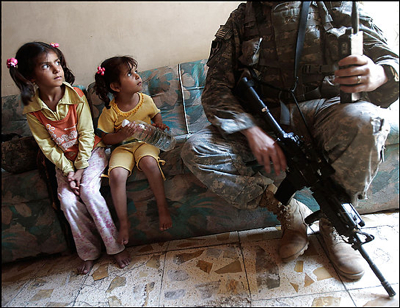 I woke up last night gripped by a deep fear. Unfortunately, such occurrences are somewhat common for me. Sometimes, the fears are completely irrational because I am over tired or stressed – Monkeys chasing me through a house of mirrors, my foot turning into a giant piece of chocolate. Sometimes, like last night, the fears are more rational.


 After an overt audience preference for John McCain at Saddleback’s faith forum last week, I found myself skeptical that another Christian mainstay (Thomas Nelson) could treat a democrat fairly.

 between worlds