Families, Children & Marriage

Interview at Offbeat Marriage

Offbeat marriage interviewed me recently about our marriage.  Here’s an excerpt:

What compromises are required in order to make your marriage work?

I knew immediately that my husband would never be happy unless I knew how to cook his food. While this seems like a small thing to someone who’s family eats mostly for nourishment (well, and sweets too!), food to Rukshan = love. This means that I study South Asian cookbooks, drive long distances to Indian grocery stories, and plead for spices to be sent with relatives traveling back and forth. It also means that I don’t really know how to cook typical American dishes and feel a little intimidated if I have to cook for Americans because I don’t really know what tastes good to them. After eating so much tasty South Asian food for 10 years, American food has lost a lot of its appeal (though a juicy hamburger is still hard to beat!!)

You can read the whole interview here.

Restoration & Reconciliation

“Love one another”

Coptic Christians guarding Muslims praying during the Egypt protests

In an era of growing divisiveness between cultures, I love the hope that this photo represents.  The photo came up the other day in my class when we were discussing interfaith relationships, and our discussion turned to how people of such different faiths can protect people they believe to be ‘led astray’.  I teach at a Christian college where many students come from conservative evangelical backgrounds.  Sadly, the goodness of evangelical theology in the US has been inextricably tied to conservative politics in the past few decades, and one of the challenges I see young evangelicals facing is how to sort out this overlap of faith and extreme right-wing politics.  To exacerbate this, the current generation came of age in a time of great tension between the Christian and Muslim worlds, and this became many students first introduction Muslims.  However, this shouldn’t be the end of the story. Continue reading ““Love one another””

Families, Children & Marriage, Food

Learning to cook Sri Lankan food *or* Curry: the way to my man’s heart


“But she can’t cook our food!!!” my South Asian friend mourned about his soon-to-be sister-in-law, “and worse yet – she doesn’t even want to learn! How will my brother survive?”

This conversation was my first clue about the kind of adjustments that marrying across a culture would entail.  It was slightly shocking to me that food – something which had been viewed primarily as a practical necessity for nourishment in childhood (well, minus homemade bread, apple pie and ice cream) – could invoke such a passionate response.  I filed our conversation away in my mind and pulled it out again in my first year of marriage to my Sri Lankan husband.

When we met, I had eaten Indian food once and wasn’t real sure what I thought about it.  The most ethnic food we ate in my home growing up was chop suey and tacos, so I was a little nervous about the prospect of even eating Sri Lankan food.  Thankfully, I ended up liking it a lot (actually even more than most American foods!), so we both breathed sighs of relief about my newfound taste buds.  When we married, in addition to curry, I tried to cook a few dishes I knew (which wasn’t much) – tacos, pasta, casserole.  My new husband dutifully tried to eat my favorite dishes, but he clearly didn’t enjoy them.  It didn’t take me long to figure out that Sri Lankan food was his love language, and that curry was a beeline to his heart.  Thus began my journey as a white-girl-turned-South-Asian-chef. Continue reading “Learning to cook Sri Lankan food *or* Curry: the way to my man’s heart”

Culture & Race, Miscellany

We’re speaking at Calvin College Symposium on Race

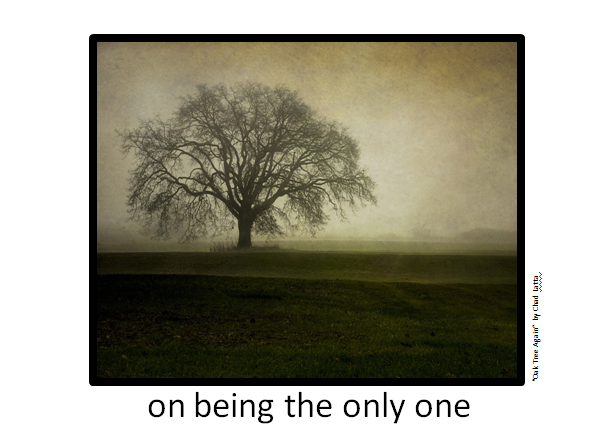
My husband and I will be speaking as part of a lecture series on race at Calvin College in Grand Rapids next Wednesday evening.  Our talk is titled “On Being the Only One” and we’re speaking about our experience living as an interracial couple in a monocultural environment.

If you’re in the area, we’d love to meet you!

For more info, visit  http://www.calvin.edu/admin/provost/multicultural/symposium/.

Books, Families, Children & Marriage

Free e-books for cross-cultural transitions

Missionary care resources is offering free e-book downloads on their website including titles like:

  • Raising Resilient MKs: Resources for Caregivers, Parents, and Teachers
  • We’re Going Home: Reentry for Elementary Children
  • I Don’t Want to Go Home: Parent’s Guide for Reentry for Elementary Children
  • Third Culture Kids and AdolescenceCultural Creations
  • Missionary marriage issues

Families, Children & Marriage

A long(er) view of intercultural marriage

172087165“Many waters cannot quench love,” I pondered Solomon’s words sitting on a dusty porch in West Africa, the afternoon downpour pounding on the tin roof over my head. “But they certainly do a good job trying to drown it.”

My boyfriend was spending the summer at his parent’s home in Sri Lanka while I was teaching English in Burkina Faso. At that time, there was little access to phone lines or email, so our only form of communication was the relentlessly slow exchange of letters. From the beginning, we had both sensed a unique kinship between us in spite of our cultural backgrounds.  However, we also realized that such a relationship carried many complexities, and that our cross-continental lives would not combine easily. When our respective summers ended, we reunited for the fall semester, somewhat unsure of our future together.

“You remind me of a Sri Lankan girl,” he told me one day, raising his deep eyes to meet mine. I had no idea what a Sri Lankan girl was like, but I was thrilled. Obviously, he connected deeply to something in me, regardless of my cornfield upbringing and blond hair. From the first day we met, I sensed an eerily similar reflection of myself in him. There were moments, of course, when we weren’t sure how to connect – meeting our families, interacting with hometown friends, navigating the chasms between third-world realities and first-world luxuries. While these cultural differences were a significant part of our relationship, our similarities ultimately prevailed. Nearly four years later, we married in a joyful ceremony, surrounded by family and friends from around the world.

Guide me, oh thou great Jehovah. These words sung at our wedding reflect our desire to follow God’s guidance in the steep task of uniting contrasting worlds.We entered the world of intercultural marriage as pilgrims in a barren land, knowing few role-models who had attained such unity across cultural boundaries. Together almost 10 years now, we have two young children and love journeying together through life.

While comparatively few are called to such an intimate cross-cultural partnership, all Christians have a responsibility to seek reconciliation across barriers. In an increasingly diverse society, our ability to establish unity across cultural boundaries is rapidly becoming a key factor in the strength of the church. Because we practice these skills daily, I have found lessons I’ve learned from our relationship to be a microcosm for cross-cultural relations at large.

Here are some skills we find useful in seeking unity across our own cultural differences:

Pay attention, be intentional
Sri Lanka is half way around the world from the U.S. At times, it feels very far away. Being so far removed from our lives, it is easy to fall into an “out-of-sight, out-of-mind” mentality with this part of my husband’s life. This has, at times, caused division between us because an essential part of his personhood lies neglected. Therefore, it is essential to pay close attention to the Sri Lankan part of him, and to seek to incorporate it in our daily lives. We both read the news and follow current events on a regular basis. Our home is filled with reminders of Sri Lanka, from batik wall hangings to photos of sari-clad relatives. We visit Sri Lanka as often as we can afford, prioritizing this over other options, even when inconvenient or complicated. We maintain regular contact with my husband’s family through phone calls, email, and pictures.

In the same way, many live in isolated communities and interact little with other cultures. People in these communities can make intentional efforts to consider differing perspectives by reading books or watching films, as well as by traveling to places where they interact across cultures. Just as I must intentionally seek to pay attention to my husband’s culture, so can people pay attention to cultures outside their own as an effort toward unity. As current events, dialogue, and perspectives from other cultures are encountered, a broader way of thinking and interacting with others naturally develops.

Share honestly, listen carefully
Romance, while breath-taking, is not particularly characterized by honesty. As the passionate romance of our relationship has settled into a committed, deeper love, we have shared many moments of intense honesty. At times, it is simpler to avoid such conversations, for we each have our own interpretation of “normal” and fear looking ignorant or prejudiced. However, this kind of honesty brings about true compromise, and ultimately, inner change.

Having grown up in a wealthy, stable, and efficient country, I struggle with certain aspects of Sri Lanka’s developing and conflict-filled environment.My husband has experienced these aspects as “normal” for much of his life.Because these perspectives form an integral part of our core-beings, we feel strongly vulnerable when sharing our fears. This fear creates a reluctance to relinquish my expectations of order, cleanliness, and safety, causing me to shut out a cherished part of my husband’s life.

In a similar vain, he has experienced certain “looks”, discomfort, and ignorance when interacting with people from my home. While I hold deep affinity for my home, it is helpful to separate from my personal attachments in order to hear his emotions. In doing this, I listen without defense, letting him process his feelings honestly.

Ultimately, honesty between cultures is not about being right orwrong. It’s about listening and considering another’s experience without defense or justification. In order to create a safe place for trustworthy relationships, people need to feel they will be heard when sharing honestly.

Be salad, not soup
The idea of a “melting pot” denies the individual characteristics that exist within cultures. A mixed salad is a more accurate comparison, as it contains various ingredients that compose one dish, yet retains unique qualities rather than dissolving everything into the majority flavor. Likewise, in our marriage, we attempt to value the individuality of each other’s cultures.

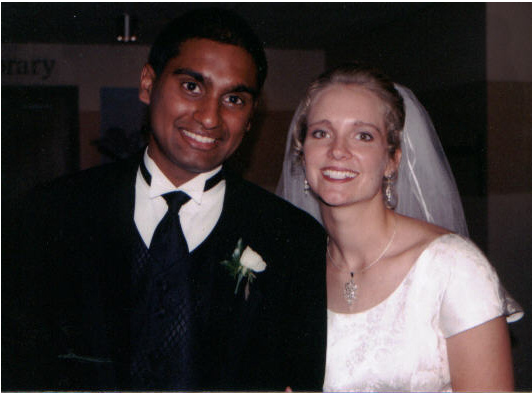
One way we love each other is by knowing about each other’s homes.For example, my husband knows things about my small hometown that only “insiders” know. He knows where the locals eat a hot breakfast, and the names of high school basketball players. Because he pays attention to my cultural background, I sense a deep love for who I am and where I come from. In the same way, I don shalwar kameez (a traditional Sri Lankan dress) every so often, can cook a mean curry, and enjoy building relationships with his family and friends. Each trip to his home increases my understanding of who my husband is.

When the majority culture blindly expects others to follow their lead without knowledge of other perspectives, they subtly send the message, “You are not important to me. Your importance is to make me comfortable.” Loving across cultures means that both sides release their grip on familiarity in order to experience deeper flavors of diversity.

While many waters could not quench our love, their rough waves have certainly smoothed our rough edges. In all of these ways, we embrace our own culture while keeping our arms open to the other. Guided by our great Jehovah each step of the way, we find deep richness in loving across cultural boundaries. Our hope remains that the church will deepen in its ability to love across such boundaries as well.

Books, Families, Children & Marriage

Books on Intercultural Marriage

Just starting out?

Mixed Matches by Joel Croehn. A very detailed and well-researched book that examines interracial, interethnic and interfaith marriages, Mixed Matches helped me start to sort out what qualities were most important to me in a ‘mixed’ marriage. Continue reading “Books on Intercultural Marriage”

Families, Children & Marriage, Women

Confessions of a Slow Mama

The moment a child is born, the mother is also born.
She never existed before.
The woman existed, but the mother, never.
A mother is something absolutely new.
-Rajneesh

When I was pregnant, a friend of mine told me that her mother hadn’t been much into babies.  She chuckled a bit as she recounted her mom’s comment, “I didn’t even like you until you were three.”  In the midst of the mystery and sentiment of pregnancy, I had a hard time following her mother’s thinking.  I mean, life was growing inside me – precious, beautiful, mysterious life! How could someone not like a baby?!?  While I chuckled at the sentiment, I couldn’t quite grasp it, that is, until one actually showed up in my arms.

I suspect my inability to understand had something to do with the fact that I had not yet lost years of sleep, been puked on (and more!) multiple times, gained over 50 pounds, spent months nauseated, endured repeated bouts of mastitis, or tried to reason with a screaming 2 year who insisted on watching TV at 2 am.  I also had not yet encountered the daunting challenge of quieting a screaming baby on a 20 hour flight, keeping fingers out of electrical sockets, short-changing engaging conversations with friends/husbands/mothers to clean up the box of cereal dumped on the floor. Continue reading “Confessions of a Slow Mama”

Restoration & Reconciliation

Bridge building

In sixth grade, my industrial arts teacher charged my class with an assignment to build a bridge out of toothpicks, paper, and Elmer’s glue.  The strongest bridge would ‘win’. Set to the task, we worked as diligently as kids that age can muster.  Some of the kids actually built a decent bridge.

Mine, however, was pitiful.  As my sticky bridge imploded on itself, it became painfully apparent there would be no career in civil engineering for me.

In spite of my early failure as a bridge builder, I regularly find myself charged with the task, though in a slightly different light. In the bridge building I practice today, the toothpicks and glue are replaced with people and problems.  Most of my life involves sitting between divergent groups in an attempt to connect them to each other.  I am both an at home mom and a career woman.  I teach how to English to non-English speakers.  I am married to a South Asian.  I raise biracial children.  I live in a rural white community. I teach college students.  I have an intense heart for the poor but live a middle class life.  I am a post-modern from a modern generation.

I can’t really get away from it, because I never exactly fit anywhere I go.  I’m beginning to wonder if God’s doing this on purpose. I suppose that may not be all that out of character for the One who initiated the idea of building bridges as a means to reconcile the Loved Ones He stood between (i.e. God and man).

Yet it’s a bit trickier for me, the imperfect one. I forget what I’m doing and get mad that I’m all alone on my bridge. I sit a bit too long on one side and lose sight of the other side. A storm blows in and I abandon my bridge for safer places. I find my bridge so important that I forget the reason it exists, and who created it.  Ultimately, this bridge is the place where God puts me.

For some reason, the place I’m used best is in the in-between.

Restoration & Reconciliation

Same site. New face.

Don’t be alarmed if this looks different than normal.  I’m just playing with some new design templates/names.  Trying to refocus the blog a bit.  Old name:  The Link Between.  New name (maybe, we’ll see how it sticks):  between worlds.

Social & Political Issues

Immigration resource

Matthew Soerens, the author of Welcoming the Stranger: Justice, compassion and truth in the immigration debate, and friends have recently launched a new website offering a forum to learn about and discuss issues around immigration.  There are forums, FAQs, and other excellent resources.


Belief

A Christmas wish

As I reflect on Christmas this year, it is clear that we are in a RICH yet BUSY (hence the lack of postings here) season of life – walking the dog, writing lectures, transporting kids, attending conferences, unpiling the house, grading papers… some days we love it, some days we nearly collapse from it. We do not lack for joy or angst, satisfaction or longing, rest or exhaustion. The paradox of it all astounds me at times!

At times we feel a lot like the shepherds in the field when “an angel of the Lord appeared to them, and the glory of the Lord shone around them, and they were terrified” (Luke 2:9), while in others we identify more closely to Mary who “treasured up all these things and pondered them in her heart.” (Luke 2:19). Perhaps that’s one of my favorite parts of this season – the simple reminder that God’s greatest gifts to us don’t always show up where or how we expect to see them, that He resides in the meek and lowly moments just as deeply as the glorious and joy-filled ones.

For whatever these days bring you, I wish you, simply, the presence of our Lord in this season.  May you have a blessed, meaningful holiday.

(image from The Jesus Storybook Bible by Sally Lloyd-Jones.  A highly recommended resource from our house!!!)

Restoration & Reconciliation

Tips for choosing culturally appropriate books & resources about Thanksgiving

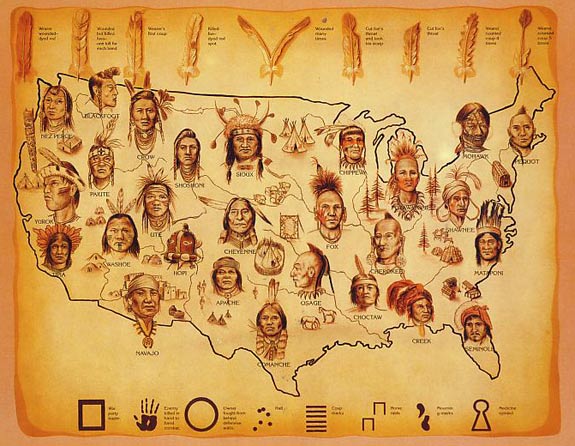
I’ve developed an increasing concern over this issue as I’ve heard what my children learn about ‘Indians’ in school. Colorin Colorado just posted a very helpful article discussing how to celebrate Thanksgiving and honor Native Americans in culturally appropriate and non-stereotypical ways. It articulated a lot of the reasons behind my discomfort with this topic.  This article has some practical suggestions and a bunch of book recommendations.


UPDATE:  Eugene Cho just posted an excellent reflection on similar ideas, and expands more on what makes me so uncomfortable…  There’s a TEDS Talk on this same post that delves even further into the issue.

Books

commUNITY

For everything in this world tries to pull us away from community, pushes us to choose ourselves over others, to choose independence over interdependence, to choose great things over small things, to choose going fast alone over going far together. Shane Claiborne

While I am deeply pulled toward the idea of community, the reality that I am much more comfortable living independently tears at me.  Skye Jethani sums up my sentiment perfectly in his [highly recommended] book The Divine Commodity, “But the idea of community always appears more beautiful than the reality.  Real people are difficult, and real arguments erupt.  This is the dilemma of community – we desire it, we need it, but we seem ill equipped to create it.”

Yup, that’s me.

I’m discovering this through something that, [sadly] for me, is an unusual circumstance – a prayer group, actually two (!) of them.  Continue reading “commUNITY”

Restoration & Reconciliation

Love your enemies

I need this reminder far more than I care to admit…  (kind of like Jamie the Very Worst Missionary who shared Missionaries probably shouldn’t be jealous of strippers. But sometimes they are. Definitely worth a read!!!)