Families, Children & Marriage, Restoration & Reconciliation

A long(er) view of intercultural marriage

Hiding from the rain under a tiny umbrella, my boyfriend of barely a month and I were making our way to class. We couldn’t see anything but the inside of the umbrella and our own two feet.  In the midst of a conversation about the future of our relationship, I reflected how this was what much of our relationship felt like – all we could see was the very next step. It was a simple statement, but a lesson that we have been learning ever since that day.

I’ve been reading some blogs of others in South Asian intercultural marriages here and there, and one particular post took me back to that time when my husband and I were working out the ifs of what it would look like to spend our lives together.  The question of loving each other wasn’t the problem – it was more the question of being able to commit to working out life together permanently. There was a lot of angst, questioning, talking, praying, reading.  After a long four years, we decided to take the plunge.

We’re now well over ten years in – past the questions of if to be together and well into the actual hows.  As we worked through the initial surface differences (i.e. food, race, dialect), we found ourselves in uncharted territory regarding where to go after the books we’d read stopped.  Living in a non-diverse area of the country, we found ourselves feeling isolated because of choices we made in relation to our bicultural-ness and unsure of how to connect to others without our experience.  Our hearts ached from the lack of frequency with which our children would interact with both families because of distance.  We grow weary of always being different, of still feeling like we’re navigating this boat alone.  In spite of these realities, we also know deeper levels of commitment and love than we could have even imagined when before we married.  Our friendship has grown and stretched us into more compassionate and humble people.  We wouldn’t dream of trading what we have for a simpler, more straightforward life, but we readily admit it hasn’t been an easy road. Continue reading “A long(er) view of intercultural marriage”

Miscellany, Restoration & Reconciliation

Unsure

Transitions make me quite reflective, which is why I think I’m processing leaving our current home in poetry…  While I will certainly leave this place with some fond memories, there are also hard memories that will accompany us as well.  (It doesn’t help that we received a racist and threatening prank call at 2 am the other morning either).  *sigh*   here is an honest thought in that vain…


How do you leave a place,
limping,
feeling as though you
made every effort to live
but aren’t sure if you ever
really got there?
.
Except for the time
you gasped
at the tree in the fog in the field
or hiked
with your daughter through the woods
or cried out
for healing on the lonely streets of an empty town.
.
Perhaps
limping
is simply
another step forward
along the path
of living.
.
Restoration & Reconciliation

Just keep going

I’ve been chewing on this quote for nearly a year now, trying to decide how it works:

Leaders are ones who learn to absorb the pain without passing it on to others or themselves.

Dr. Pete Menejares, Biola University

Clearly, there are days when I don’t feel capable of absorbing anyone’s pain. But in more lucid moments, I really ponder this idea of absorbing pain while not passing it on.

  • How do we let hard words be said, and then forgive?
  • How do we acknowledge painful realities, without losing all hope?
  • How do we walk, and then lead others, through turbulent waters without drowning?

Part of the answer, I suppose, is to just keep going.  “Our greatest glory is not in never falling,” said Confucious, “but in rising every time we fall.”

Jesus said it in a slightly different way, “Come to me, all you who are weary and burdened, and I will give you rest.”

How have you found ways to absorb pain without taking it out on others or yourself?

Culture & Race, Restoration & Reconciliation

Diversity’s Symphony

I’m a growing fan of spoken verse poetry (thanks to Sarah Kay) and just found this great video by David Bowden on the call to unity amidst all types of diversity within the church.  An excerpt:

“I was taught that Jesus died for the sins of humanity,
that his cross would demolish all hints of inequality,
that he cried out for unity in his last prayer at Gethsemane,
and that this infallible book would bring all believers to harmony.
But across the street were the Nazerenes,
and two blocks down were the Catholics,
and a mile north a church called Community
and east of that were more Baptists.
I had this uncalloused thought
that if we couldn’t have fellowship with those in other fellowships
who were taught a little different
than at least we could at least befriend the Baptists
who were baptized for the same reasons
and under the same creeds and because of the same tree.
But these Baptists weren’t like the Baptists in all baptistry,
washing away their sin, for though these baptists shared our beliefs,
they did not share our skin. “
 
Most haunting is his question: “How did we get so far off from the truth that now a poor, dark-skinned, unattractive, isreali-jew would have better luck dying for our sins than fitting in on our pews?”

I wonder that too.

Belief, Restoration & Reconciliation

The Crippled Beggar (Acts 3)

ironically,
your warped body begged by day
at a gate called Beautiful –
something you were not. 
 
most people at the courts
looked through you –
never at,
for fear of ruining the Gate’s name.
but they looked –
the disciples of One
to whom “beautiful” meant
more than straight anklebones.
 
and then you
walked,
skipped,
leapt,
twirled,
danced,
and probably cried
at the beauty
of moving
for the
very
first
time
in your life.
 
Families, Children & Marriage, Restoration & Reconciliation

A complex beauty

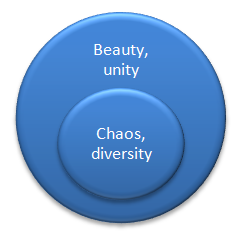
Sri Lankan BeachThere are some things that are inherently breath-taking and beautiful: a newborn baby sleeping, the mountains looming, the sea lapping the shore, a wheat field swaying in the wind.  In a world wracked with tragic ugliness, it doesn’t take long for our hearts to recognize the calming power and focus of which such simple beauties speak.  Such aspects of the created order symbolize a value for beauty and unity.  Yet within this reality is also immense diversity – sometimes so diverse it appears more chaotic than beautiful.

As a human race, we struggle much more with the concept of chaos and diversity than we do with beauty and unity.  Ethnic wars rage.  Globalism disregards the little people.  Opposing sides rail against each other.  Yet does it have to look like this?

Are beauty and unity truly pitted against diversity and chaos as the news headlines would have us believe?

Nature certainly gives of a part of the picture of created order.  Yet another piece of this puzzle involves human beings.  Even as we see them inflicting wars, cultural imperialism, trafficking, and bitter divisiveness, we also see humans participating deeply in the stories of reconciliation, empowerment, restoration, and respect for one another.  These people are merging the realities of beauty and unity with diversity and chaos to look something like this:

In other words, chaos and diversity exist within the realm of beauty and unity, not as forces working against it.

And what humans know the reality of this co-existence better than we who embody intercultural marriages?  I’d wager a large bet that beauty, unity, chaos, and diversity are integral aspects of our experiences, unable to be separated from each other.  Left unexamined and misunderstood, they do tend to pit us against each other.  But combined with some intense honesty and personal sacrifice, we are part of the picture to a world that desperately needs tangible examples of how to love, not hate.

It is not a task for the feeble-hearted, or for those only interested in learning about new food, new music, new clothing styles or new languages.  It is also not an endeavor to enter lightly with sugary visions of world peace.  It is a day-at-a-time thing, a walking-together path with fierce listening and compromising skills combined with perseverant hope and realistic acceptance.

And after all these things, it, too, is beautiful – albeit in a less visible and more complex way than the mountains and the sea – filled with all of their power and peacefulness, fury and calm.

Restoration & Reconciliation

“Love one another”

Coptic Christians guarding Muslims praying during the Egypt protests

In an era of growing divisiveness between cultures, I love the hope that this photo represents.  The photo came up the other day in my class when we were discussing interfaith relationships, and our discussion turned to how people of such different faiths can protect people they believe to be ‘led astray’.  I teach at a Christian college where many students come from conservative evangelical backgrounds.  Sadly, the goodness of evangelical theology in the US has been inextricably tied to conservative politics in the past few decades, and one of the challenges I see young evangelicals facing is how to sort out this overlap of faith and extreme right-wing politics.  To exacerbate this, the current generation came of age in a time of great tension between the Christian and Muslim worlds, and this became many students first introduction Muslims.  However, this shouldn’t be the end of the story. Continue reading ““Love one another””

Restoration & Reconciliation

Bridge building

In sixth grade, my industrial arts teacher charged my class with an assignment to build a bridge out of toothpicks, paper, and Elmer’s glue.  The strongest bridge would ‘win’. Set to the task, we worked as diligently as kids that age can muster.  Some of the kids actually built a decent bridge.

Mine, however, was pitiful.  As my sticky bridge imploded on itself, it became painfully apparent there would be no career in civil engineering for me.

In spite of my early failure as a bridge builder, I regularly find myself charged with the task, though in a slightly different light. In the bridge building I practice today, the toothpicks and glue are replaced with people and problems.  Most of my life involves sitting between divergent groups in an attempt to connect them to each other.  I am both an at home mom and a career woman.  I teach how to English to non-English speakers.  I am married to a South Asian.  I raise biracial children.  I live in a rural white community. I teach college students.  I have an intense heart for the poor but live a middle class life.  I am a post-modern from a modern generation.

I can’t really get away from it, because I never exactly fit anywhere I go.  I’m beginning to wonder if God’s doing this on purpose. I suppose that may not be all that out of character for the One who initiated the idea of building bridges as a means to reconcile the Loved Ones He stood between (i.e. God and man).

Yet it’s a bit trickier for me, the imperfect one. I forget what I’m doing and get mad that I’m all alone on my bridge. I sit a bit too long on one side and lose sight of the other side. A storm blows in and I abandon my bridge for safer places. I find my bridge so important that I forget the reason it exists, and who created it.  Ultimately, this bridge is the place where God puts me.

For some reason, the place I’m used best is in the in-between.

Restoration & Reconciliation

Same site. New face.

Don’t be alarmed if this looks different than normal.  I’m just playing with some new design templates/names.  Trying to refocus the blog a bit.  Old name:  The Link Between.  New name (maybe, we’ll see how it sticks):  between worlds.

Restoration & Reconciliation

Tips for choosing culturally appropriate books & resources about Thanksgiving

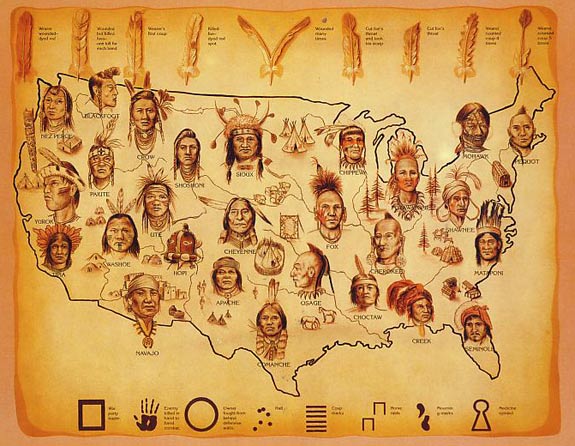
I’ve developed an increasing concern over this issue as I’ve heard what my children learn about ‘Indians’ in school. Colorin Colorado just posted a very helpful article discussing how to celebrate Thanksgiving and honor Native Americans in culturally appropriate and non-stereotypical ways. It articulated a lot of the reasons behind my discomfort with this topic.  This article has some practical suggestions and a bunch of book recommendations.


UPDATE:  Eugene Cho just posted an excellent reflection on similar ideas, and expands more on what makes me so uncomfortable…  There’s a TEDS Talk on this same post that delves even further into the issue.

Restoration & Reconciliation

Love your enemies

I need this reminder far more than I care to admit…  (kind of like Jamie the Very Worst Missionary who shared Missionaries probably shouldn’t be jealous of strippers. But sometimes they are. Definitely worth a read!!!)

Restoration & Reconciliation

Shakertown Pledge

I read this this morning in Guide to Prayer for Ministers and Others Servants (which I highly recommend!) and thought I’d share…

Recognizing that Earth and the fullness thereof is a gift from our gracious God, and that we are called to cherish, nurture, and provide loving stewardship for Earth’s resources, and recognizing that life itself is a gift, and a call to responsibility, joy, and celebration, I make the following declarations:

  1. I declare myself a world citizen
  2. I commit myself to lead an ecologically sound life.
  3. I commit myself to lead a life of creative simplicity and to share my personal wealth with the world’s poor.
  4. I commit myself to join with others in the reshaping of institutions in order to bring about a more just global society in which all people have full access to the needed resources for their physical, emotional, intellectual, and spiritual growth.
  5. I commit myself to occupational accountability, and so doing I will seek to avoid the creation of products which cause harm to others.
  6. I affirm the gift of my body and commit myself to its proper nourishment and physical wellbeing.
  7. I commit myself to examine continually my relations with others and to attempt to relate honestly, morally, and lovingly to those around me.
  8. I commit myself to personal renewal through prayer, meditation, and study.
  9. I commit myself to responsible participation in a community of faith.
Restoration & Reconciliation

Zondervan issues apology and pulls Deadly Viper from the shelves

What a move!!!  Way to go Zondervan!  See the apology on Soong Chan Rah’s blog.  (If you don’t know about this controversy, read this.)

Restoration & Reconciliation

Ministering to Uprooted Peoples and Advent Adventures

Found this article today about ministering to refugees by S. Tilewa Johnson, the Anglican archbishop of Angola on a great advent reflection on Idelette.com.

In her reflection, Idelette quotes Johnson’s article:

Whilst still a small baby, Jesus became a refugee. Jesus, his mother, Mary, and Joseph had the experience of being dispossessed and marginalized as aliens in a foreign land. The immediacy of their departure is striking. The angel instructs Joseph to ‘get up . . . take the child and his mother and escape to Egypt. So he got up . . . immediately.’ They no doubt collected a few belongings. However, was there time to say farewell to loved ones? That is very doubtful.

Like the Holy Family, the stories we hear from refugees reflect the “immediacy” of their departure. If, for example, they are working in the fields when an attack comes, there is often no time to return to their house, or even to find close relatives, such as one’s wife, husband or children. Very often families are fragmented when the violence of war enters their lives and they are forced to flee to save those lives.

Belief, Restoration & Reconciliation

Interfaith dialogue – Eboo Patel

interfaith-muralThis is an excellent lecture by Eboo Patel, a committed Muslim, speaking to evangelical Christians at the Q conference in NYC about necessity of interfaith dialogue and collaboration.  It’s very thought-provoking.  I was primarily captured by his challenge for Muslims and Christians to interact on the common value for humanity that they share as the basis for establishing peace.  What thoughts do you have about his lecture?