Books, Culture & Race

BOOK REVIEW: The Middle of Everywhere: Helping Refugees Enter the American Community

by Mary Pipher

I spent part of my summer teaching English to Burmese refugees at a local robot-uniform factor (yes, I did say “robot-uniform”!  Who knew the intense need for such textiles?!?)  They were a delightful bunch, and I loved every minute I spent with them – gleaning from their perseverance while imagining the sorrows they carry.  This experience spurred me to read Mary Pipher’s book The Middle of Everywhere: Helping refugees enter the American community. 

What I most loved about this book was Pipher’s premise for writing it.  She lives in Lincoln, Nebraska, where immigration is a fairly new thing, and the city is still adjusting to its newly acquired diversity, or what she deems “cultural collision on the great plains”.  She speaks of how identity can occur only in context, and suggests that as our world globalizes, we will all have identity issues like many of the displaced refugees with whom she has worked.

“Who are we when we don’t have a hometown when we don’t know our neighbors or our kin?  Who are we when we don’t know the history of our land or the names of common plants or birds in our area? Or when our stories come from television sets instead of grandparents or village storytellers?  Who are we in a world where the universal language is, to quote Pico Iyer, ‘french fries’?

“We think the world apart,” said Parker Palmer. “What would it be like to think the world together?”

It is with this foundation that she embarks upon the stories of the many refugee families with whom she has been friends.  She writes especially about refugee stories of young people as well as looks at how generational differences affect families in cultural transition.  Their stories are poignant, realistic, and raw.  Pipher is skilled at giving refugees human faces – turning stigma into stories and facts into faces. She points to the need for ‘cultural brokers’ who will serve as refugees guides in a system that may be apt to exploit them because of their vulnerability.

I’d highly recommend The Middle of Everywhere for anyone living near refugee communities who wants a deeper understanding of their new neighbors.

Culture & Race, Restoration & Reconciliation

Diversity’s Symphony

I’m a growing fan of spoken verse poetry (thanks to Sarah Kay) and just found this great video by David Bowden on the call to unity amidst all types of diversity within the church.  An excerpt:

“I was taught that Jesus died for the sins of humanity,
that his cross would demolish all hints of inequality,
that he cried out for unity in his last prayer at Gethsemane,
and that this infallible book would bring all believers to harmony.
But across the street were the Nazerenes,
and two blocks down were the Catholics,
and a mile north a church called Community
and east of that were more Baptists.
I had this uncalloused thought
that if we couldn’t have fellowship with those in other fellowships
who were taught a little different
than at least we could at least befriend the Baptists
who were baptized for the same reasons
and under the same creeds and because of the same tree.
But these Baptists weren’t like the Baptists in all baptistry,
washing away their sin, for though these baptists shared our beliefs,
they did not share our skin. “
 
Most haunting is his question: “How did we get so far off from the truth that now a poor, dark-skinned, unattractive, isreali-jew would have better luck dying for our sins than fitting in on our pews?”

I wonder that too.

Culture & Race

Research shows interracial marriages increasing in the US

A recent study by the Pew Research center shows that interracial marriages are on the rise in the US.  According to the study, currently 1 in 7 marriages is interracial, with 9% of whites, 16% of blacks, 26% of Hispanics and 31% of Asians marrying interracially.  I think is says something sad about the majority that whites are the smallest group in the mix, however, there is slight hope because while rates among Asians and Hispanics have stayed about the same since 1980, rates of interracial marriage for whites have doubled, and for blacks have tripled.

What did you find interesting about this study?  Did anything surprise you?

Belief, Books, Culture & Race

BOOK REVIEW: God behaving badly: Is the God of the Old Testament angry, sexist and racist?

While I’m deeply grateful to have had spiritual influences in my life who encouraged me to wrestle with tough questions of faith, I’ve still encountered plenty of voices along the way who have preferred to silence them.  Avoiding difficult questions about the Bible seems to be a sad reality of evangelical Christianity these days, and I’m often drawn to those willing to walk this path (see sidebars).  So clearly, when I saw David Lamb’s new book, God behaving badly: Is the God of the Old Testament angry, sexist, and racist?, I was intrigued.

The book’s chapters cover the following topics:

  • Angry or loving?
  • Sexist or affirming?
  • Racist or hospitable?
  • Violent or peaceful?
  • Legalistic or gracious?
  • Rigid or flexible?
  • Distant or near?

With clarity, candidness, and humor, Old Testament (OT) theologian David Lamb makes his case that while Yahweh’s actions often sound angry, sexist, or violent to modern day ears, we must first consider the context of Yahweh’s actions and the overarching narrative of the OT before assuming we know His true motives. Continue reading “BOOK REVIEW: God behaving badly: Is the God of the Old Testament angry, sexist and racist?”

Culture & Race

Multiracial Americans increasing significantly

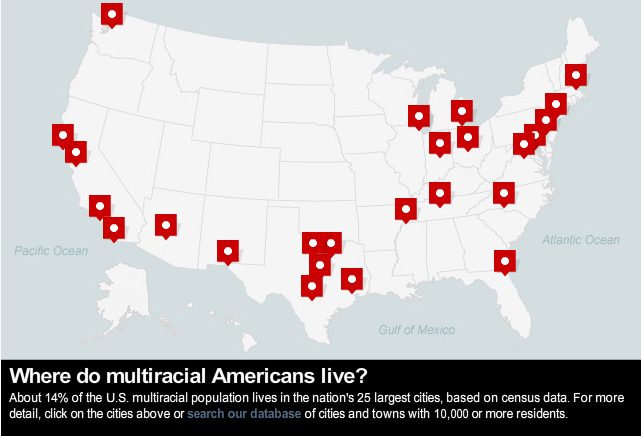
CNN has a great article with some current information on multiracial Americans.  Some interesting points:

  • Interactive map showing where multiracial Americans live
  • Indianapolis has one of the highest percentages of multiracial Americans – who knew?!?
  • There has been a 32 percent increase in the number of people reporting themselves as multiracial since 2000
Culture & Race, Travel

The American dream versus the good life

A deep bass beat rippled through the darkness of the dance club.  Strobe lights flashed outlines of bodies, some clinging, some flailing, some just sitting and staring.  A newly arrived English teacher to Burkina Faso,West Africa, this wasn’t exactly the way I had anticipated learning about a new culture.  However, my new West African friends had mistakenly assumed that because I was American, this would be the scene in which I felt most comfortable.  I am neither a clubber by personality nor a dancer by ability.

I ordered a Coke and did my best to play wallflower – not an easy task for one of two nasaras (white people) in the room.  Pondering the scene, I realized ironically that I was the only person in the room not donning the “American” uniform of jeans and T-shirts.  As the beat shook the walls, we abandoned our attempt at conversation and coolly turned our attention to the crowd, all the while Solomon’s warning about chasing the wind thundering through my head (Ecclesiastes 1 & 2).

With tight Levi’s, smooth moves, and Coke bottles, the clubbers of the night chased their imagined version of the American dream.  In class, my Burkinabé students echoed similar assumptions, believing that American streets were literally paved with gold.  Consequently, it wasn’t difficult to understand why a ticket to America was their dream come true (especially since most of the roads in Ouagadougou, Burkina Faso’s capital city, were not paved at all).  This mentality recurred throughout Ouagadougou – American flags on T-Shirts, pictures of American movie stars on billboards, or American rock classic playing in restaurants.

As I grew to love the warmth of African hospitality and graciousness, I also grew increasingly fearful that such cultural strengths would be blown away by the very winds they were chasing.  “This isn’t what you want,” I challenged my students one day as we discussed the opulence of American culture, “I know it appears enticing, especially in comparison to the poverty, hunger, and injustice people here face on a daily basis.  But what I see being chased – the pride of “image”, the greed of materialism, the selfishness of “independence” – is a façade.  It won’t get you any further than where you are now.  Financial poverty in America is limited, but spiritual poverty is widespread.  Not many go hungry for food, but droves starve for love, recognition, and success.  The injustice to our own is not as blatant as what many countries see in their leaders, but there are still many left unfairly forgotten, neglected.” Continue reading “The American dream versus the good life”

Culture & Race

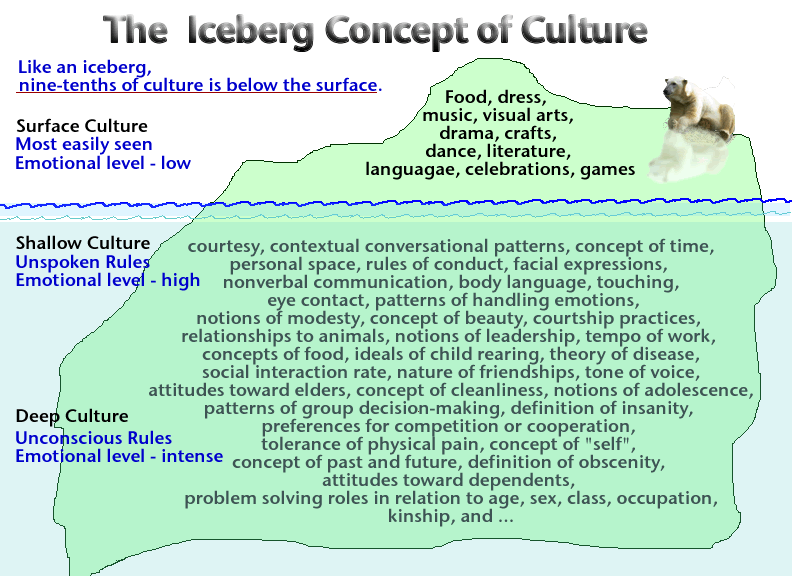
Iceberg Concept of Culture

One of my favorite ways to teach culture is with this diagram:

What is particularly intriguing to me is how it shows how culture can grow more stressful when you get past the ‘fun parts’ like food, dancing, and dress.  In intercultural relationships, simply talking about some of the rules guiding the unspoken and unconscious rules of culture brings a new level of awareness in understanding how to relate to one another.  When I use this in my classes with predominately white students, it always fascinates them to realize how differences in culture run deep even in their own families.  These conversations often begin like this:

“In my dad’s family, it’s like this, but my mom’s family is completely different.”

And then they start to chuckle and it dawns on them that they, too, come from a diverse family culture and begin to identify with how might foreigners feel navigating a new land.  I have all sorts of stories about how the deeper layers of culture play out – some funny, some sobering – that I may share more about as time goes on.  In the meantime, do any of these strike a chord for you?  What unspoken or unconscious cultural rules have caused more intense emotional loads in your life?

Culture & Race, Miscellany

We’re speaking at Calvin College Symposium on Race

My husband and I will be speaking as part of a lecture series on race at Calvin College in Grand Rapids next Wednesday evening.  Our talk is titled “On Being the Only One” and we’re speaking about our experience living as an interracial couple in a monocultural environment.

If you’re in the area, we’d love to meet you!

For more info, visit  http://www.calvin.edu/admin/provost/multicultural/symposium/.

Culture & Race

Bowing to the Japanese Emperor

The web is full of fun stuff tonight!!!  Josh has a very insightful reflection on humility and culture on his site, Black WASP about Obama bowing to the Japanese emperor.  Definitely worth a read!  Eugene Cho also weighed in with some good thoughts.  I also thought Tokyo Moe highlighted an interesting inconsistency:  “Never mind how W walked hand-in-hand with the Saudi Arabian royal petro dealers or cozied up perched on their arm rests.”

Culture & Race

Why does “Asian” = “East Asian” in America?

Something has baffled me for awhile now, and I’m wondering if anyone else can shed some light on this.  In following the Deadly Viper controversy that emerged last week, I was reminded once again, that when Americans refer to “Asian”, they really mean “East Asian” (i.e. China, Korea, Japan, etc.)  South Asia (India, Pakistan, Sri Lanka, etc.) is really left completely out of the discussion, as evidenced by this website – I browsed a bit and everything was rooted in East Asian cultures.  A simple Google Image search turns up almost all photos showing East Asians.

Whenever I teach, I generally try to refer to ‘East Asia’ or ‘South Asia’ because while the areas have some things in common, there’s a lot of culture that they don’t share.  I hear my family refer to themselves at times as “Asian”, but they don’t ever seem to be ‘counted’ in the Asian discussion – this is reserved for East Asians.  I’m not passing judgment on either side –  just questioning something I don’t understand very well.  Has anyone else ever wondered this?  Is there history to it?

Belief, Culture & Race

Racially accurate communion tables

So six year old my daughter is very sensitive to race and often asks many questions about skin color, why she’s the only brown kid, why no one else is from Sri Lanka, why she’s the only one who has to eat curry, etc.  (My son, on the other hand, has yet to figure out anything beyond race cars and fire trucks…)

This summer, we were processing some of her feelings about race while we were in Sri Lanka, and my daughter asked, “But mama, why is everyone in America white?  Why am I the only one with brown skin?”  (disclaimer:  I *know* not everyone in America is white – please refrain from pointing this out…  however, where we live there are very few non-white people, so it feels like this to my daughter). Wanting to help clarify my daughter’s understanding, I responded, “Well, honey, not everyone is white – there’s __ and __ and __. And everyone you see here is brown, right?”

She was too distracted to acknowledge my right-ness.  “No, mama,” she said.  “EVERYONE is white – and I’m not.  Even Jesus is white!”

Well, she might as well have stuck a knife through my heart.  Those blasted colonialist publishers who had to go and make Jesus look just like them – they were fully responsible for my child feeling on the outs.  I collected myself and told her that actually, Jesus isn’t white, and that the people who painted the pictures of Him got a little too focused on themselves and didn’t pay attention to what Jesus really looked like.  “He probably looked much more like you, hon,” I told her, hoping to soothe her angst.

“Really?”  She was now listening to me, and seemed a bit relieved.  We finished our conversation and the topic seemed resolved for quite some time – until we took communion several months later.

I’d told her she couldn’t take communion because she wasn’t old enough to fully understand what it meant.  She was mad because she loves grape juice.  (I was mad because I prefer wine for communion, but that’s a story for another day).  The ride home from church entailed a detailed explanation of the components of and symbolism behind communion.  Later that week, communion came up in conversation.  I asked my daughter if she remembered what the grape juice represented.

“I know, mama. The grape juice is Jesus’ blood, and the bread is his – his – his – ”

“Body,” I completed the sentence for her.

“Yeah, that’s it!  His body,” she seemed satisfied that the whole ritual was straight in her head. “But mama, there’s still something I don’t understand.”

“Ok, what is it?”

“Well, mama, if the bread represents Jesus’ body, then why do we use white bread?”

*Sigh*

As Kathy Khang says, “I need a manual for this.”

Related Posts

Culture & Race

Multiracial people become fastest growing group in US

AP article courtesy my friend Josh….  This fascinates me.  I wonder what it means for my kids?  the future of US race relations?  the world?

Culture & Race

Cultural Isolation

Tree in cornfieldSorry for the loooooooooooong absence.  First was Christmas travels, then our January term at the university that I spent somewhere between intense project mode and complete vegging out due to Christmas exhaustion and winter depression.  We’re currently in the throes of the onset of second semester, so now I’m somewhere between completely overwhelmed by my newly realized workload and waking back up from the January slump.

A significant piece of this slump was  influenced by the cultural isolation we experience living in a non-diverse environment.  While there are many upsides to where we live (no commute, low cost of living, tight community, job satisfaction, balanced work-home commitments, etc.), one of the downsides that arises intensely at times is cultural isolation.  I was explaining a bit of this struggle to an Asian colleague who’s moving to our town, and he commented, “But you’re ok, right?” suggesting that because I’m white & American, I don’t experience the same struggles that the rest of my family does.  In a sense, I completely understand where he’s coming from, and he’s right.  I don’t experience what they do.  In another sense, though, it still affects me significantly because it affects the people I love most.  My husband hit a significant low – basically just feeling lonely for people who see him as “normal” (and frustrated by people who eye him wearily) – over January and all I can do is listen, give him a hug, and try not to diminish his feelings of isolation. My daughter’s continues to ask about race, the latest being, “Mama, why is everyone white except me?”

While it may be easy for the casual observer to simply respond:  “Yikes.  Get outta there,” it’s not quite so simple for us.  Yes, we do feel like this at times.  But then there is also this issue of calling – a deep sense that we are to stay where we are for now, regardless of the challenge it holds for us.  What I’m still trying to sort through is how to live ‘contentedly discontent’. Every so often I wonder what God’s purpose is for us around here, breathe in a deep breath of courage, and then let out a shallow, slow breath of exhaustion.  It. is. so. stinkin’. lonely. doing. this.  *sigh*

Anyone out there have experience/wisdom in this area?  I’m sure missionaries experience this kind of isolation.  How do you possibly survive when there’s no way you’ll ever fit in where you live?  How do you survive the (at times) crushing tension of being a square peg in a round hole?  One small request – I *know* that God carries us all through such valleys, but God does not come to my house to relish a curry dinner, or share a meaningful hug over the struggle of war in a home country or missing family afar.  God IS here, but he’s also NOT here like people can be who share similar experiences. Hence, the cultural (not spiritual) isolation.  Because of this, I bristle when people’s response is, “Trust God” or “You have a purpose here.”  Both true, but not really addressing the root of the issue.

I do apoligize in advance for my grumpiness.  But, it is what it is, and I’m guessing someone, somewhere has had similar feelings.  Quite obviously, I don’t have perspective on this and I need some, but, hey, the only way is through, right?